
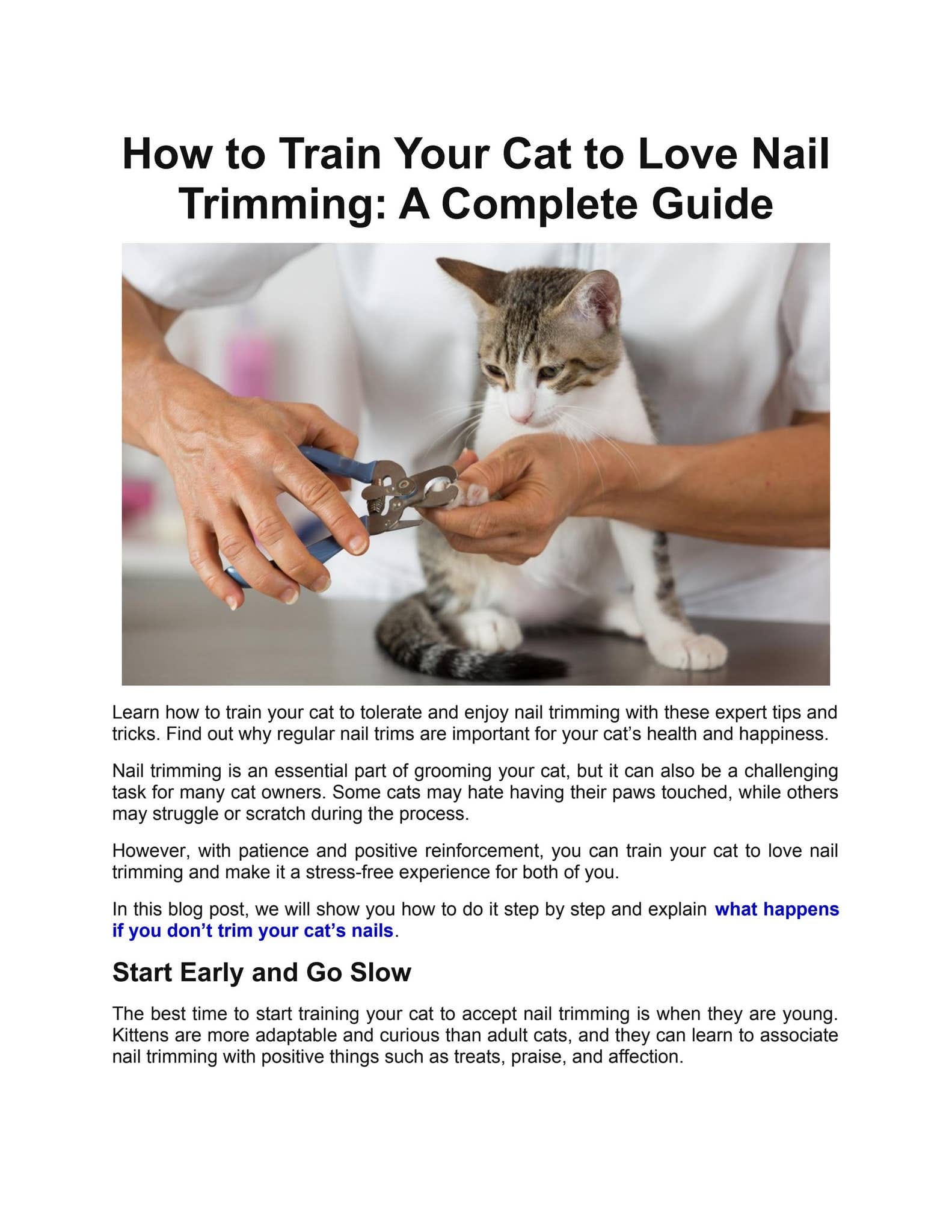
Training your cat might seem like an impossible task, with many believing cats are untrainable or that training them is a frivolous endeavor. However, by following specific, patient steps, you can successfully train your feline companion to tolerate, and even accept, nail trims. This process not only makes grooming easier for you but also reduces stress for your cat, especially if they are an indoor-only pet. This guide will walk you through the essential steps to achieve this valuable skill, demonstrating that cats are indeed capable of learning and that training them can be a beneficial and rewarding experience for both of you.
The Necessity of Nail Trims for Indoor Cats
With a growing number of cats living exclusively indoors, regular nail trimming has become a crucial aspect of their care. While a veterinarian can perform this service, a cat that is accustomed to paw handling and the trimming process will experience significantly less anxiety. Ideally, your cat should feel comfortable having their claws trimmed in their familiar environment, your home. This fosters a sense of security and can even turn a potentially stressful event into a positive interaction.
Step 1: Getting Your Cat Comfortable with Paw Touching
The initial stage of training hinges on your cat’s current comfort level with physical contact. If your cat already tolerates being petted and having their legs touched without issue, you have a head start. Begin by incorporating paw touching into your daily petting routine. As you pet your cat, if they appear relaxed, gently run your hand down their leg to their wrist. Offer a soft word of praise and a small, high-value treat. Repeat this process a couple of times if your cat remains content.
Should your cat show any signs of distress, such as flinching, immediately withdraw your hand. Wait for them to relax before attempting again, but this time, stop your hand just short of the area that caused them to react. Continue these brief, daily sessions, gradually increasing the duration and proximity to the paw until your cat is comfortable with you touching their paw without any negative reaction.
Step 2: Extending the Paw and Exposing the Claws
Once your cat is at ease with you holding their paw pad, the next step is to gently apply pressure to extend the claws. As you do this, offer praise and a treat. It is crucial to pay close attention to your cat’s body language throughout this process, stopping before they exhibit any signs of discomfort or fear. Patience is key; avoid rushing. Incrementally increase the pressure with each session until the claws are fully extended. Release the pressure and offer a reward as soon as the claws are exposed. Gradually extend the amount of time you can hold the paw firmly enough to keep the claws visible.
Step 3: Introducing the Nail Trimmers
Now it’s time to introduce your cat to the actual nail trimmers. Initially, allow your cat to investigate the trimmers on their own. Offer a treat for remaining calm while they sniff them – this is a positive sign. Next, simulate the action of using the trimmers by opening and closing them with your fingers, making a snapping motion in the air. This helps your cat become accustomed to the visual and auditory cues associated with the tool. Once they are comfortable with this, try cutting a piece of raw spaghetti with the trimmers, allowing your cat to hear the distinct crunching sound. Continue to reward calm behavior. For guidance on choosing the right tools, consider learning how to train cats to walk on a leash as a related training activity.
Step 4: The First Nail Trim
When your cat is comfortable with the sound of the trimmers and the process of having their claws extended, you can attempt the first nail trim. Start by trimming just a tiny bit off of one claw. If this goes smoothly, you can trim another claw the following day. Always follow the trim with praise and a treat. If your cat seems startled, revert to the previous step of “cutting the air” near their claw for a day or two. Remember, patience is paramount; do not trim more than one claw per day until your cat is very comfortable with the entire procedure.
Within about ten days, you may have successfully trimmed all of your cat’s front claws. Allow them to grow in slightly, and then repeat the process, again trimming only one claw per day. If this second round proceeds well, you can gradually increase to trimming two claws in a single session before reinforcing the positive behavior with a treat. It is not necessary to aim for trimming all ten claws at once; many cats do best when only one paw is attended to per session, and this is perfectly acceptable.
Step 5: Addressing Hind Claw Trims
It is advisable to wait to train your cat to accept hind claw trims until they are very comfortable with having their front claws trimmed. Hind claws are typically thicker, and cats may be more sensitive about having these trimmed. Fortunately, hind claws do not require trimming as frequently as front claws. Therefore, prioritize maintaining your cat’s positive association with claw trims by not rushing this stage and risking a setback. You can explore training cat to walk on a leash as another way to build trust and provide enrichment.
The Multifaceted Benefits of Cat Training
Beyond nail trims, numerous other training skills can significantly enhance the quality of life for both you and your cat. These include teaching them to enter a carrier on cue, come when called, go to a designated spot, and follow you when prompted. Training also serves as a vital source of mental and physical stimulation for cats, preventing boredom and promoting overall well-being. So, yes, you can train your cat, and no, it is not a silly pursuit. The key to success lies in keeping training sessions short, positive, and never rushing the process. This methodical approach can lead to a more harmonious relationship with your feline friend. Consider further enhancing your cat’s engagement by learning how to train a cat to not go outside.
Patience Fisher, owner of Patience for Cats LLC, is an Associate Certified cat behavior consultant based in Pittsburgh, PA. She holds a Bachelor’s in Biology, a Diploma of Feline Behavior Science Technology, and is a certified veterinary assistant. Her expertise is recognized by the International Association of Animal Behavior Consultants. Visit her Patience for Cats channel on YouTube for humorous videos and connect with her on Facebook at Patience for Cats.
