
If you own a cat, you’ve likely experienced their dramatic pleas for food, often accompanied by the insistence that they haven’t eaten in ages. This can happen at any time, whether it’s early morning or just before their scheduled meal. Fortunately, there are effective strategies you can implement to curb this begging behavior, especially after consulting with your veterinarian to rule out any underlying medical issues that might be causing it. Remember, even if your cat is on a weight loss plan, you don’t have to let them remain overweight simply because they’re vocal about their hunger.
Disclaimer: This article provides general information and may not apply to every cat. Always consult your veterinarian for personalized advice. This content does not replace or supersede professional veterinary guidance.
Ensure Adequate Caloric Intake
Begin by calculating your cat’s basic caloric needs. Refer to the feeding guidelines provided by your cat’s food manufacturer. Are you feeding them significantly less than recommended? If so, a slight adjustment to their portion size might be in order. However, be cautious not to overfeed, as your goal is to manage hunger, not to increase their weight. Always discuss any dietary changes with your veterinarian.
Resources like Chewy offer a helpful guide on how much to feed cats, providing approximate guidelines. This can serve as a valuable starting point for discussions with your vet or a certified nutritionist. Navigating your cat’s diet independently can be challenging, so professional input is highly recommended.
Implement Changes Methodically
A common pitfall for cats on weight loss plans is haphazard or overly rapid implementation of dietary changes. It’s crucial to be very intentional when reducing your cat’s food intake. Expecting a cat to be hungry without any distress is unrealistic. Approach any reduction in food slowly and systematically to allow your cat to adapt to the changes. Gradual adjustments are often less upsetting than sudden, drastic cuts.
Your veterinarian can offer specific recommendations, but a sensible approach involves comparing the manufacturer’s suggested feeding amount for your cat’s current weight with what you are currently providing. Start with the recommended amount and make minor reductions. If your cat shows signs of distress, slow down the process. Monitor their behavior closely to ensure the transition is as smooth and gradual as possible.
Always adhere to your vet’s advice. If your cat struggles with the suggested weight loss plan, discuss potential adjustments for a slower pace or strategies to help them cope better with reduced food intake. Your vet may be able to modify the plan or offer alternative solutions if a slower dietary change isn’t feasible.
Slow Down Feeding (With Caution)
Cats are natural hunters, preying on small animals like mice and birds. In the wild, they consume multiple small meals throughout the day. Mimicking this natural behavior by breaking meals into smaller portions can be beneficial. Aim for at least 3 or 4 meals per day, if your schedule permits. This helps prevent excessive hunger and reduces the likelihood of begging.
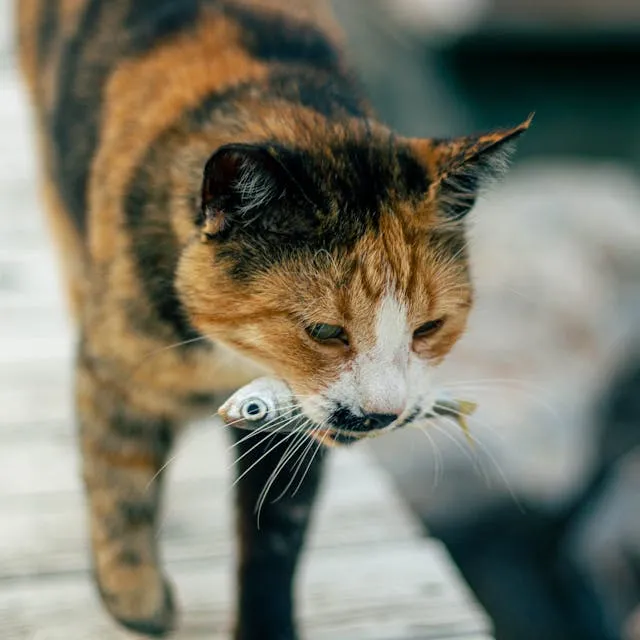 A cat carries a fish in its mouth
A complementary strategy involves using a slow feeder or a food puzzle. These tools encourage your cat to eat more slowly, engaging their natural foraging instincts and making them feel more satisfied with less food. Some puzzles require cats to eat around an obstacle, while others involve completing a task or a series of tasks to access their food. This not only provides mental stimulation but also helps them perceive their meal as more substantial.
However, exercise caution with this method. Avoid food puzzles for cats exhibiting frustration or aggression around food. Start with very easy puzzles and gradually increase the difficulty only if your cat responds well. Consider introducing treats into a puzzle after their regular meal.
Utilize Training to Slow Eating
Incorporating training into your cat’s feeding routine can be another effective approach. Cats are naturally motivated to train when they are hungry, and delivering their meal in a controlled, deliberate manner can help them feel fuller for longer. This also provides an enjoyable bonding experience. A clicker training kit can be a helpful starting point, or you can set up a training session.
It’s crucial to remember two key points: Never intentionally withhold food to motivate training; conduct training sessions during naturally hungry periods. This method is also unsuitable for cats who display aggression related to food. Your cat’s basic need for sustenance must be met, regardless of their willingness to participate in training.
Furthermore, only employ this strategy if your cat is not already frustrated or aggressive around food. Training should be simple, focusing on familiar behaviors. The goal is to help your cat eat at a slower pace and feel a sense of control, not to increase their frustration.
Employ an Automatic Feeder for Scheduled Meals
Automatic feeders are excellent for ensuring consistent feeding and predictability, but they also offer control over portion sizes. This allows your cat to receive small meals throughout the day with minimal effort on your part, which is particularly useful if you’re away from home during the day. PetLibro offers reliable automatic feeders that can be a valuable asset.
Enhance Meal Volume
Consider the concept of adding bulk to your cat’s diet, similar to how low-calorie, high-volume foods can create a feeling of fullness in humans. Always consult your veterinarian before adding anything to your cat’s food. They might suggest transitioning to a weight-loss specific cat food that is naturally bulky but lower in calories.
A simple and effective way to add volume is by offering cat grass. Growing cat grass is relatively easy, even for those without a green thumb. You can even use a decorative umbrella-shaped grow light if natural light is limited. Starting seeds a few days apart and replanting as needed ensures a continuous supply of fresh grass for your cat to enjoy.
Avoid Punishment
It’s essential to remember that your cat’s begging is not a sign of naughtiness but rather an indicator of hunger or a potential health issue. Even if their persistent meowing becomes tiresome, never resort to punishment. Devices like squirt bottles, remote punishment devices, or anti-bark collars are ineffective and counterproductive. They fail to address the root cause of the behavior and can damage communication between you and your cat.
The Key to Stopping Food Begging
While the ideal solution varies for each cat, the most critical steps involve collaborating with your veterinarian or a certified pet nutritionist to ensure your cat receives adequate nutrition. Implement any dietary changes slowly and deliberately. Crucially, avoid giving in to begging. If you occasionally feed your cat when they beg, you are inadvertently training them to beg for longer durations, as they learn that persistence eventually yields results.
You may need to adjust the pace of their weight loss plan or make other modifications. By making every step of the plan intentional and prioritizing your cat’s well-being, you can successfully manage their begging behavior.
Consider investing in an automatic feeder if it aligns with your cat’s needs.
Seeking Guidance for Your Begging Cat?
Set Up a Consultation
