
Training a bird dog is a rewarding journey that deepens the bond between you and your canine companion while honing their natural instincts. Whether you’re a seasoned hunter or a novice enthusiast, understanding the fundamental principles and employing effective techniques is crucial for success. This guide will walk you through the essential steps, from imprinting young pups to refining the skills of a seasoned retriever, ensuring your bird dog becomes a reliable and skilled partner in the field.
The Foundation: Early Imprinting and Socialization
The journey of training a bird dog begins long before any formal lessons. Early imprinting and socialization are paramount, laying the groundwork for a confident, well-adjusted dog that is receptive to training.
Introducing Pups to Birds
Introducing puppies to the sights, sounds, and smells of birds in a controlled and positive manner is a critical early step. This can be done using quail cages, feather dummies, or even live birds under strict supervision. The goal is to create positive associations, allowing the puppy to explore and become curious without feeling overwhelmed or fearful.
Positive Reinforcement
Positive reinforcement is the cornerstone of effective dog training. This involves rewarding desired behaviors with treats, praise, or play, making the learning process enjoyable for the dog. Early socialization, exposing puppies to various environments, people, and other well-behaved dogs, helps them develop into confident and adaptable companions, essential for a successful bird dog.
Basic Obedience: The Building Blocks of Training
Before embarking on specialized bird dog training, a solid foundation in basic obedience is non-negotiable. A dog that reliably responds to commands like “sit,” “stay,” “come,” and “heel” is easier to manage and train for more complex tasks.
Mastering “Sit” and “Stay”
Teaching “sit” and “stay” instills a sense of control and patience in your dog. Start in a quiet environment, rewarding the dog for sitting when you say the command. Gradually increase the duration and distance of the “stay” command, always ensuring positive reinforcement.
The Importance of “Come”
A reliable “come” command, or recall, is vital for safety in the field. Begin with short distances in a controlled area, using an upbeat tone and a high-value reward when your dog comes to you. Never punish a dog for coming to you, even if they were previously running off; this will only discourage them from returning.
Introducing Birds and Retrieving
Once basic obedience is established, you can begin introducing your dog to the core activities of bird hunting: pointing, flushing, and retrieving.
Developing the Point
The point is a natural instinct for many bird dog breeds, but it often needs to be encouraged and refined. Using planted birds or dummies, reward your dog for freezing and staring intently at the scent source. This can be a gradual process, with rewards given for any sign of focused attention.
The Art of the Retrieve
Teaching a successful retrieve involves encouraging your dog to pick up a bird or dummy, carry it gently, and bring it back to you. Start with short retrieves using toys your dog enjoys. Introduce the concept of “give” or “out” to encourage them to release the item. For actual birds, focus on a soft mouth to prevent damage.
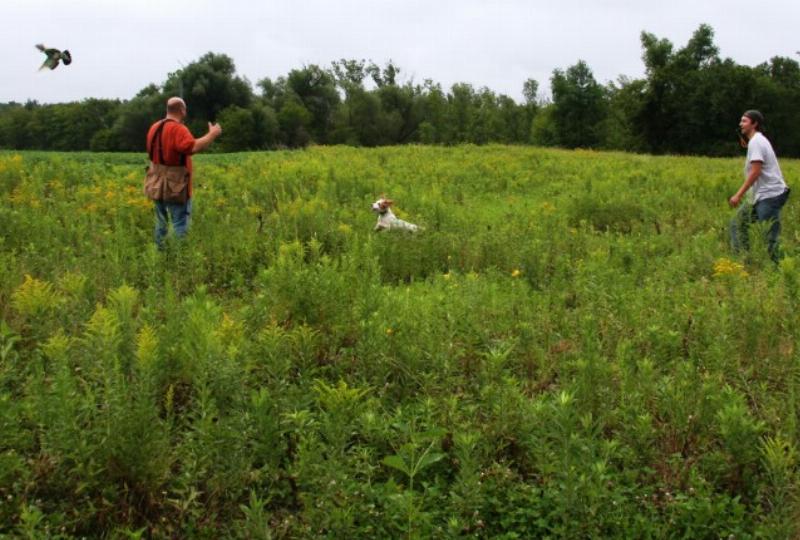 Professional trainer guiding a bird dog in retrieving a pheasant.
Advanced Bird Dog Training Techniques
As your dog progresses, you can introduce more advanced techniques to enhance their performance in the field.
Force Fetch Training
Force fetch is a technique used to ensure a dog will reliably pick up and retrieve game, even if they are hesitant. This method requires patience and a thorough understanding of canine behavior, always prioritizing positive reinforcement and avoiding any harshness that could create aversion. This method is similar to, and can be complemented by, whoa training bird dogs in terms of instilling control and responsiveness.
Whistle Training and Hand Signals
Many bird dog handlers utilize whistle commands and hand signals for silent communication at a distance. This is particularly useful in dense cover or across wide-open fields. Consistent training with clear signals, paired with rewards, will help your dog respond effectively.
Working with Different Bird Types
Different types of game birds may require slightly different approaches. Understanding the flight patterns and behavior of quail, pheasants, or waterfowl can help you anticipate your dog’s responses and adjust your training accordingly. For instance, training with specific birds for training hunting dogs will prepare them for real-world scenarios.
Addressing Common Challenges
Even with the best training, challenges can arise. Recognizing and addressing common issues promptly is key to continued progress.
Over-Excitement and Distractions
Bird dogs can sometimes become over-excited in the field, leading to running off birds or ignoring commands. Counter-conditioning and consistent practice of commands like “whoa” and “stay” can help manage this. Using planted birds or dummies in controlled environments can help your dog focus on the task at hand.
Soft Mouth vs. Hard Mouth
A “hard mouth” (chewing the retrieved bird) is a common problem that can damage game. Reinforce gentle retrieves by rewarding your dog only when they carry the bird without damaging it. If the issue persists, specialized training may be necessary.
The Role of Nutrition and Health
A well-trained bird dog is also a healthy dog. Proper nutrition and regular veterinary care are fundamental to their stamina, performance, and overall well-being.
Choosing the Right Food
High-performance dog food formulated for active breeds is essential to meet the energy demands of a bird dog. Consult with your veterinarian to determine the best diet for your dog’s specific needs, age, and activity level.
Regular Veterinary Check-ups
Routine check-ups, vaccinations, and parasite prevention are crucial to keep your bird dog in top condition. Be vigilant for any signs of illness or injury, especially after rigorous field work.
Conclusion: A Lifelong Partnership
Training a bird dog is an ongoing process that builds a profound partnership. By employing patience, consistency, and positive reinforcement, you can cultivate a skilled and devoted companion. The journey of training a bird dog is as much about the human-animal bond as it is about the skills acquired. Remember that every dog is an individual, and adapting your training methods to suit their personality and learning style will lead to the most rewarding outcomes. Whether you are looking for trained bird dogs for sale in texas or embarking on the training journey yourself, the dedication to understanding and nurturing your dog’s potential will create a partnership that lasts a lifetime.
