
Training a bird can be a profoundly rewarding experience, transforming a wild creature into a companion who trusts and interacts with you. It’s not about dominance, but about building a strong, positive relationship based on understanding and consistent communication. Whether you’re aiming for simple tricks or more complex behaviors, the core principles remain the same: patience, positive reinforcement, and a deep understanding of your bird’s unique personality and needs. “The journey of training a bird is as much about learning to understand them as it is about teaching them,” says Dr. Isabella Rossi, a renowned avian behaviorist. “It’s about mutual respect and building a bridge of communication.”
Understanding Your Bird’s Motivation
Before you even think about commands, it’s crucial to understand what drives your bird. For most pet birds, positive reinforcement—rewarding desired behaviors—is the most effective and humane approach. This means identifying what your bird finds valuable. High-value treats (like small pieces of fruit, nuts, or seeds they don’t get all the time) are common motivators, but praise, a favorite toy, or even a gentle head scratch can also work wonders. “Every bird is an individual,” notes avian trainer Mark Jenkins. “What motivates a budgie might not work for a macaw. The key is observation and experimentation to find your bird’s currency.”
The Foundation: Trust and Socialization
Trust is the bedrock of any successful bird training. If your bird doesn’t feel safe and comfortable around you, they won’t be receptive to training. This begins the moment you bring your bird home.
- Gentle Introduction: Allow your bird time to adjust to its new environment without excessive handling or loud noises.
- Positive Association: Offer treats and soft-spoken praise whenever you are near the cage. Associate your presence with good things.
- Respecting Boundaries: Never force interaction. If your bird retreats or shows signs of stress, back off and try again later.
Socialization also plays a vital role. Birds are highly social creatures and often learn best through interaction. Spending quality time with your bird daily, talking to them, and engaging in gentle play can significantly enhance their willingness to learn and interact.
Basic Training: Step-Up and Target Training
Two fundamental behaviors to start with are “step-up” and target training. These not only teach your bird to respond to cues but also build confidence and reinforce your bond.
The “Step-Up” Command
This teaches your bird to step onto your finger or a perch when asked.
- Offer Your Finger: Slowly extend your finger towards your bird’s chest, just above their legs.
- Gentle Pressure: If your bird doesn’t step up, apply very gentle pressure upwards on their chest.
- Reward: The instant they lift a foot or step onto your finger, say “Yes!” or “Good step-up!” and offer a treat and praise.
- Practice: Repeat this in short, frequent sessions throughout the day.
Target Training
Target training involves teaching your bird to touch a specific object (the target stick) with its beak. This is a gateway to many other behaviors.
- Introduce the Target: Hold a target stick (a chopstick or a dowel works well) near your bird.
- Reward Contact: When your bird investigates or touches the target with its beak, say “Yes!” and offer a reward immediately.
- Verbal Cue: Once your bird reliably touches the target, start saying a cue word like “Touch” just before you present the target.
- Increase Distance: Gradually move the target further away, and your bird will learn to follow it.
This method is incredibly versatile. You can use the target to guide your bird to a new perch, into its cage, or even to perform simple movements. The ability to how to train birds to fly back to you often starts with a foundation in target training, teaching them to associate the target with a return to a desired location.
Advanced Training: Tricks and Behaviors
Once your bird has mastered the basics, you can move on to more complex behaviors and tricks. Remember to break down each trick into tiny steps and reward each successful approximation.
Common Tricks
- Waving: Teach your bird to lift a foot on cue. This is an extension of the “step-up” behavior.
- Spinning: Use a target stick to lure your bird into a circle. Reward them for each part of the turn.
- Fetching: Start by rewarding your bird for interacting with a small toy, then for picking it up, and eventually for bringing it to you. This requires significant patience.
Recall Training
Teaching your bird to come to you when called is a crucial safety behavior.
- Start Close: Call your bird’s name followed by a recall cue like “Come!” while holding a treat.
- Reward: Reward them enthusiastically the moment they respond and move towards you.
- Increase Distance: Gradually increase the distance between you as your bird becomes more reliable.
- Positive Reinforcement: Always make coming to you a positive and rewarding experience.
For those interested in more advanced training, understanding How To Train Birds effectively can be extended to various contexts. For instance, some people explore how to train birds not to bite, which involves building trust and desensitizing them to handling. Similarly, concepts like how to train birds to bring you money might be explored in more complex training scenarios, though this is typically reserved for highly trained avian performers and requires expert guidance. The fundamental principles of positive reinforcement and trust remain central, regardless of the complexity of the desired behavior. You can learn more about training in general, even in contexts like how to train birds in minecraft, which, while virtual, still touches on concepts of rewarding actions.
Addressing Common Training Challenges
- Biting: Often stems from fear, overstimulation, or a lack of trust. Never punish biting, as this can exacerbate the problem. Instead, try to identify the trigger and avoid it, or work on desensitization and confidence-building exercises. Teaching your bird that your hands are not a threat is paramount.
- Not Responding: Ensure your rewards are high-value enough and that your training sessions are short and engaging. Birds have short attention spans. If your bird seems disinterested, end the session on a positive note with an easy command they know, and try again later.
- Aggression: This can be hormonal, territorial, or fear-based. It’s essential to consult with an avian veterinarian or a certified avian behaviorist to diagnose the root cause and develop an appropriate management plan.
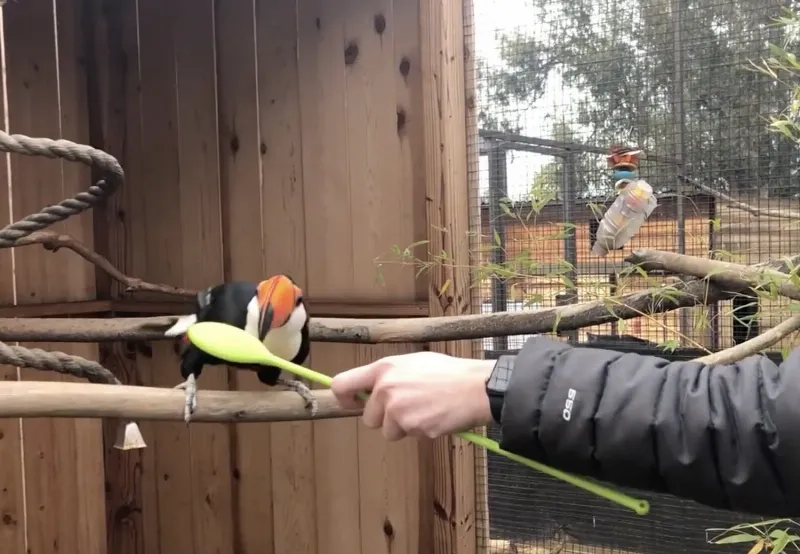 A colorful parrot successfully spinning in a circle, guided by a target stick, with a trainer offering a reward.
The Importance of Patience and Consistency
Bird training is a marathon, not a sprint. Every bird learns at its own pace. Some might pick up commands quickly, while others may take weeks or months to master a single behavior. Consistency is key: use the same cues, reward the same behaviors, and train in short, regular sessions.
“The most important thing any owner can bring to training is patience,” reiterates Dr. Rossi. “Celebrate the small victories, and don’t get discouraged by setbacks. The bond you build through this process is priceless.”
When considering advanced training or specific behaviors, remember that the underlying principles are universal. Even in contexts beyond typical pet ownership, such as understanding how do you train birds for research or specialized tasks, the emphasis remains on positive interaction and clear communication.
Conclusion: A Rewarding Partnership
Training your bird is an ongoing process that deepens your understanding and enriches your relationship. By employing patience, positive reinforcement, and a keen eye for your bird’s individual needs, you can unlock their potential and build a truly remarkable partnership. The journey of learning together, from simple step-ups to more complex behaviors, is a testament to the incredible bond we can forge with these intelligent and fascinating creatures. Whether you are exploring basic commands or delving into more complex training, remember that every interaction is an opportunity to strengthen your connection, making the “Dog Care Story” for avian companions one of trust, joy, and mutual respect.
