
Embarking on a running journey with your canine companion is a fantastic way to bond, stay active, and promote overall well-being for both of you. Canine fitness is a cornerstone of a healthy life, and having a furry running buddy can be a powerful motivator to hit the pavement. However, before you lace up your sneakers and hit the trails with your dog, it’s crucial to understand the proper training and preparation involved. This guide will walk you through the essential steps to train your puppy to become your perfect running partner, ensuring a safe, enjoyable, and rewarding experience for everyone. We’ll cover everything from age and breed considerations to building endurance and ensuring safety on your runs.
The Foundation: Suitability and Age-Appropriate Training
The first step in training your puppy to run with you is to assess their suitability for this activity. Not all dogs are naturally built for long-distance running, and importantly, puppies are still developing. Running is generally not safe for puppies whose bones and joints are still growing and maturing. For most breeds, it’s advisable to wait until they are around 1.5 years old before introducing them to consistent running routines. This critical waiting period allows their skeletal system to fully develop, minimizing the risk of injury.
Beyond age, breed characteristics play a significant role. Some breeds are inherently predisposed to endurance activities, while others are better suited for shorter bursts of energy. Researching your dog’s breed can provide valuable insights into their physical capabilities and potential limitations. Equally important is your individual dog’s temperament. Some dogs are naturally more energetic and eager to participate in strenuous activities, while others might be more laid-back.
Before embarking on any new physical regimen with your dog, a thorough veterinary checkup is essential. Your veterinarian can assess your dog’s overall health, identify any underlying conditions that might affect their ability to run, and provide personalized advice. This proactive approach ensures that running is a safe and beneficial activity for your canine friend. Remember, a well-informed owner is the first step towards a happy and healthy running partnership.
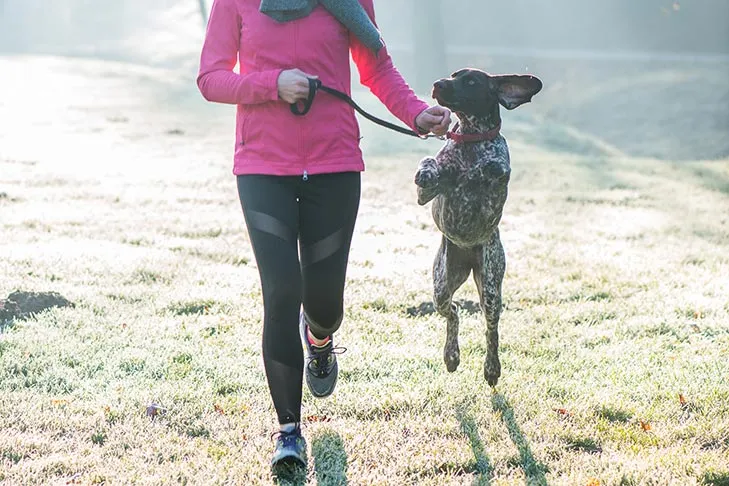 German Shorthaired Pointer running with a woman in the early morning. ©Laszlo Lorik – stock.adobe.com
Mastering the Basics: Loose-Leash Walking is Key
Before your puppy can confidently run beside you, they must first master the art of loose-leash walking. A dog that pulls incessantly on the leash during walks can quickly become a significant safety hazard when you pick up the pace to a run. The world is full of enticing distractions for dogs – from intriguing scents to scurrying squirrels. To keep your puppy focused and by your side, with the leash hanging in a relaxed “J” shape, you need to be a rewarding companion.
Utilize positive reinforcement techniques consistently. High-value treats, engaging toys, and enthusiastic praise are your most effective tools. Reward your puppy every time they maintain a slack leash. This consistent positive association will teach them that staying close and calm by your side is a highly desirable behavior. Consistency is paramount; always reinforce the desired behavior.
Crucially, you need to teach your puppy to stay on one specific side of you. Whether it’s their left or right, choose a side and stick with it. This prevents them from weaving in front of you or behind, which can lead to tripping hazards or tangled leashes. Begin this training at a walking pace. Always deliver rewards on the side you want them to stay on. For instance, if you want them on your left, offer treats only at your left leg. Once they’ve reliably mastered one side, you can introduce training for the other side with a distinct cue. For added convenience and control, you might consider investing in a hands-free dog leash.
Introducing Speed Cues for a Smooth Transition
Once your puppy is confidently walking politely at your side, it’s time to introduce the concept of increased speed. Having distinct verbal cues for different paces can significantly improve your communication and your dog’s responsiveness. For instance, a cue like “let’s go” can signal it’s time to move along during a walk. For running, a specific cue such as “get running” or “move it” can be used to indicate it’s time to pick up the pace. The more clear and consistent information you provide, the better your puppy will understand and respond to your expectations.
To teach these running cues, begin by interspersing short bursts of jogging or running within your regular walking routine. Immediately before you increase your speed, give your designated running cue. When your puppy naturally hurries to catch up to your new pace, offer immediate rewards. Similarly, you can teach a cue like “whoa” to signal your dog to slow down, which is equally important for safety and control.
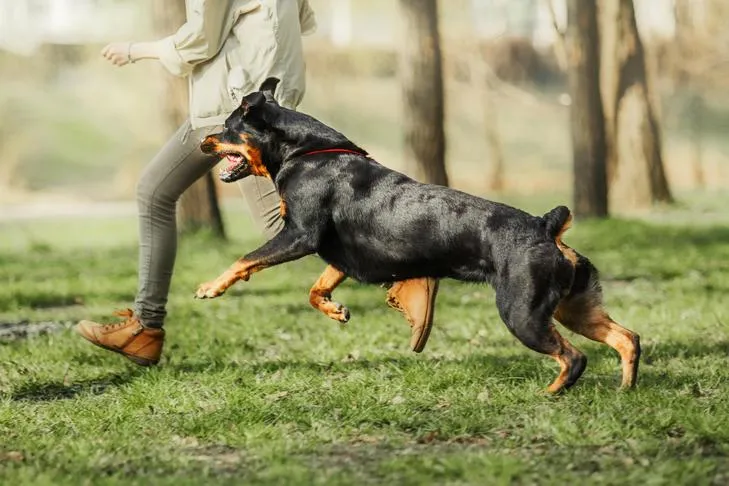 Rottweiler running in the park playing with its owner. ©OlgaOvcharenko – stock.adobe.com
Building Endurance Gradually
With your puppy now understanding how to stay by your side and match your pace, the next step is to gradually build their endurance. Just as humans need to build strength and stamina incrementally, so do dogs. Begin by incorporating short running intervals into your walks. With each subsequent outing, slowly increase the duration of the running segments while decreasing the walking time. This gradual progression allows your dog’s body to adapt to the demands of running without overexertion. After several weeks of consistent, progressive training, your puppy will be better conditioned for longer running distances.
Essential Tips for Safe and Enjoyable Runs
As your puppy becomes your dedicated running partner, prioritizing their safety and enjoyment is paramount. Keep these essential tips in mind to ensure every run is a positive experience:
- Warm-up and Cool-down: Always begin your runs with a few minutes of walking to warm up your dog’s muscles. Similarly, end your run with a walking cool-down to help their body recover.
- Weather Awareness: Dogs are more susceptible to heat and humidity than humans. Be mindful of weather conditions and avoid running in extreme temperatures.
- Hydration: Carry water on your runs and offer it to your dog regularly, especially during warmer weather or longer distances.
- Frequent Breaks: Allow your dog to take frequent breaks to drink, relieve themselves, and simply enjoy their surroundings.
- Leash Control: Only allow your dog to run off-leash in safe, designated areas, and only if they have a highly reliable recall amidst distractions. This ensures they will return to you when called.
- Monitor for Fatigue: Pay close attention to your dog’s body language. Signs of fatigue include excessive panting, lagging behind, or a reluctance to continue. Remember, dogs may push themselves to please their owners, even when they are tired.
 ©Przemyslaw Iciak – stock.adobe.com
Maintaining Fitness in Extreme Weather Conditions
Even dedicated runners sometimes face weather that’s too extreme for their canine companions. When running outdoors isn’t feasible due to intense heat, cold, or inclement weather, you can still maintain your dog’s physical conditioning indoors. For smaller dogs, a game of fetch down a long hallway or engaging in play on carpeted stairs can provide a good cardiovascular workout and engage their muscles. You can also set up a DIY obstacle course using everyday household items like hula hoops or cardboard boxes. For more structured indoor activity, many training facilities offer agility classes designed to get your dog running and jumping.
For dogs who need a more regulated workout, a treadmill can be an excellent option. While specialized dog treadmills exist, a standard human treadmill can also work, provided it’s long enough for your dog’s stride. It’s crucial to introduce your dog to the treadmill gradually and safely. Consider researching treadmill training techniques or consulting with a professional dog trainer. Never tie your dog to the treadmill or leave them unsupervised while they are on it.
References
- Canine Fitness: https://www.akc.org/expert-advice/health/fitness/
- Running Safely With Your Dog: https://www.akc.org/expert-advice/health/fitness/running-safely-with-your-dog/
- Puppy Information: https://www.akc.org/expert-advice/categories/puppy-information/
- Best Running Dogs: https://www.akc.org/expert-advice/health/best-running-dogs/
- Loose-Leash Walking: https://www.akc.org/expert-advice/training/basic-training/whos-walking-who-tips-to-teach-loose-leash-walking/
- Rewards and Positive Reinforcement: https://www.akc.org/expert-advice/training/basic-training/training-your-dog-with-rewards-and-positive-reinforcement/
- Training Rewards: https://www.akc.org/expert-advice/training/basic-training/training-rewards/
- Getting Fit With Your Dog: https://www.akc.org/expert-advice/health/how-to-get-fit-with-your-dog/
- Recall Training: https://www.akc.org/expert-advice/training/basic-training/teach-dog-to-come-when-called/
- Teaching a Dog to Fetch: https://www.akc.org/expert-advice/training/how-to-teach-a-dog-to-fetch-or-retrieve/
- Indoor Dog Games: https://www.akc.org/expert-advice/lifestyle/great-indoor-games-to-play-with-your-dog/
- Treadmill Exercise for Dogs: https://www.akc.org/expert-advice/health/use-your-treadmill-to-exercise-your-dog/
