
It’s a classic image: a dog owner with a pocketful of treats, rewarding a well-behaved pup with a tasty morsel. For decades, food has been the gold standard in dog training. But what happens when you have a dog that turns its nose up at even the most delicious snack? If you’re trying to figure out How To Train A Non Food Motivated Dog, you might feel frustrated or even helpless. The good news is that every dog has something that motivates them; the secret is discovering what it is and learning how to use it effectively.
Training a dog that isn’t interested in food isn’t about forcing a square peg into a round hole. It’s about expanding your toolkit and strengthening your bond by learning your dog’s unique language of motivation. This requires a shift in perspective from “my dog is stubborn” to “what does my dog truly value?” Understanding this is often considered the best way to train your dog because it builds on a foundation of mutual understanding rather than just transactions.
Why Isn’t My Dog Motivated by Food?
Before you label your dog as completely uninterested in food, it’s essential to explore the potential reasons behind their lack of enthusiasm. Sometimes, the issue isn’t a total absence of food drive, but rather a specific circumstance or preference.
Potential Underlying Reasons
- Stress or Anxiety: A dog that is anxious or overstimulated by its environment is often too stressed to eat. In training situations with too many distractions, their brain is in “fight or flight” mode, and digestion is the last thing on their mind.
- Low-Value Treats: Your dog might not be motivated by their regular kibble or a dry biscuit when more exciting things are happening. The reward must be more valuable than the distraction.
- They’re Simply Full: If you’re scheduling training sessions right after a meal, your dog may genuinely not be hungry. Try training when they have a bit of an appetite.
- Medical Issues: A sudden loss of interest in food can sometimes be a sign of a health problem, such as dental pain or gastrointestinal upset. If this behavior is new, a check-up with your veterinarian is a good idea.
- Genuine Preference: Some dogs, plain and simple, value other things more than food. This is particularly common in certain breeds bred for specific jobs, like terriers who might prefer a chase or retrievers who live for a game of fetch.
Understanding the “why” can help you adjust your strategy. You might need to find a quieter training space, upgrade your treats to something smellier like freeze-dried liver, or accept that your dog’s currency is play, not pellets.
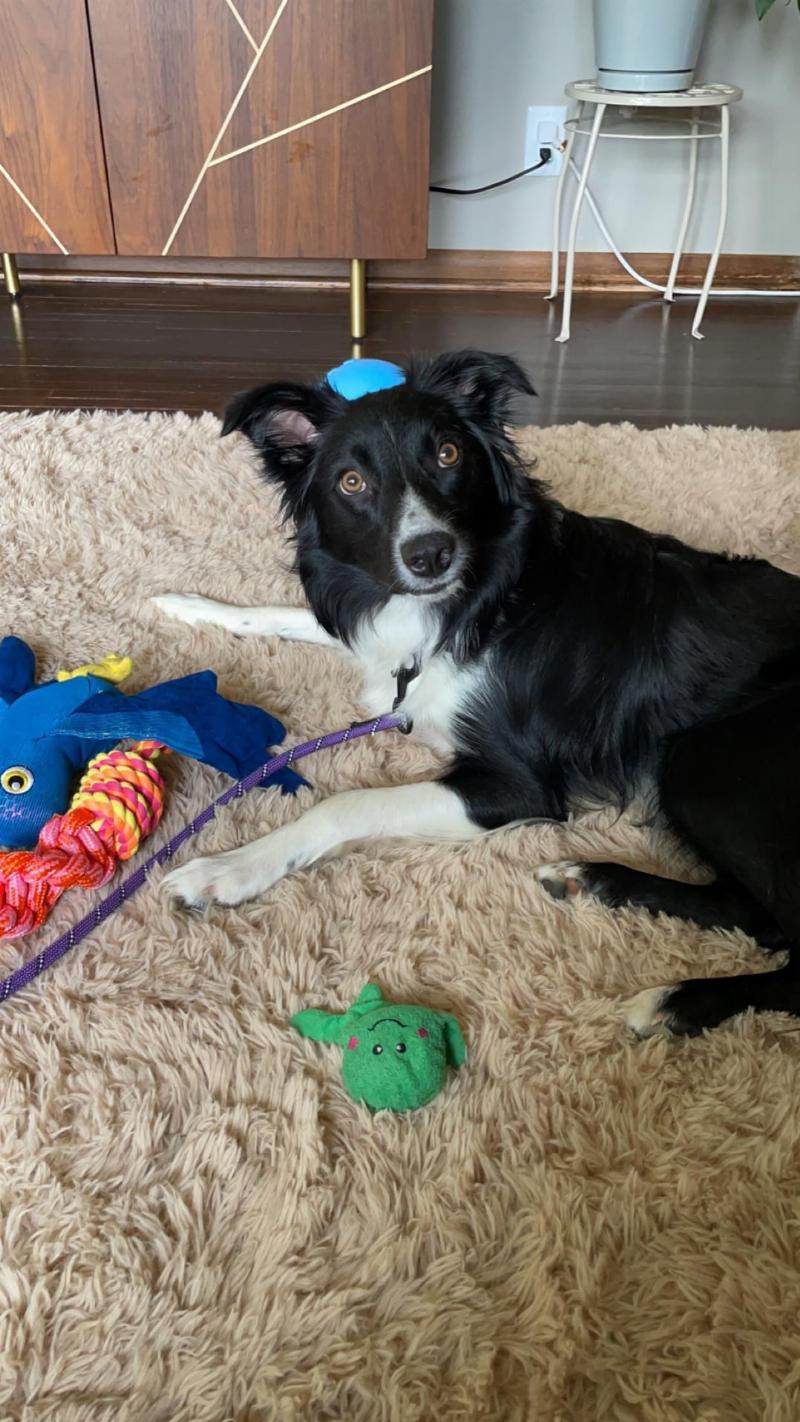 A Border Collie dog looking past a hand offering a treat, focusing instead on a tennis ball on the ground, showcasing the challenge of training a non food motivated dog.
Discovering Your Dog’s True Currency
The key to training a dog that isn’t food-driven is to become a detective. Your mission is to observe your dog and identify what makes their tail wag, their eyes light up, and their entire body wiggle with excitement. This becomes your new “high-value reward.”
The Power of Praise and Affection
For many dogs, especially those that are deeply bonded with their owners, your genuine praise and affection can be an incredibly powerful motivator. This is more than just a mumbled “good boy.”
- Use an enthusiastic, high-pitched voice: Your excitement is contagious.
- Combine voice with physical touch: Find out if your dog loves a good chest scratch, an ear rub, or vigorous pats on their side.
- Keep it short and sweet: The praise should be a quick burst of positive energy that marks the correct behavior, not a long, distracting cuddle session.
As canine behavior specialist Dr. Ethan Hayes notes, “We often underestimate the power of our own enthusiastic approval. For a social animal like a dog, sincere, joyful praise can be just as potent as a piece of cheese, especially when it comes from the person they trust most.”
Engaging Through Toy-Based Rewards
If your dog has a high play drive, toys can be your most valuable training asset. A game of tug or a quick toss of a ball can be the ultimate jackpot for a job well done.
- Identify their favorite toy: Is it a squeaky ball, a crinkly plush, or a rope for tug-of-war? Use this “special” toy only for training to keep its value high.
- Keep the reward brief but exciting: After your dog performs the desired behavior (e.g., a “sit”), immediately initiate a 10-15 second game of tug or throw the ball.
- Teach a “drop it” or “out” cue: This is crucial for maintaining control of the training session. The game ends on your terms, and you can then ask for the next behavior. A good dog training treat bag can be repurposed to hold a small tug or ball, keeping your hands free.
Using “Life Rewards” to Your Advantage
Life rewards, also known as real-world rewards, are things your dog wants to do in their everyday environment. By controlling access to these things, you can use them as powerful training opportunities. This concept is central to many modern training philosophies, including those taught by experts like andrea arden dog training.
Examples of life rewards include:
- Going outside: Ask for a “sit” before you open the door to the backyard.
- Greeting people: Ask for a “four on the floor” (no jumping) before they get to say hello to a guest.
- Getting on the couch: Ask for a “down” before giving them the “up” cue to join you.
- Sniffing an interesting spot on a walk: Ask for a moment of loose-leash walking before giving a “go sniff” cue.
This method integrates training seamlessly into your daily life, teaching your dog that polite behavior is the key to getting what they want.
A Step-by-Step Plan for Training
Once you’ve identified your dog’s preferred currency, you can build a training plan. The principles are the same as food-based training; only the reward is different.
1. “Charge” the Reward
Before you even begin, build the value of your chosen reward. If it’s a toy, engage in several fun-only sessions with it. If it’s praise, make your happy voice and scratches the best thing in the world. The dog needs to learn that this specific reward is amazing and worth working for.
2. Start in a Low-Distraction Environment
Set your dog up for success by starting in a quiet place, like your living room. Ask for simple behaviors you know they can do, like a “sit.” The moment their rear hits the floor, mark the behavior with a verbal “Yes!” and immediately deliver the reward—be it praise, a toy, or a life reward.
3. Keep Sessions Short and Positive
Training sessions should be brief, no more than 5-10 minutes at a time, especially in the beginning. Always end on a high note with a behavior your dog performed successfully. This keeps them engaged and eager for the next session. If your dog seems to be losing interest, it’s better to end early than to push through frustration.
4. Gradually Increase the Difficulty
As your dog becomes proficient with a cue in a quiet environment, you can start to “proof” the behavior. This means practicing in slightly more distracting settings, like your backyard, and then eventually on quiet walks. This process can be challenging and sometimes feels like you are trying to learn how to house train a stubborn dog; patience and consistency are your best friends.
5. Fade the Reward
Just as with food rewards, you don’t want to be stuck rewarding every single behavior forever. Once a cue is reliable, move to an intermittent reinforcement schedule. Reward their best and quickest responses, not every single one. This keeps them guessing and often results in more enthusiastic performance.
Frequently Asked Questions (FAQ)
What if my dog is motivated by nothing?
It’s highly unlikely a dog is motivated by absolutely nothing. More often, the owner hasn’t found the right motivator or the dog is experiencing stress, fear, or a medical issue that is overriding its ability to engage. Go back to basics: quietly observe your dog for a few days. What do they choose to do in their free time? That is your starting point.
Can you train a dog without any rewards?
While you can train a dog using force or intimidation, this approach is outdated and severely damages the bond between you and your dog. It often creates anxiety and aggression. Positive reinforcement—rewarding desired behaviors—is the most effective, humane, and enjoyable way to train, whether the reward is food, a toy, or praise.
My dog only likes toys. How do I get their attention when I don’t have one?
The goal is to use the toy as a reward, not a bribe. Keep the training toy out of sight until it’s time to reward the behavior. Over time, your verbal praise and the training routine itself will become reinforcing. You can also work on building value in other rewards, like affection and life rewards, so you have more tools at your disposal.
Is it okay to use different types of rewards?
Absolutely! Using a variety of rewards can keep training interesting for your dog. A simple “sit” inside might earn them praise, while a challenging recall at the park might earn them their favorite squeaky ball. Tailor the value of the reward to the difficulty of the task you’re asking them to perform.
What if my dog’s motivation changes from day to day?
This is completely normal. Just like humans, a dog’s preferences can shift based on their mood, energy level, and environment. A flexible trainer learns to read their dog’s body language in the moment and adjust their approach accordingly. Pay attention to what your dog is “telling” you they want to work for today.
Your Bond is the Ultimate Reward
Learning how to train a non food motivated dog is a journey that can ultimately be incredibly rewarding for both of you. It forces you to look beyond the easy solution and truly get to know your canine companion on a deeper level. By discovering what your dog genuinely loves and using that to build communication and cooperation, you are doing more than just teaching cues; you are strengthening the invisible leash of trust and respect that connects you. The result is a well-behaved dog and a relationship built on a foundation of mutual understanding.
