
As cat owners, we often seek ways to enrich our feline companions’ lives and manage their routines more effectively. One unique aspect of cat behavior that can be adapted is their natural inclination to bury their waste. This stems from their ancestry, where burying waste was crucial for survival by masking their scent from predators. While our domestic cats may not face the same threats, this instinct remains strong. Adapting their environment to accommodate this need can lead to a more harmonious living situation for both you and your cat. This guide will explore how to create an appealing outdoor toilet for your cat, ensuring their comfort and natural behaviors are respected.
Understanding Your Cat’s Instincts
Domestic cats are descendants of the African wildcat, a creature that thrives in arid, sandy environments. In such terrains, the ability to dig and bury waste is paramount for concealing their presence from predators. Even though our house cats are far removed from these ancestral challenges, the innate need to dig and cover their waste persists. They still require specific conditions to feel secure and comfortable during toileting. Unfortunately, the typical modern garden, often featuring decking or concrete, doesn’t naturally provide these ideal conditions. Therefore, it’s up to us to create a suitable outdoor toileting area that mimics their natural habitat and instincts.
Creating the Ideal Outdoor Toilet
The cornerstone of successfully transitioning your cat to an outdoor toilet is providing the right medium for digging and burying. Materials like soil or fine play sand are excellent choices because they are easy for cats to manipulate with their paws. You can establish this outdoor toilet in a few ways. One method is to set up an outdoor litter tray filled with your chosen substrate. Alternatively, you can dig a dedicated spot in your garden, roughly the size of a standard litter tray or larger, and fill it with soil or sand. It is crucial to ensure this outdoor facility is accessible year-round. In colder months, if the ground freezes, you must provide an alternative indoor option to prevent your cat from developing negative associations with the outdoor toilet.
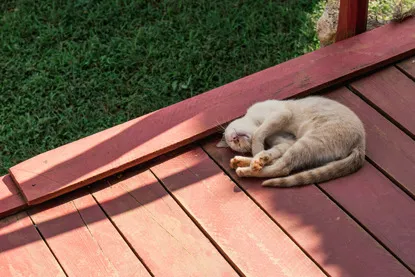 Ginger cat curled up relaxing on garden decking
Modern gardens with decking and concrete don’t make great cat toilets.
Strategic Location is Key
For cats, the act of toileting is a vulnerable moment, requiring a sense of privacy and security. Therefore, the location of their outdoor toilet is critical. It should be situated in a quiet, safe area, far from excessive noise and the usual pathways of neighborhood cats. Ideally, the toilet should be placed within your cat’s core territory, as close to the house as possible. Positioning it at the edge of the garden, rather than in the center, is often preferred. To further enhance their sense of security, consider planting shrubs or installing a small fence around the area to provide visual screening and a feeling of seclusion.
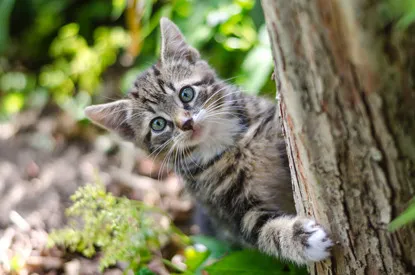 Tabby kitten peering around a tree
Your cat will prefer a private toilet obscured from view.
Timing and Environmental Considerations
When introducing your cat to a new outdoor toileting routine, it’s most effective to do so during warmer, drier periods of the year. The appeal of an outdoor toilet diminishes significantly in harsh winter weather. To mitigate the effects of the elements, you can erect a small shelter or windbreak around the designated area. This will offer protection from rain and wind, making the outdoor toilet a more inviting option even in less favorable conditions.
Maintaining Indoor Options
Encouraging a cat to adopt an outdoor toilet can sometimes be a gradual process, and success is not always guaranteed. It is therefore imperative that you do not alter or remove their existing indoor litter box during this transition. Providing a consistent indoor option ensures your cat always has a familiar and accessible place to relieve themselves, preventing stress and potential behavioral issues. By creating an attractive and accessible outdoor toilet while maintaining their indoor facility, you give your cat the choice and the time to adapt. Hopefully, over time, they will increasingly choose to use the outdoor facility you’ve prepared.
If you’re facing challenges with your cat’s toileting habits, exploring resources on how do you train a cat to poop outside can offer further insights. Remember, patience and consistency are vital when implementing any new routine for your feline friend. You might also find information on potty training cats on the toilet or general litter training a cat beneficial in understanding feline behavior. For those interested in advanced methods, a cat toilet training system could be an option, alongside various ways to litter train a kitten.
