
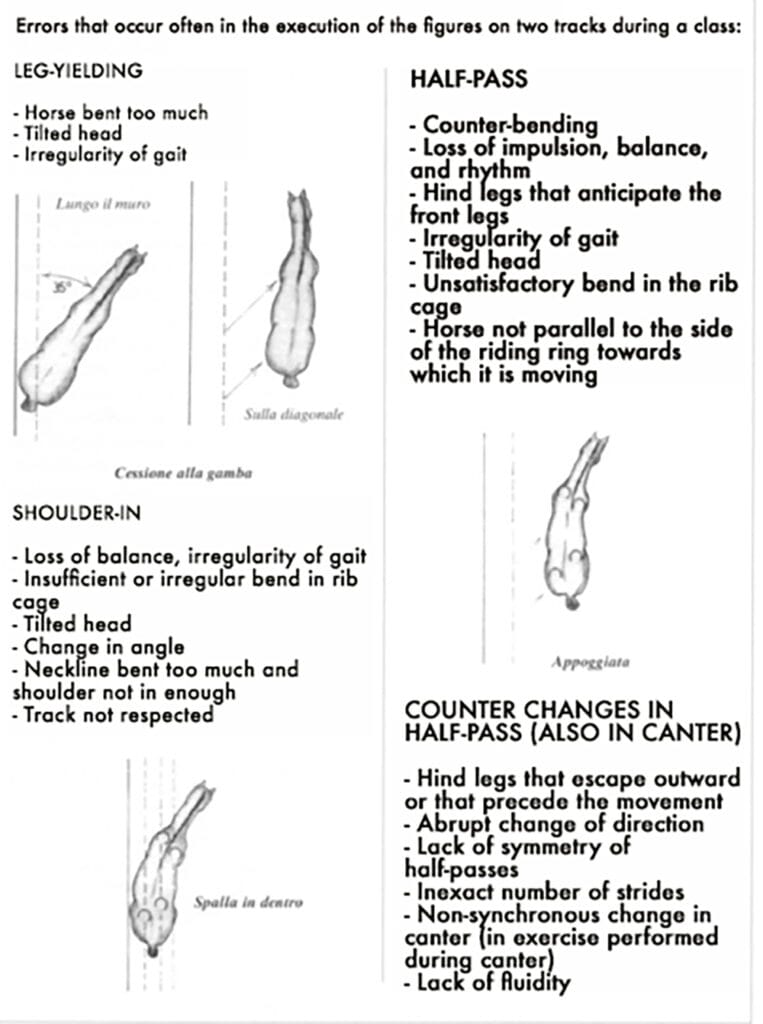
The leg yield is a fundamental lateral movement in equestrian training, essential for developing a harmonious partnership between horse and rider. It involves the horse moving both forward and sideways, with its inside legs crossing in front of its outside legs, while maintaining a straight body. This exercise is crucial for suppling the horse, improving its responsiveness to aids, and building a foundation for more advanced movements.
The Importance of the Leg Yield
The leg yield offers a multitude of benefits for both horse and rider:
- Enhanced Communication: It refines the rider’s ability to coordinate weight, leg, and rein aids, fostering a clearer communication channel with the horse.
- Horse’s Understanding: It teaches the horse to understand and react precisely to these specific aids.
- Physical Development: The movement supples, loosens, and straightens the horse’s body.
- Improved Carriage: It encourages the horse to step further underneath its center of gravity, promoting self-carriage.
- Suppleness and Straightness: It increases the horse’s ability to round its back, maintain straightness during transitions, and follow a track on flat ground and while jumping.
- Foundation for Advanced Movements: It serves as the groundwork for more complex lateral exercises like shoulder-in, haunches-in, turn on the forehand, and half-pass.
- Dressage Requirement: The leg yield is a mandatory movement in First Level Dressage Tests Two and Three.
Executing the Leg Yield: Step-by-Step
The leg yield can be effectively taught and refined by following a progressive approach, starting on the rail and then moving to the open arena.
Step One: On the Rail
Begin by approaching the rail at approximately a 30-degree angle. As the horse’s forehand reaches the track, simultaneously execute three key actions:
- Weight Shift: Slightly weight your inside seat bone. This can be achieved by turning your inside hip slightly forward.
- Leg Aid: Position your outside leg back behind the girth. This leg acts as both a driving aid to keep the horse moving forward and as a support to prevent the haunches from swinging outwards. Your inside leg is placed just behind the girth, slightly less than the outside leg, to initiate the sideways movement.
- Head Flexion: Gently flex your inside hand inward, just enough to encourage the horse to look slightly towards the inside, allowing you to see its inside nostril. This is similar to asking the horse to look around the arc of a 20-meter circle.
Once the horse begins to leg-yield, maintain a normal feel on your inside rein and apply just enough inside leg pressure to keep the horse moving steadily and rhythmically down the rail. Control the degree of bend and keep the neck straight with a consistent feel on your outside rein. Initially, ask for a few steps of leg-yield, then release the aids by straightening and moving forward. Repeat this process on subsequent long sides. As the horse becomes comfortable with this angle and demonstrates good rhythm and balance, you can gradually ask for a slightly larger angle.
It’s important to maintain a rhythm and balance; a maximum angle of about 30 degrees is generally advisable to avoid compromising the quality of the movement.
Step Two: In the Open Arena
Once proficient on the rail, transition to practicing the leg yield in the open arena, often at a trot. The angle here can be slightly greater than on the rail, typically suitable for First Level dressage tests.
To achieve this increased angle, use your inside (right) leg a little more actively. To prevent the horse from rushing forward in response to your leg, use a slightly firmer feel on your outside rein. The primary focus remains on maintaining rhythm and balance. As long as you can feel the horse stepping forward and sideways evenly, you can ask for this degree of angle. You’ll notice the evenness of the leg pairs indicates good rhythm: the horse’s right front and left hind legs move sideways, followed by the other pair.
The key principle is that the horse must move forward and sideways easily, creating a sensation of “swinging along” with the horse. Apply only the necessary amount of leg and hand aids to achieve this. When the horse responds correctly, lighten your aids until they are needed again. If you push the horse sideways beyond its capacity to maintain rhythm and balance, you will feel it push you onto your outside seat bone, fall through your outside leg and rein, and become strong in your hand. In such cases, ride forward to regroup and then try again with a less exaggerated angle.
Mastering the leg yield requires patience, clear aids, and a focus on the horse’s balance and rhythm, ultimately enhancing its responsiveness and suppleness.
