
Bringing a Goldendoodle puppy home is an exciting time, and establishing a solid potty training routine from the start is crucial for a happy coexistence. Goldendoodles, known for their intelligence and eagerness to please, share the core puppy training needs with all breeds. This guide will walk you through the essential steps and considerations for successfully potty training your Goldendoodle, ensuring a smooth transition into your home.
Understanding the Potty Training Timeline
It is highly recommended to begin potty training your Goldendoodle puppy the moment they arrive. Delaying this process can lead to the development of unwanted habits, making it more challenging to establish good ones. While Goldendoodles are quick learners, consistent and diligent training is key. Reliably potty-trained puppies typically emerge around four months of age, but mastery, evidenced by at least a month of accident-free behavior, often takes closer to six months. Even then, occasional accidents can occur if their cues are missed or they are left too long. Failing at potty training is unfortunately a significant reason pets end up in shelters, making your commitment to this process vital.
The Process of Potty Training Your Goldendoodle Puppy
Successful house training requires patience, the right tools, and a consistent approach. You will need a crate with an adjustable partition, baby gates, and enzymatic cleaners specifically designed to eliminate urine odors. Lingering scents can inadvertently attract your puppy back to the same spot, reinforcing the undesirable behavior.
Teaching your puppy to relieve themselves exclusively outdoors is a time-consuming but essential task. For the initial weeks, constant supervision is necessary. Take your puppy outside at least once every hour they are actively playing. Adjusting your schedule to accommodate your puppy’s needs is paramount.
To prevent accidents, close off access to rooms where your puppy can be out of your sight. Puppies often seek corners or other rooms to eliminate, and if you miss these moments, the “damage” is done, as they may consider these spots appropriate for future use. If you cannot effectively restrict access to other rooms, consider attaching a six-foot lead to your puppy and your belt. This keeps them within your sight and prevents you from forgetting them as you move around the house.
When returning home to a crated puppy, always carry them directly outside to their designated potty area immediately after opening the crate. Allowing them to walk out on their own after being confined for an extended period increases the likelihood of an accident en route. Puppies generally won’t eliminate while being carried, making this a useful technique to get them outside quickly.
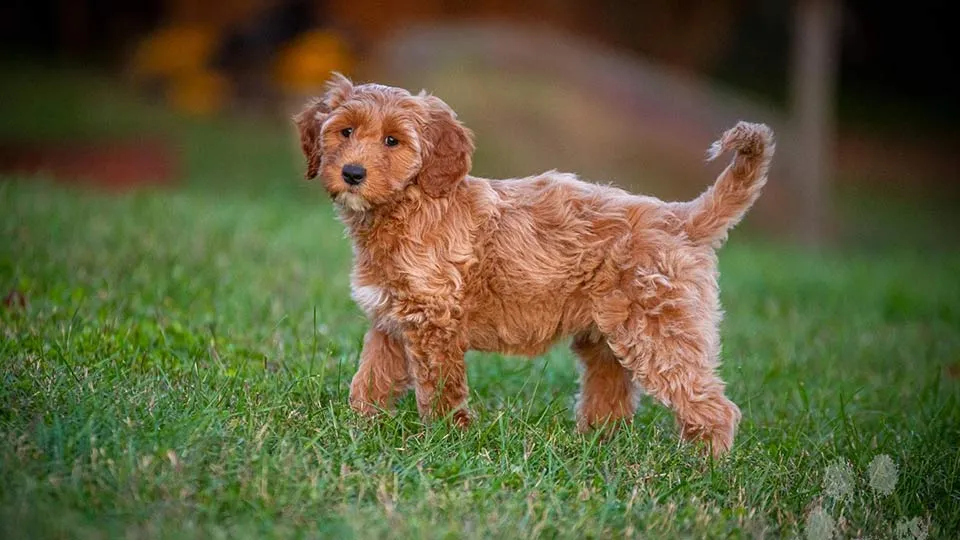 A red Goldendoodle stands alert in a grassy field.
You can also teach your puppy a more effective way to signal their need to go outside through “bell training.” Hang a bell on a rope from the doorknob of the primary exit door used for potty breaks. Ensure it’s low enough for your puppy to reach with their nose. This door should be in a high-traffic area where you spend most of your time with your puppy. Each time you take your puppy out, pause and use their nose to ring the bell, then immediately open the door. This associates the bell’s sound with access to the outdoors. Be aware that puppies may sometimes ring the bell just to play; it’s important to respond to every cue initially to avoid “untraining” them from using it to communicate their actual needs.
Key Elements for Successful Potty Training
Understand Your Puppy’s Cues
Most puppies need to eliminate shortly after meals. Make it a routine to take your puppy out immediately after they eat. Also, observe their behavior when it’s been over an hour since their last potty break. Look for signs like walking or pacing by the door, whining, circling, sniffing, or squatting. These are immediate signals to take them to their designated potty spot. Recognizing these cues is vital for preventing accidents.
Maintain a Consistent Feeding Schedule
A regular feeding routine is fundamental to predictable potty needs. Monitoring your puppy’s food and water intake allows you to better anticipate when they will need to go. Consider offering water only at mealtimes and specific intervals between meals to help gauge necessary potty times. A young puppy’s small bladder can only hold so much, and a drink of water may necessitate a potty break within 10-15 minutes.
Utilize Clear Commands
Choose a consistent command, such as “go potty” or “go pee,” to signal your intention for them to eliminate. Consistency is key to avoiding confusion. If you catch your puppy in the act of eliminating in the wrong place, use a firm “no” or “stop” to interrupt them. Immediately after, take them to their designated potty area to reinforce the correct location.
Employ Positive Reinforcement
Positive reinforcement involves rewarding your dog for correct behavior. While food rewards can be effective, they may sometimes be associated with the act of pottying itself rather than the location. Instead, focus on enthusiastic verbal praise like “good puppy!” or “yes!” accompanied by petting and positive attention.
Proper Cleaning of Accidents
Accidents are an inevitable part of puppyhood. When they occur, use an enzymatic cleaner to thoroughly remove all traces of urine odor. Prevent your puppy from accessing rooms where previous accidents have happened by closing doors or using baby gates, effectively “closing the bathroom door.”
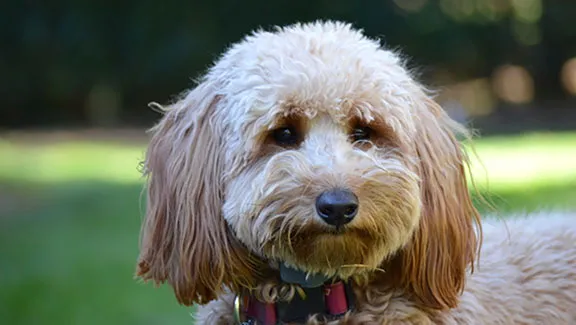 Cooper, a Goldendoodle, is pictured looking towards the camera.
Crate Training for Unsupervised Times
A crate serves as a safe den for your puppy. Ensure the crate is just large enough for them to stand, turn around, and lie down comfortably, but not so large that they can use one end as a bathroom. An adjustable partition can allow the crate to “grow” with your puppy. Use the crate for unsupervised periods, as dogs are naturally reluctant to soil their den. Importantly, never use the crate for punishment; it should always be a positive and safe space, ideally furnished with safe chew toys. As your puppy demonstrates bladder control, gradually increase the crate space. If an accident occurs, reduce the space to the previous setting and try again after a few days.
Overnight Success with Your New Puppy
On the first night, place the crate next to your bed. Keep your puppy awake until your bedtime. Take them out for a final potty break, then place them in the crate with non-squeaky toys. A Snuggle Puppy can provide comfort. After closing the crate door, allow your puppy to cry and whine. You can place your hand through the crate for reassurance but avoid opening it for at least three hours. Your puppy may settle quickly but might wake crying soon after.
Allow your puppy to self-soothe back to sleep. Only take them out for a potty break if three hours have passed since their last outing and they are actively waking you. Never wake a sleeping puppy. Each night, the crying should decrease, and sleeping periods should lengthen. Within a week, you may find you and your puppy have slept through the night without a potty break. Be prepared for them to need to go out immediately upon waking in the morning.
Sample Daily Schedule for a Young Goldendoodle Puppy (2-6 months)
This schedule is a guideline, assuming the owner can be home at lunchtime. For families with members home during the day, more supervised playtime outside the crate can be incorporated.
- 7:00 AM: Potty break outside.
- 7:15 AM: Playtime in a supervised area.
- 7:30 AM: Feeding and water. Remove the dish after 15-20 minutes.
- 8:00 AM: Potty break outside. Crate confinement when leaving, with safe chew toys. If home, supervised playtime with potty breaks every 45-60 minutes.
- Noon: Potty break outside (if home for lunch).
- 12:15 PM: Playtime.
- 12:30 PM: Feeding and water.
- 12:45 PM: Potty break outside.
- 1:00 PM: Crate confinement when leaving. Rest time indoors.
- 4:00 PM: Potty break outside.
- 5:00 PM: Potty break outside (upon returning home from work).
- 5:15 PM: Playtime.
- 5:30 PM: Feeding and water.
- 5:45 PM: Potty break outside.
- 6:00 PM onwards: Supervised playtime, with potty breaks every 45-60 minutes.
- 7:30 PM: Feeding and water.
- 7:45 PM: Potty break outside.
- 8:00 PM onwards: Keep puppy awake and engaged, with potty breaks every 45-60 minutes until bedtime.
- 11:00 PM: Final potty break, then crate confinement overnight.
This sample schedule highlights the time commitment involved. Ideally, your puppy should have ample supervised time outside the crate in the evenings for quality bonding and basic obedience training.
Essential Tips for Potty Training Your Goldendoodle
- Dedicate Time: If possible, take time off work when your puppy first arrives to focus on training and adjust to their new environment. The initial weeks require significant attention, including overnight interruptions.
- Understand Crate Limits: A puppy’s daytime crate confinement limit is generally 3 hours at 8 weeks, increasing by approximately one hour per month of age. Following confinement, a minimum of one hour of supervised playtime is recommended before re-confining, if feasible.
- Focused Potty Breaks: During designated potty breaks, avoid distractions and playtime. The focus should be solely on elimination. Your puppy may need multiple trips to fully empty their bladder.
- Designated Potty Spot: Establish a specific area for your Goldendoodle to eliminate. Returning them to a familiar spot aids in their understanding of where they are supposed to go.
- Carry to Potty Area: Until your puppy demonstrates consistent bladder control, always carry them from their crate to the designated potty area to prevent accidents.
- Separate Potty and Play: Immediately bring your puppy back inside after a successful potty break. If you intend to play or go for a walk, do so in a separate outing to avoid diluting the purpose of the potty break.
- Address Submissive Urination: Some puppies may urinate when excited or greeting people. Avoid scolding, as this can worsen the issue. Remain calm, avoid direct eye contact initially, and know that this behavior often improves with age and confidence.
In conclusion, potty training a Goldendoodle requires patience, consistency, and keen observation. Their responsive temperament makes them ideal candidates for positive reinforcement methods, making the process rewarding for both you and your new canine companion.
