
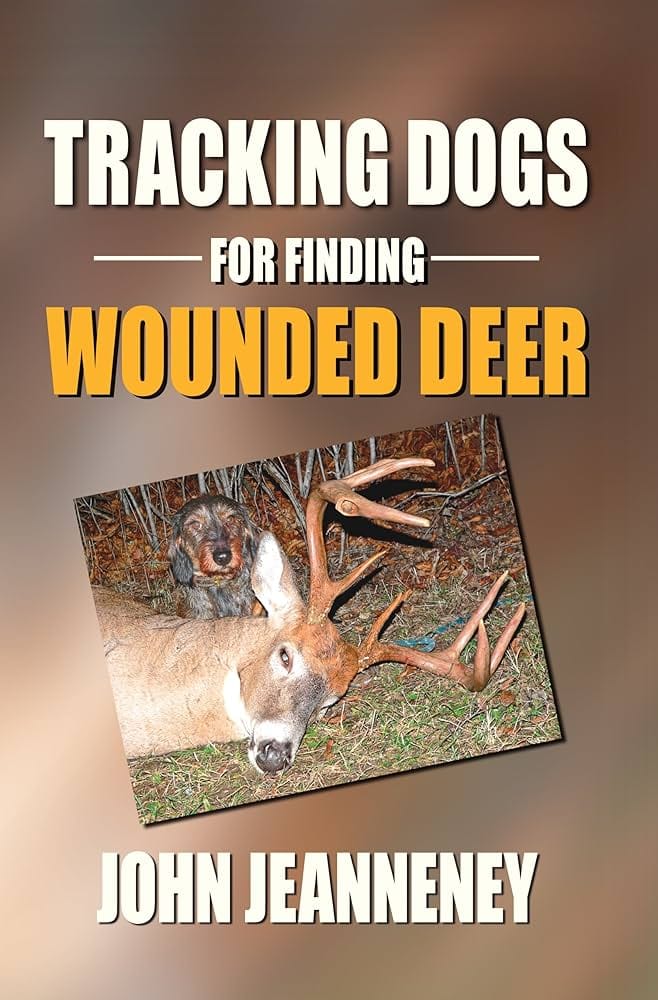
Training a dog to track deer is a rewarding experience that can deepen your bond and enhance your hunting adventures. It requires patience, consistency, and a solid understanding of canine scent work. This guide will walk you through the essential steps, from basic scent introduction to advanced tracking techniques, ensuring your canine companion becomes a reliable partner in the field.
Understanding the Basics of Scent Tracking
At its core, deer tracking is about leveraging a dog’s natural olfactory abilities. Dogs possess a sense of smell exponentially more powerful than humans, capable of detecting and differentiating scents from great distances and after significant time has passed. Understanding how your dog perceives scent is the first step.
How Dogs Perceive Scent
A dog’s nose is a marvel of biological engineering. Their nasal passages are lined with millions of scent receptors, and the part of their brain dedicated to processing smells is proportionally much larger than ours. When a dog tracks, they are not just following a scent trail; they are analyzing a complex tapestry of olfactory information, including:
- Scent Particles: These are microscopic particles shed by the deer (skin cells, hair, urine, feces).
- Ground Disturbance: The scent left by the deer’s passage, disturbing the soil and vegetation.
- Air Currents: How the scent is carried by the wind, providing directional cues.
The Importance of Scent Drive
Every dog has an innate scent drive, but its intensity varies by breed and individual. Breeds like Bloodhounds, Basset Hounds, and various German Shepherds have been selectively bred for their tracking and hunting capabilities. However, even dogs without a specific tracking lineage can be trained with the right methods. Recognizing and nurturing your dog’s natural inclination to follow a scent is crucial for successful deer tracking.
Early Training: Building the Foundation
Before you even think about a live deer scent, it’s vital to establish a strong foundation with basic obedience and scent games. This ensures your dog is focused, responsive, and understands the concept of following a scent command.
Basic Obedience and Focus
A dog that is easily distracted or disobedient will struggle with the concentration required for tracking. Commands like “sit,” “stay,” “come,” and “heel” are fundamental. Practice these in various environments to ensure reliability. A strong “come” command is particularly important for safety in the field.
Scent Introduction Games
Simple games can introduce your dog to the concept of following a scent to a reward:
- Find It: Start by hiding a favorite toy or treat a short distance away while your dog watches. Release them with a command like “Find it!” As they improve, increase the distance, complexity of the hiding spots, and the time delay between hiding and seeking.
- Scent Balls: Use a small canvas dummy or a rolled-up sock. Scent it with a high-value treat or a scent lure (like a commercial dog scent product). Toss it a short distance and encourage your dog to find it. This teaches them to work with a specific scent object.
Introducing Deer Scent
Once your dog has a solid grasp of basic obedience and scent games, you can introduce them to deer scent. It’s best to start with artificial lures or shed deer hair before progressing to live game.
Using Scent Lures and Deer Hair
Commercial deer scent lures are readily available and provide a safe way to introduce your dog to the target odor. You can also collect shed deer hair from areas where deer frequent.
Steps for Introduction:
- Scented Object: Place a small amount of lure or deer hair onto a canvas dummy or rag.
- Short Drag: Drag the scented object a short distance (10-20 yards) in an open area, creating a visible trail.
- Command and Follow: Have your dog “sit” and “stay” while you lay the drag line. Then, release them with your tracking command (e.g., “Track,” “Find,” “Seek”).
- Reward: When your dog finds the scented object, praise them enthusiastically and offer a high-value treat.
- Progression: Gradually increase the length of the drag line, add turns, and introduce slight variations in terrain.
Working with Shed Deer Antlers
Shed deer antlers are another excellent, legal, and ethical way to introduce deer scent. They are durable and can be easily scented. Treat them similarly to scent lures, dragging them to create a trail.
Advanced Tracking Techniques
As your dog becomes proficient with artificial scents and shed antlers, you can gradually introduce more challenging scenarios, eventually working towards tracking actual deer.
Laying Scent Trails
- Length and Complexity: Start with shorter trails (50-100 yards) with a few simple turns. As your dog succeeds, increase the length to several hundred yards and incorporate more complex turns, dead ends, and changes in terrain.
- Time Delay: Begin with minimal time delay (a few minutes) and gradually increase it to several hours. This teaches your dog to work a colder trail.
- Varying Conditions: Practice in different weather conditions (wind, rain, dry heat) and on various types of terrain (woods, fields, hills). This prepares your dog for real-world tracking.
- The “Finish”: The end of the track should always be rewarding. This could be finding the scented object, a pile of deer treats, or even a controlled encounter with a penned deer if you have access to such facilities.
Introducing Live Deer Scents (Ethical Considerations)
This is the most advanced stage and requires careful consideration of ethical and legal guidelines. In many areas, it is illegal to use live deer for training. However, if you have access to legally permitted facilities or situations, here’s how to approach it:
- Controlled Environments: Use a penned deer or a designated training area where a deer has recently been.
- Short, Fresh Trails: Start with very short, fresh trails laid by the deer itself.
- Supervision: Always supervise your dog closely to ensure they do not catch and harm the deer. The goal is tracking, not pursuit or capture.
- Legal Compliance: Crucially, ensure you are adhering to all local and state regulations regarding the use of live game for training. Many areas prohibit this entirely.
Handling Challenges in Tracking Training
Even with the best methods, you may encounter challenges. Understanding common issues and their solutions is key.
Common Tracking Problems and Solutions
- Dog Loses the Trail: This is common, especially on cold trails or in difficult conditions.
- Solution: Go back to the last known point of the scent. If the dog is still struggling, shorten the trail, reduce the time delay, or simplify the terrain. Ensure your “find it” command is clear and rewarding.
- Dog Gets Distracted: Other scents (rabbits, squirrels, food) can pull your dog off track.
- Solution: Practice in areas with fewer distractions initially. Use a longer leash or a scent-proof tracking harness to provide more control. Reinforce the importance of the primary scent with strong rewards. For hunting scenarios, ensure your dog is not trained on non-target game.
- Dog Works Too Fast or Too Slow: Some dogs may rush the track, while others might be hesitant.
- Solution: Adjust your training based on your dog’s pace. If they are too fast, practice with longer leashes and introduce more complex trails that require careful nose work. If too slow, ensure the reward is motivating and the trails are clear and not overly challenging initially.
- “Hot Nosing” vs. “Cold Nosing”: Some dogs prefer to follow very fresh scents (“hot nosed”), while others excel at picking up older scents (“cold nosed”).
- Solution: You can train for both, but understand your dog’s natural inclination. If they are naturally cold-nosed, focus on increasing time delays. If hot-nosed, work on trails with shorter delays and more immediate rewards.
Training Gear Essentials
Proper equipment can make the training process smoother and safer for both you and your dog.
Essential Tracking Gear
- Tracking Harness: A well-fitting, comfortable harness designed for tracking is essential. It should allow freedom of movement while providing a secure point of attachment for the leash.
- Long Leash: A 30-50 foot leash made of lightweight but strong material (like biothane or nylon) is necessary for allowing your dog to work the trail without restriction.
- Scent Lures/Deer Hair: As mentioned, these are vital for initial training.
- Dummy/Rag: A canvas dummy or a sturdy rag to hold the scent lure or hair.
- High-Value Treats: Small, tasty treats that your dog absolutely loves will be your primary reward.
- Boots (Optional): If you’ll be tracking in rough terrain or areas with potential hazards, dog boots can protect your dog’s paws.
Integrating Tracking into Hunting
Once your dog is proficient, you can integrate their skills into your deer hunting activities. This typically involves training your dog to follow the scent of a wounded deer.
Training for Blood Trailing
Blood trailing is a specialized form of tracking that focuses on the scent of blood.
- Introduce Blood Scent: Use a scent lure that incorporates blood, or carefully collect a small amount of blood from a legally harvested animal (ensure this is permissible in your area). Add this to your scent dummy.
- Short Blood Trails: Lay short trails with a clear blood source at the end.
- Gradual Increase: Slowly increase the length and time delay, similar to regular scent trailing.
- Real-World Practice: In a controlled hunting scenario where a deer has been wounded and legally recovered, you can ask your dog to track the blood trail to the downed animal. Always ensure you are complying with hunting regulations.
The Benefits of Deer Tracking Training
Training your dog to track deer offers numerous advantages:
- Enhanced Hunting Success: A well-trained tracking dog can significantly increase your chances of recovering wounded game, minimizing lost animals and ethical concerns.
- Stronger Bond: The intensive training process builds trust, communication, and a deeper relationship between you and your dog.
- Canine Enrichment: It provides mental and physical stimulation for your dog, channeling their natural instincts in a productive way.
- Safe and Ethical Hunting: By helping to recover game, you contribute to more ethical hunting practices.
Conclusion: A Partnership Forged in Scent
Training a dog to track deer is a journey that requires dedication, understanding, and a passion for the outdoors. By starting with a strong foundation, introducing scents systematically, and practicing consistently, you can develop a reliable tracking partner. This shared pursuit not only enhances your hunting experience but also creates an unbreakable bond, proving that the best stories are often written by the trails our dogs lead us on. Remember to always prioritize ethical training methods and legal compliance, ensuring the well-being of both your dog and the wildlife.
