
When you welcome a dog into your home, you’re not just gaining a pet; you’re establishing a relationship built on trust and clear communication. However, leaving your dog to roam freely when you’re not around can inadvertently create confusion and lead to behavioral problems. This is where crate training, often misunderstood, emerges as a crucial tool for fostering a calm, well-behaved canine companion and preserving the owner-dog dynamic. Properly implemented, the crate serves not as a prison, but as a safe haven, a private space where your dog can learn to relax and be comfortable, ultimately preventing a host of common household issues.
The benefits of crate training are multifaceted and directly address common challenges faced by dog owners. It acts as a preventative measure against destructive behaviors such as peeing and pooping indoors, preventing the development of nuisance barking, pacing, and over-alertness at windows. Furthermore, a crate provides your dog with a personal sanctuary, their own “room” in the house, which helps them learn to self-soothe and relax when left alone. This can significantly contribute to a calmer state of mind overall and reinforces your position as the decision-maker in the relationship, with your dog understanding their role as a follower.
Consider the alternative: a dog left to its own devices all day makes its own decisions. When you return, expecting immediate obedience, it’s a steep climb. If your dog has spent the day engaging in “window surveillance” and barking at every passing movement, it’s unlikely to cease these habits on command. Similarly, a dog accustomed to free-roaming and rummaging through the house will struggle to understand boundaries regarding the laundry basket or trash can. Confusion also arises when a dog is allowed on the couch all day but then scolded for it upon your return. Without your presence to enforce rules, the dog perceives these freedoms as implicitly permitted. This lack of clear boundaries, stemming from excessive freedom, is a primary cause of behavioral problems and can even complicate the owner-dog relationship, blurring the lines of leadership. Handing over decision-making responsibilities to your dog when you leave is both unreasonable and unfair, making it difficult for them to relinquish those decisions when you return. Therefore, to maintain a respectful relationship, prevent trouble, and preserve good behavior, crating your dog is a beneficial and proactive approach.
Embracing the Crate as a “Casa”
Many owners feel a pang of guilt when using a crate, a sentiment that can unfortunately be mirrored by their dogs. It’s important to reframe this perspective. Think of the crate as your dog’s personal space, a sanctuary where they can unwind without worry. While children might instinctively understand the need for a private room, dogs require guidance. You must teach your dog that their crate is a place for relaxation. If your dog seems hesitant, it doesn’t mean the crate isn’t suitable; it simply means they need to be shown that it’s a safe, calming environment. This is a human-guided process.
A helpful shift in perception can come from changing the very word we use. Instead of “crate,” consider calling it a “casa” or “home.” Words carry power, and associating the enclosure with positive concepts like “casa” or “home” can foster a more positive human attitude, which in turn influences the dog’s perception.
Consider how our own emotions impact our dogs. If you feel guilty, apologize, and display sad body language when closing the crate door, your dog will interpret this as a sign of distress, believing something is wrong. Dogs are highly attuned to our signals; they can’t rationalize that you’re crating them for their own good. They simply react to the negative emotions you project. Conversely, approaching the crate with confidence, communicating that it’s a normal, positive experience, is crucial. Your calm demeanor, unapologetic actions, and reassuring eye contact send the right message. While a positive mindset is a significant part of the equation, it’s essential to remember that successful crate training still requires dedicated effort and structured steps.
Practical Steps for Successful Crate Training
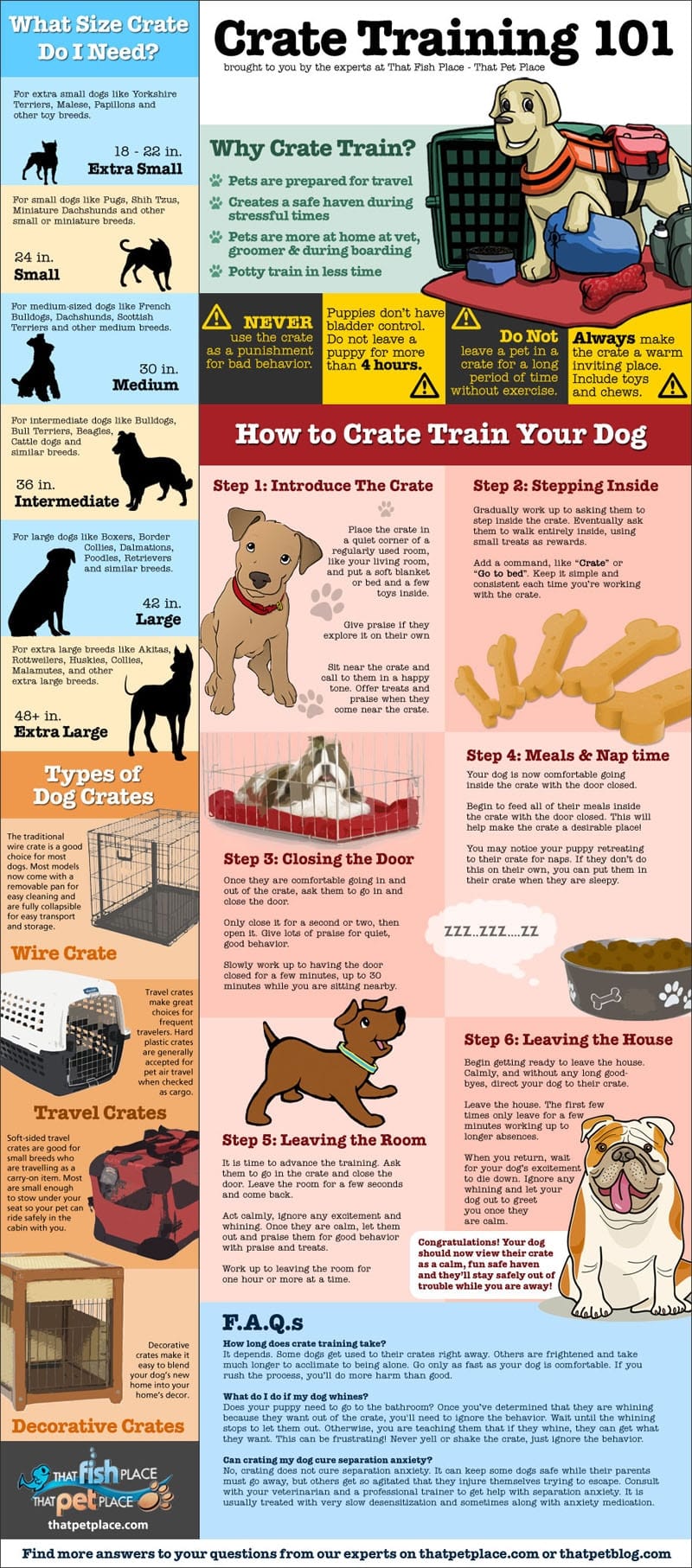
To begin, ensure you have the right equipment. If you don’t own a crate, prioritize purchasing one for each dog. Consider cost-effective options like Facebook Marketplace or OfferUp, or reputable online retailers like Chewy.com for quality products. Crucially, each dog must have their own crate. Sharing a crate can lead to conflict, especially if a moment of tension arises, as there isn’t enough space for dogs to move away from each other.
The placement of the crates is also important. Choose a location that is used but not a high-traffic area, avoiding spaces like a basement furnace room. A spare bedroom can serve as an excellent “dog room.” Once you’ve identified a suitable spot, resist the urge to constantly move the crates, as this can hinder the training process. To enhance security, use zip ties to reinforce all edges of the crate. Dogs are adept at finding and exploiting weak points, but a structurally sound crate reduces their motivation to try.
Initiating the crate training process can typically be done at home with the aid of numerous free online tutorial videos. A key step is to feed your dog in their crate with the door closed. This establishes a positive association and provides a private, pressure-free eating space. High-value treats and chews, such as a Kong filled with peanut butter or an antler chew, should also be exclusively given inside the crate. Consistently associating the crate with good things will positively shift your dog’s perception of it.
It’s also beneficial to integrate crate use into your daily routine beyond just when you’re away. This prevents the crate from becoming solely associated with your departure. Crating periodically while you are home, such as during your shower, can help normalize the experience. Once the basics are established, teach and enforce a “down-stay” within the crate. The down position promotes relaxation, which is the desired state in the crate. Practicing down-stays with the door open, while supervised, is highly effective. Remember, the crate door is a threshold, much like your front door. Strictly enforce rules around exiting and entering the crate on command, reinforcing your leadership role. By carefully considering these steps, you can transform the crate into a positive and essential tool for fostering a well-adjusted and obedient dog.
