
Leaving your dog home alone for the first time can feel like a monumental step for both of you. Will they be okay? Will they be anxious? Will your favorite pair of shoes survive? These are valid concerns for any loving dog owner. The good news is that with patience and consistency, you can teach your furry friend to be calm and confident when you’re away. Learning How To Train A Dog To Stay Home Alone is not just about preventing a chewed-up sofa; it’s about nurturing your dog’s independence and ensuring their well-being.
This process is a journey, not a race. It involves creating positive associations with solitude and gradually building up the time your dog spends by themselves. Think of it as teaching a valuable life skill. Just as you would teach them to sit or stay, teaching them to be comfortable alone is a fundamental part of their education and a cornerstone of a happy, balanced life together. This is a skill that has parallels with other training challenges, and understanding the core principles can be very helpful; it’s similar in some ways to the patience required when training a dog to stop barking, where consistency is key.
Understanding Separation Anxiety vs. Boredom
Before diving into a training plan, it’s crucial to understand what you’re dealing with. Is your dog truly anxious, or are they just bored? While both can lead to destructive behavior, their root causes are different.
Separation anxiety is a genuine panic disorder. Dogs with separation anxiety are distressed when separated from their owner. The signs often begin before you even leave and are consistent every time they’re left alone.
- Key Signs of Separation Anxiety:
- Excessive vocalization (howling, barking, whining) that starts as you prepare to leave or shortly after.
- Destructive behavior, often focused on exit points like doors and windows.
- Inappropriate elimination (urinating or defecating) in the house, even if they are perfectly house-trained.
- Pacing, drooling, or trembling as you get ready to depart.
- Frantic attempts to escape, which can sometimes lead to injury.
Boredom, on the other hand, is a lack of stimulation. A bored dog is looking for a job to do or a way to entertain themselves. The destructive behavior is not rooted in panic but in a search for something—anything—to do. A bored dog might chew on a table leg because it’s interesting, not because they are terrified of being alone.
Distinguishing between the two is the first step toward an effective solution. If you suspect true, severe separation anxiety, consulting a professional is always the best course of action.
The Foundation: Creating a Safe and Positive Space
Every dog needs a “den”—a space that is unequivocally theirs. This sanctuary is the cornerstone of teaching them to be comfortable alone. It could be a crate, a gated-off room, or a playpen. The key is to make this space a paradise of positivity.
Making the Den a Happy Place
This space should never be used for punishment. It should be associated with everything good: high-value treats, special toys, and peaceful rest. Start by feeding your dog their meals in their den. Toss in a delicious treat when they aren’t looking so they discover treasures there. Ensure it’s comfortable with cozy bedding. The goal is for your dog to voluntarily go to their space to relax.
As veterinary behaviorist Dr. Emily Carter notes, “The most critical step in preventing separation anxiety is to build a positive association with independence from the very beginning. The dog must learn that their own space is a place of safety and reward, not a place of isolation.”
This process requires patience. You’re building a foundation of security that will support your entire training effort.
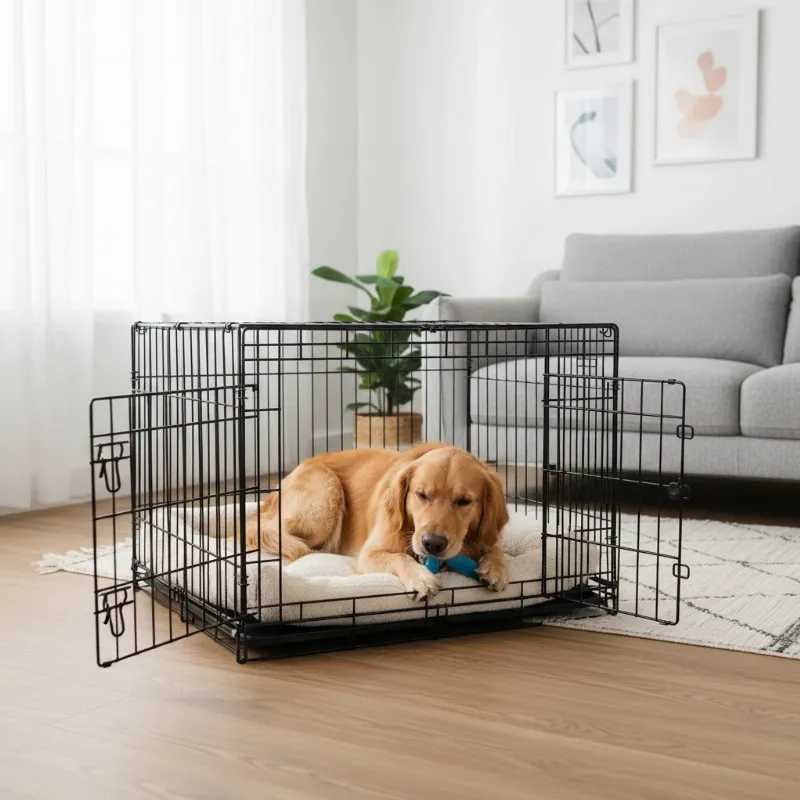 A happy golden retriever dog relaxing comfortably alone inside a cozy crate filled with soft blankets and a favorite chew toy, looking content.
A Step-by-Step Guide: How to Train a Dog to Stay Home Alone
Once you’ve established a safe space, you can begin the formal training process. This is a gradual method of desensitization and counter-conditioning.
Step 1: Start with “Pre-Departure” Cues
Dogs are masters at picking up on our routines. They know the jingle of keys or you putting on specific shoes means you’re leaving. The first step is to desensitize them to these cues.
- Pick up your keys and walk to the kitchen.
- Put on your coat, then sit down to watch TV.
- Grab your bag, then put it back in the closet.
Do these things randomly throughout the day without actually leaving. The goal is to break the association that these cues always lead to your departure. They become meaningless background noise.
Step 2: The “Absence” Game
Now, you’ll practice short departures. Start incredibly small.
- Ask your dog to go to their safe space.
- Walk to the door, open it, and close it, but stay inside. Return to your dog and reward them for being calm.
- Next, step outside for just one second, then come back in. Don’t make a fuss.
- Slowly, and I mean slowly, increase the duration. Go out for five seconds, then 10, then 30. Vary the times. Sometimes you’re gone for 5 seconds, sometimes for 20. The unpredictability is important.
This process can take days or even weeks. If your dog shows any signs of distress (whining, scratching at the door), you’ve moved too fast. Go back to a shorter duration where they were successful.
Step 3: Don’t Make a Big Deal of Goodbyes or Hellos
This is perhaps the hardest part for owners! We love our dogs and want to shower them with affection. However, long, emotional goodbyes can heighten a dog’s anxiety. Similarly, overly enthusiastic greetings can reinforce the idea that your return is the most exciting event in the world, making your absence seem worse by comparison.
- Before Leaving: About 5-10 minutes before you go, ignore your dog. Be calm and matter-of-fact. Give them a special “you only get this when I’m gone” puzzle toy, and then leave quietly.
- When Returning: When you come home, ignore them for the first few minutes, no matter how excited they are. Put your things away, get a glass of water, and once they have settled down, you can greet them calmly.
Step 4: Exercise and Mental Stimulation
A tired dog is a happy dog. Before you leave for any significant period, ensure your dog has had plenty of physical exercise and mental stimulation.
- Physical Exercise: A brisk walk or a game of fetch can help burn off excess energy that might otherwise be channeled into anxiety or destruction. This is different than just a walk around the block, which is more akin to the fundamentals learned in the best way to leash train a dog. The goal here is to get their heart rate up.
- Mental Stimulation: Engaging your dog’s brain is just as tiring as physical exercise. Use puzzle toys, food-dispensing toys, or have a short training session. This gives their mind a workout and leaves them ready for a nap.
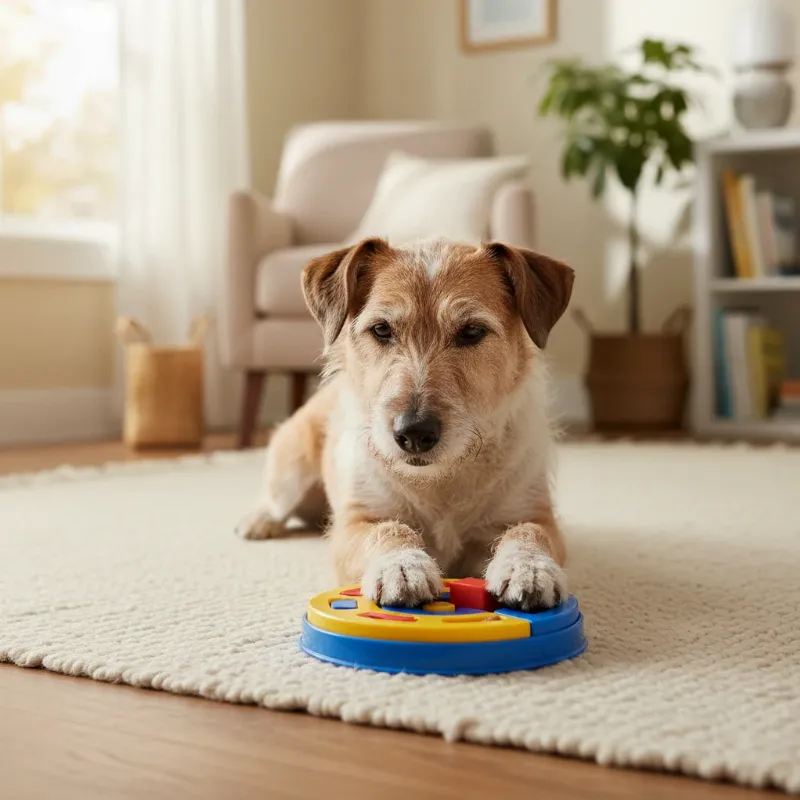 A medium-sized mixed-breed dog actively engaged and focused on solving a food puzzle toy on a living room floor, happily trying to get treats out.
Common Mistakes to Avoid When Training
Knowing what not to do is as important as knowing what to do.
- Don’t Punish Your Dog: Coming home to a mess is frustrating, but punishing your dog for it is counterproductive. The behavior is a symptom of distress, not malice. Punishment will only increase their anxiety and damage your bond.
- Don’t Get Another Dog (to solve the problem): While some dogs appreciate the companionship, getting a second dog rarely cures the first dog’s separation anxiety. The anxiety is about their separation from you, not just being alone.
- Don’t Use a Muzzle to Prevent Chewing: A muzzle should not be used to manage destructive behavior caused by anxiety when the dog is unsupervised. It can be dangerous and prevents the dog from panting or drinking, exacerbating their panic.
What If My Dog’s Anxiety Is Severe?
Sometimes, despite your best efforts, a dog’s anxiety is too severe to manage on your own. There is no shame in seeking professional help. A qualified expert can provide a tailored plan for your dog’s specific needs. For pet owners in certain areas, finding a local professional, like a New Jersey dog trainer, can provide the hands-on guidance necessary for more challenging cases.
- Certified Dog Trainer or Behavior Consultant: Look for professionals with certifications like CPDT-KA or KPA-CTP. They can help you implement a behavior modification plan.
- Veterinary Behaviorist: For extreme cases, a board-certified veterinary behaviorist can be invaluable. They can rule out underlying medical issues and may discuss the possibility of anti-anxiety medication to be used in conjunction with training.
Frequently Asked Questions (FAQ)
How long does it take to train a dog to be left alone?
There is no set timeline. It depends on the dog’s individual temperament, history, and the severity of their anxiety. It could take a few weeks for a puppy with no prior issues, or many months for a dog with severe separation anxiety. Patience and consistency are your most important tools.
Can I leave my 8-week-old puppy home alone?
An 8-week-old puppy should not be left alone for long periods. They have small bladders and an intense need for socialization and supervision. They can be left for very short periods (initially just 15-30 minutes) in a puppy-proofed safe space as part of their training, but not for a full workday.
Does crate training help with separation anxiety?
It can, but only if the dog has a positive association with the crate. For some dogs, the crate is their safe haven and helps them feel secure. For others who have had negative experiences, a crate can increase their panic. If you use a crate, it must be introduced slowly and positively.
Should I leave the TV or radio on for my dog?
Leaving a TV or radio on can be helpful for some dogs. The background noise can muffle outside sounds that might startle them and can provide a sense of presence. Classical music or talk radio often works well. This is a management tool, however, not a cure for the underlying anxiety.
What are the best toys to leave with a dog who is home alone?
The best toys are durable, interactive puzzle toys that can be stuffed with food. Brands like KONG are famous for this. These toys engage your dog’s mind, provide a rewarding activity, and create a positive association with you leaving. Always supervise your dog with a new toy first to ensure it’s safe for them.
Your Path to a Confident, Independent Dog
Teaching your dog to be comfortable alone is one of the greatest gifts you can give them. It’s a process that builds confidence and reduces stress for everyone in the household. Remember to be patient with your dog and with yourself. Celebrate the small victories, whether it’s five seconds of quiet or a full minute. Each step forward is a testament to your bond and your commitment to their well-being. By understanding the core principles of how to train a dog to stay home alone, you are empowering your companion with the skills to navigate the world confidently, even when you’re not by their side.
