
Tired of your furry friend turning every walk into a tug-of-war? You’re not alone. Leash training a dog can be one of the most common, yet frustrating, challenges for pet owners. But it doesn’t have to be a battle! With the right approach, patience, and consistency, you can transform those walks from a struggle into a joyful experience for both you and your canine companion. This guide will walk you through the essential steps to teach your dog how to walk politely on a leash, ensuring a more harmonious relationship and safer outings.
Understanding the Root of Leash Pulling
Before we dive into training techniques, let’s explore why dogs pull on the leash in the first place. Often, it’s not about defiance, but rather excitement and a lack of understanding. Dogs naturally want to explore their environment, sniff interesting scents, and greet other dogs or people. When they’re on a leash, their natural urge to move forward can easily lead to pulling, especially if they haven’t been taught otherwise. Other common reasons include:
- Excitement: The world is a stimulating place for dogs, and they’re eager to get to the next exciting thing.
- Lack of Training: Many dogs simply don’t understand what’s expected of them on a leash.
- Breed Tendencies: Some breeds are naturally more inclined to pull due to their working dog heritage.
- Owner Reinforcement: Unknowingly, we might reinforce pulling by letting the dog drag us forward or by tightening the leash, which can create tension.
Essential Supplies for Leash Training
Having the right equipment can make a significant difference in your training success. While a standard collar and leash are a starting point, consider these options for more effective training:
- Well-fitting Collar or Harness: Ensure the collar isn’t too tight or too loose. For dogs that pull excessively, a front-clip harness can be incredibly helpful. This type of harness attaches the leash to the dog’s chest, redirecting them back towards you when they pull, rather than allowing them to surge forward.
- Sturdy Leash: A 4-6 foot leash made of nylon or leather is ideal. Avoid retractable leashes, as they offer less control and can be dangerous.
- High-Value Treats: Small, soft, and incredibly tasty treats that your dog loves will be your primary reward system. Think tiny pieces of cheese, cooked chicken, or specialized training treats.
- Patience and Consistency: These are non-negotiable tools! Training takes time and requires everyone in the household to be on the same page.
Step-by-Step Guide to Leash Training
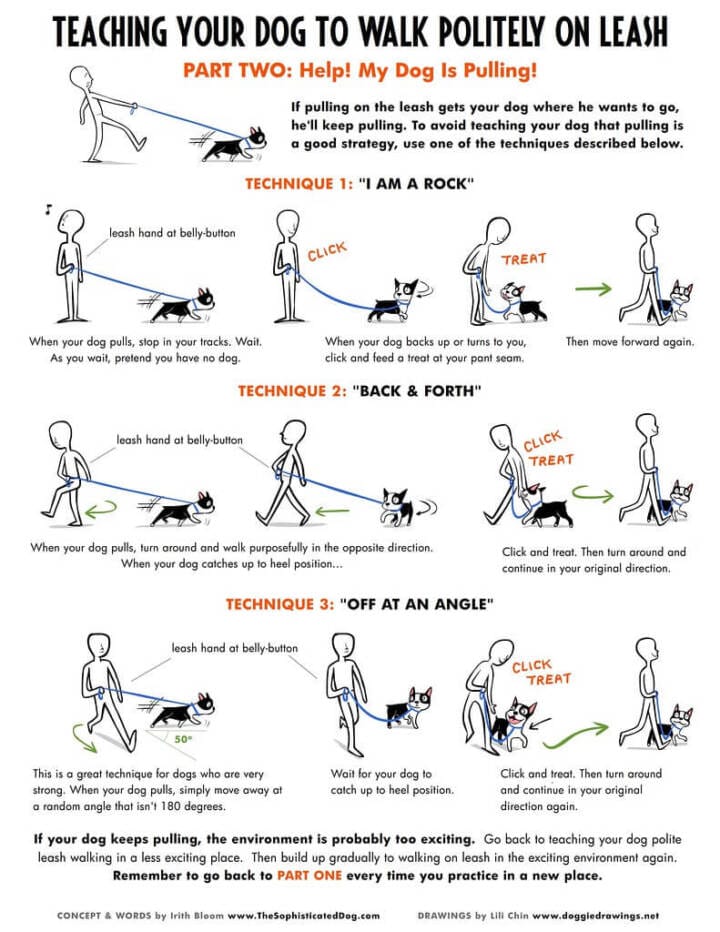
The core principle of loose-leash walking training is to reward your dog for walking by your side with a relaxed leash, and to stop forward movement whenever the leash becomes taut.
1. Introduce the Equipment
Before even stepping outside, get your dog comfortable with the collar or harness and leash. Let them wear the equipment for short periods indoors, associating it with positive experiences like treats and praise. Never force the equipment on them.
2. Teach the “Heel” or “Loose Leash” Cue
Start in a quiet, distraction-free environment like your living room or backyard.
- Attach the leash and hold it loosely.
- Use a treat to lure your dog to your side, typically your left. Say your chosen cue, such as “Heel” or “Let’s go.”
- Take one step forward. If your dog stays by your side with a loose leash, immediately praise them and give them a treat.
- Gradually increase the number of steps. As your dog gets better, you can start taking more steps before rewarding.
- If the leash tightens: Simply stop walking. Don’t yank or pull back. Wait for your dog to release the tension, either by stepping back towards you or looking at you. The moment the leash slackens, resume walking. This teaches your dog that pulling stops the fun.
3. Practice in Controlled Environments
Once your dog is showing progress indoors, gradually introduce low-distraction environments like your yard or a quiet street.
- Start short: Keep training sessions brief (5-10 minutes) to avoid overwhelming your dog.
- Manage distractions: If your dog gets too excited by a passing car or another dog, increase the distance or use a high-value treat to redirect their attention back to you.
4. Gradually Increase Distractions
As your dog masters walking nicely in quieter areas, slowly introduce more challenging environments:
- More people and dogs: Practice in parks or on busier sidewalks.
- Vary your pace and direction: Change speeds and make sudden turns to keep your dog engaged and focused on you.
- Use a release cue: Have a word like “Free” or “Go play” that signals to your dog they can stop focusing on heeling and can sniff or explore for a moment.
Troubleshooting Common Leash Pulling Issues
Even with consistent training, you might encounter some bumps along the road. Here’s how to address common problems:
My Dog Pulls Whenever They See Another Dog
This is a classic case of excitement overriding training.
- Increase Distance: If you see another dog approaching, create more space. Move to the side of the path or even cross the street if necessary.
- Desensitization and Counter-Conditioning: When you’re far enough away that your dog notices the other dog but isn’t reacting intensely, reward them for looking at the other dog calmly, then looking back at you. This helps them associate the sight of other dogs with good things (treats!). This is similar to how to train a dog with positive reinforcement for other behaviors.
- Consider a dog training day camp: If severe reactivity is an issue, professional help can be invaluable.
My Dog Lunge and Barks at Everything
This behavior can stem from fear, frustration, or over-excitement.
- Identify Triggers: Pay attention to what sets your dog off. Is it people, bikes, skateboards, or other animals?
- Create Space: Again, increasing distance is key. If your dog is lunging and barking, they are too close to the trigger to learn effectively.
- “Look at That” Game: Teach your dog to look at the trigger and then look back at you for a reward. Start with the trigger far away and gradually decrease the distance as your dog becomes more comfortable.
- Professional Guidance: For aggressive or highly reactive dogs, consult a certified professional dog trainer or a veterinary behaviorist. They can provide tailored strategies, potentially including dog training portland maine or similar services depending on your location.
My Dog Won’t Walk Beside Me At All
If your dog consistently lags behind or tries to forge ahead regardless of your efforts:
- Check Equipment: Is the harness or collar fitting correctly and comfortably?
- Are Your Rewards High Value Enough? If your dog isn’t motivated by the treats you’re using, try something more exciting.
- Is the Session Too Long? Short, frequent, positive sessions are more effective than long, drawn-out ones.
- Consider a Different Approach: Sometimes, a dog may respond better to different methods. Exploring best dog training videos youtube can offer visual demonstrations of various techniques.
The Importance of Consistency and Patience
Training a dog to walk nicely on a leash is a marathon, not a sprint. There will be good days and bad days. The key is to remain patient, consistent, and positive. Every time you go for a walk, you have an opportunity to reinforce good behavior.
Remember, a well-trained dog is a happier dog, and a pleasant walk is one of the cornerstones of a strong human-animal bond. By understanding your dog’s motivations and applying these training principles, you’ll be well on your way to enjoying stress-free walks together. If you’re struggling with specific issues, don’t hesitate to seek help from local trainers, such as those offering dog training roanoke va services, or explore online resources.
