
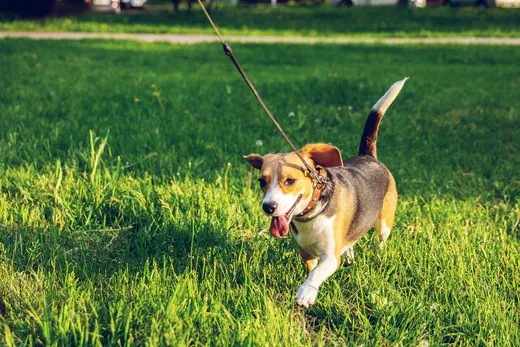
 Small dog on a leash in a grassy area
Teaching your dog to walk politely on a leash is a cornerstone of responsible dog ownership. It’s a process that requires patience, consistency, and positive reinforcement. This guide will walk you through the essential steps to train your dog to walk happily by your side, respond to your cues, and enjoy walks without pulling.
What You’ll Need Before You Start Leash Training
Before embarking on leash training, consider using tools that can aid the process. A head collar or a front-attachment harness can help discourage pulling and provide better control. Front-attachment harnesses are user-friendly and effective for most dogs, while head collars offer maximum control for dogs with aggressive tendencies or for owners with large breeds.
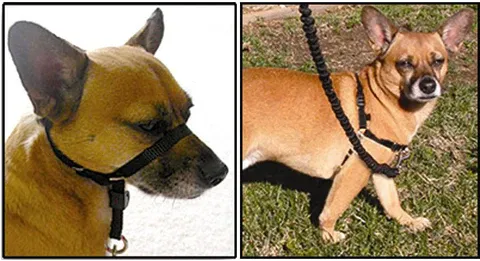 A small tan dog wears a head collar on the left and a front-attachment harness on the right
Gigo wearing a Comfort Trainer head collar (left) and an Easy Walk front-attachment harness (right)
When using these tools, opt for leashes no longer than 6 feet to prevent potential injury if the dog makes a sudden, abrupt stop.
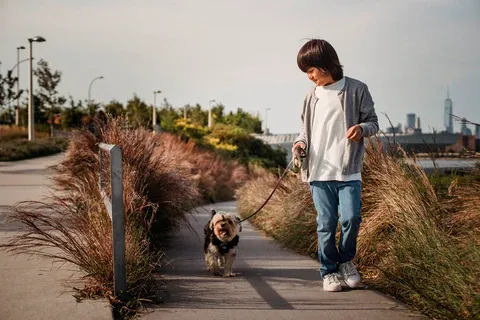 Young boy walking a small dog on a leash
The “Stop and Reward” Method for Leash Training
A fundamental technique in leash training is the “stop and reward” method. When your dog pulls, simply stop walking. Reward them with high-value treats or a favorite toy when they return to your side or the leash slackens. This teaches them that walking politely with you is more rewarding than pulling ahead. Having a treat bag readily accessible can significantly streamline this process. Dog training pouches are ideal for keeping treats within easy reach.
Step-by-Step Dog Leash Training
Here’s a detailed breakdown of how to train your dog to walk on a leash without pulling:
Step 1: Make Walking Together Rewarding
Start by attaching a long leash (10-20 feet, non-retractable) to a standard harness. Use small, delicious treats like pieces of meat or cheese. Begin in a familiar, low-distraction area like your backyard. Decide on a preferred side for your dog to walk (traditionally, the left side) and deliver treats near your thigh on that side. As you walk briskly, reward your dog with praise and a treat whenever they are walking beside you. Gradually increase the distance between rewards as they improve.
Gigo walking by my side. Feeding Gigo a treat by my side.
Step 2: Encourage Your Dog to Follow You
When your dog starts to wander or lags behind, use an upbeat voice to say “let’s go,” perhaps slap your thigh to get their attention, and turn to walk away from them. Reward them with praise and a treat next to your preferred side when they catch up. Continue rewarding them for staying with you. If they pull or don’t come towards you, apply gentle leash pressure as a reminder, but immediately release it and praise them when they move towards you.
“Let’s go”, and walking away.
Step 3: Establish Designated Sniff and Potty Breaks
Integrating sniff and potty breaks teaches your dog that these are privileges. Periodically, instead of giving a food reward, announce “go sniff” and allow them to explore or relieve themselves. If they pull during this time, redirect them by saying “let’s go” and walking in the opposite direction, ending the free time.
Authorized sniff break!
Step 4: Introduce Shorter Leashes and Varied Pacing
Transition to a shorter leash (eventually 6 feet) in your yard, continuing the previous steps. Practice varying your walking speed (fast and slow) and changing directions abruptly. Reward your dog for staying with you through these changes. Start rewarding less frequently for normal walking but continue to offer higher rewards for maintaining pace during challenging maneuvers or when distractions appear.
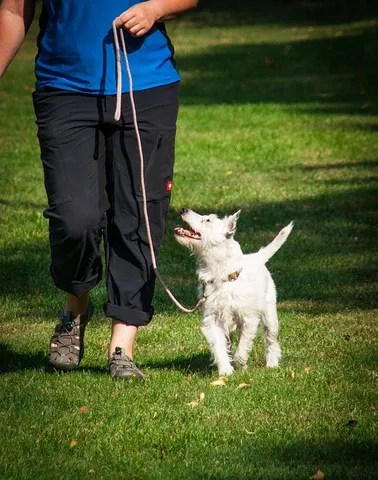 White dog on leash watching owner
Transitioning to Outdoor Walks
Apply the same techniques used in your yard to neighborhood walks, being mindful of increased distractions. Using a front-attachment harness or head collar can provide extra control. Continue using “let’s go” to redirect pulling and reward your dog generously for focusing on you, especially in stimulating environments. Remember to grant permission for sniff breaks.
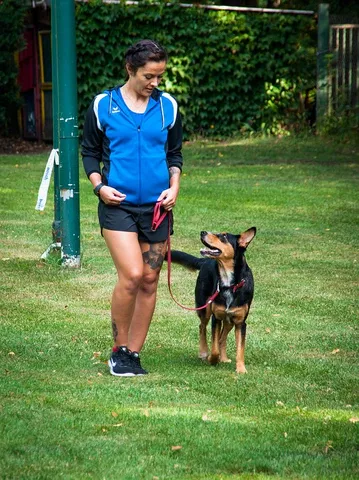 Woman walking attentive black and tan dog
Challenging Your Dog During Training
Increase the difficulty by tossing a ball or treat 20 feet away while your dog is on a 6-foot leash. If they pull towards the object, use the “let’s go” command and walk away. If they walk beside you towards the object, let them reach it as their reward. Adjust the difficulty by using a less desirable object or a longer leash initially.
Troubleshooting Common Leash Training Issues
- Crossing in front: Stomp or shuffle your feet slightly to make your presence more noticeable.
- Lagging behind: If your dog seems frightened or unwell, offer encouragement rather than pulling. If they are lagging to sniff or potty, maintain a gentle leash pressure and keep walking, rewarding them when they rejoin you.
- Inconsistent progress: If your dog alternates between walking beside you and pulling, focus on rewarding longer sequences of consecutive steps by your side, rather than rewarding them for returning after pulling.
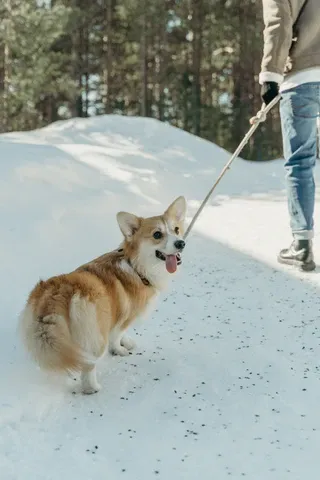 Small white and brown dog on a leash in the snow
Training for “Heel”
Teaching your dog to “heel” is useful for short periods when you need them very close and attentive, especially around distractions. Practice this indoors first. Hold a treat in your fist, let your dog sniff it, say “let’s go,” and take a few steps, keeping the treat near your thigh. Praise them when they follow your fist. Gradually progress to an empty fist, rewarding them for following. Increase your standards and practice in more distracting environments.
We hope this guide helps you and your dog enjoy more pleasant walks together. Explore our leash training aids and other unique dog products to further enhance your training journey.
