
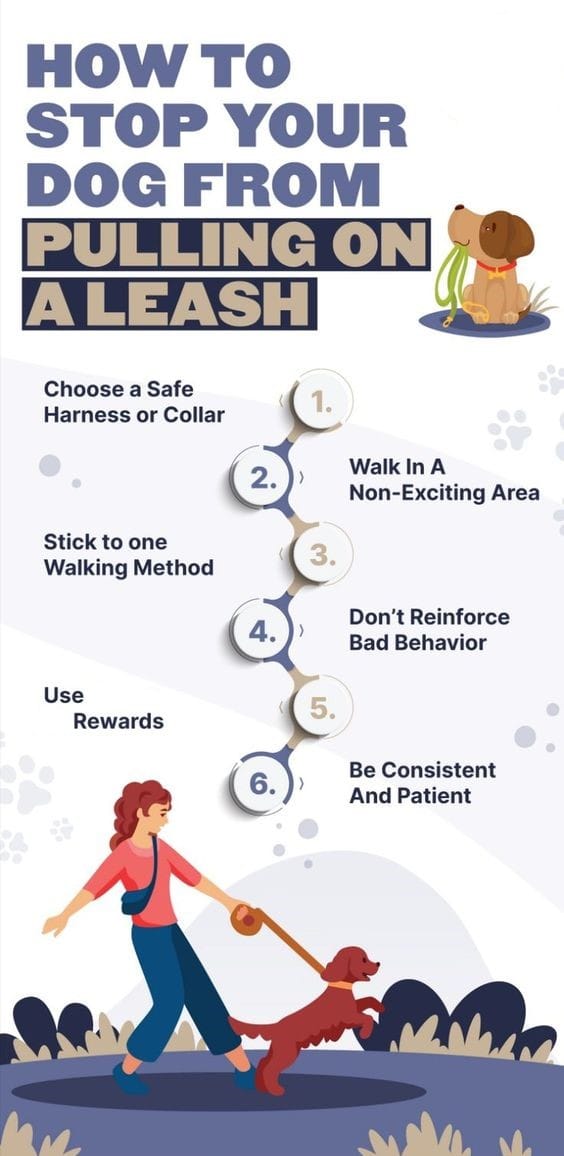
Walks are meant to be an enjoyable experience for both you and your dog. However, when your dog pulls on the lead, it can quickly turn a pleasant stroll into an uncomfortable tug-of-war. Fortunately, with consistent and reward-based training, you can teach your dog to walk politely by your side, making every outing a pleasure.
Dogs often pull on the lead due to excitement, excess energy, or simply because it has become a learned habit – they’ve discovered that pulling gets them where they want to go faster. Instead of resorting to punishment, understanding these natural behaviors allows you to work with your dog. This process requires patience and consistency, but the reward of a well-behaved walking companion is well worth the effort.
Preparing for Your Walk
Before you even step out the door, preparation is key. Ensure you have high-value, low-calorie treats readily available. Options like small pieces of boiled chicken, turkey breast, or even crunchy carrot slices work wonderfully as rewards for good behavior. Remember to adjust your dog’s main meal portions on training days to prevent unhealthy weight gain. It’s also beneficial to engage your dog in a vigorous play session before your training walk. This helps expend some of their energy, making them less inclined to pull.
For dogs who get overly excited at the mere sight of the lead, a desensitization process can be helpful. Try exposing your dog to the lead frequently throughout the day, picking it up and putting it down, or even attaching it for short periods. This helps them associate the lead with calm behavior rather than an immediate cue for playtime, aiding in a more relaxed walk.
The Stop-and-Start Method
The most effective way to curb pulling is by demonstrating that a loose lead is rewarding, while pulling is not. As soon as your dog begins to pull, immediately stop walking. Do not yank the lead back; simply wait until there is slack again.
Once the tension is released, reward your dog with a treat and praise, then resume walking. In the initial stages, you might find yourself stopping and starting numerous times. While this can significantly lengthen your walk, consistency is crucial. Every time your dog walks with a loose lead, offer plenty of positive reinforcement. Avoid scolding or pulling back on the lead, as negative reinforcement can hinder your dog’s understanding and create anxiety.
Gradually Phasing Out Treats
As your dog progresses and reduces pulling, you can gradually decrease the frequency of treats, replacing them with verbal praise and affection. If your dog’s motivation wanes, consider reintroducing treats or finding a different healthy option. Always transition away from treats slowly to maintain your dog’s enthusiasm for walking nicely.
Expert Tips for a Pull-Free Walk
- Start in quiet environments: Begin training in areas with minimal distractions to help your dog focus on learning.
- Allow ample off-lead time: Whenever it’s safe, provide opportunities for your dog to run and play freely. This helps expend energy and reduces the urge to pull on the lead during walks.
- Encourage sniffing: Dogs naturally love to explore their surroundings through scent. Allow your dog time to sniff and investigate during walks.
- Be patient and consistent: Breaking the habit of pulling takes time. Consistently apply positive training methods and avoid any form of punishment.
- Use appropriate equipment: Avoid painful or restrictive tools like choke collars. A harness is often recommended for dogs that pull, as it can help prevent neck injuries.
By implementing these strategies with patience and consistency, you can transform your walks into a more enjoyable experience for both you and your canine companion.
References:
Reward-based training. DogCareStory. Retrieved from https://dogcarestory.com/pet-help-and-advice/looking-after-your-pet/puppies-dogs/reward-based-training/
Obesity in dogs. DogCareStory. Retrieved from https://dogcarestory.com/pet-help-and-advice/pet-health-hub/conditions/obesity-in-dogs/
Positive training. DogCareStory. Retrieved from https://dogcarestory.com/pet-help-and-advice/looking-after-your-pet/puppies-dogs/reward-based-training/
Exercising your adult dog. DogCareStory. Retrieved from #
well-d dog training collar. DogCareStory. Retrieved from https://dogcarestory.com/well-d-dog-training-collar/
