
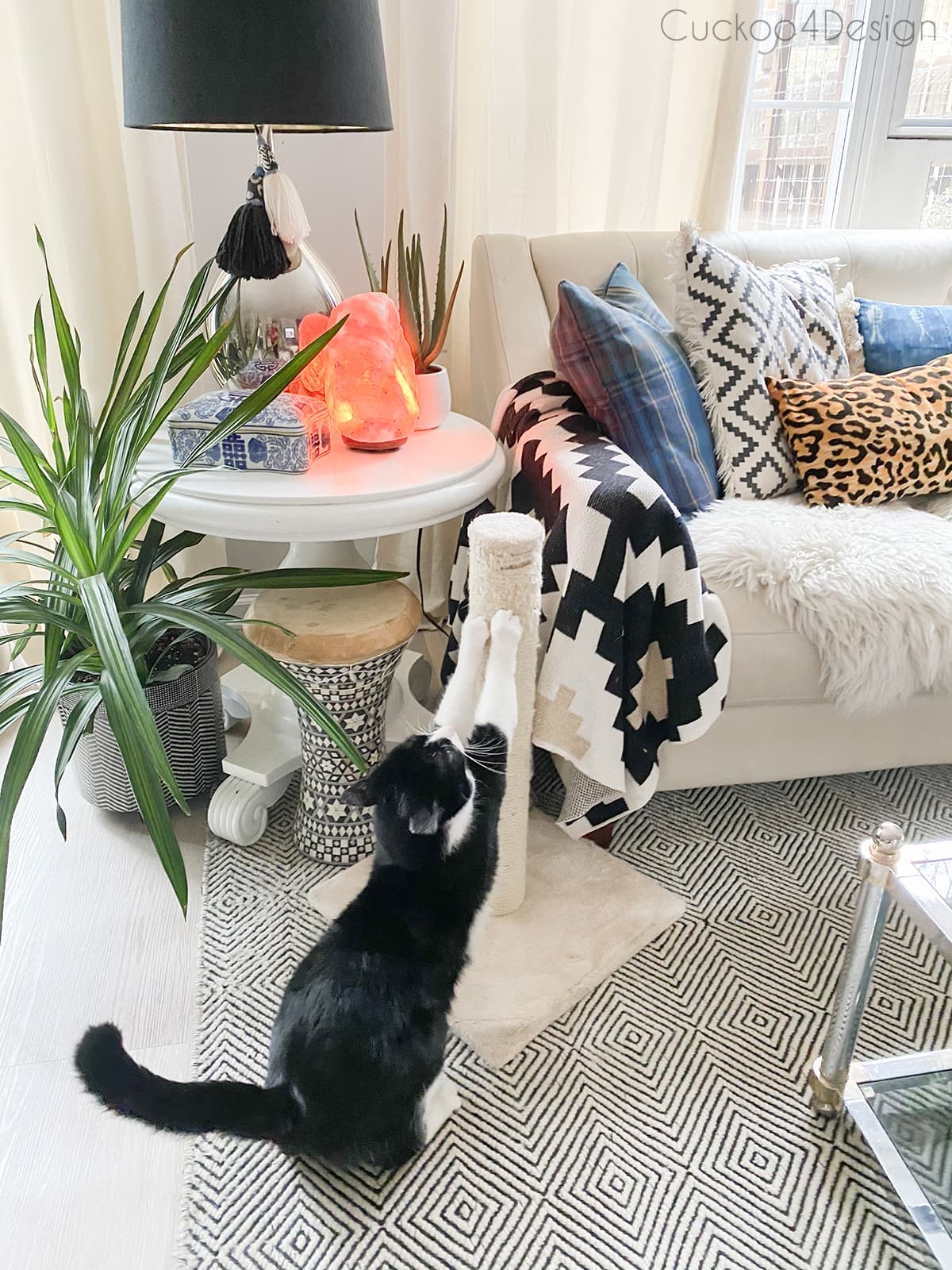
Cats are cherished members of our families, but their natural instincts can sometimes lead to unwelcome damage to our furniture. Understanding why cats scratch and employing effective deterrents is key to protecting your belongings. This guide offers practical, humane strategies to gently guide your feline friends away from your furniture and towards appropriate scratching alternatives.
Understanding Your Cat’s Scratching Habits
Before implementing any training, it’s important to observe your cat’s scratching behavior. Asking yourself a few key questions can provide valuable insights:
- What do they scratch? Identifying specific materials or types of furniture they target can help in choosing the right deterrents.
- When do they scratch it? Understanding if scratching occurs at specific times, like after waking up or when you’re away, can inform your strategy.
- How do they scratch? Observing their technique can offer clues about their needs, whether it’s stretching, marking territory, or simply sharpening their claws.
By understanding these nuances, you can more effectively train your cat to keep off certain surfaces and direct their scratching to acceptable outlets.
Effective Deterrents to Keep Cats Off Furniture
Several simple yet effective methods can discourage cats from scratching furniture. These approaches focus on making the furniture less appealing or comfortable for scratching.
Utilize Sticky Surfaces
One highly effective method involves using double-sided tape, often recommended by organizations like the Humane Society. Applying no-residue, double-sided tape to the surfaces your cat frequently targets can deter them. While it might leave their paws feeling sticky temporarily, it doesn’t cause harm and acts as a gentle deterrent. Placing double-sided tape on furniture can be a surprisingly effective way to protect your belongings. Other textured materials like sandpaper, sheet plastic, or aluminum foil can also be used on furniture to make it less appealing for scratching or scent marking.
Introduce Uncomfortable Textures
Cats generally dislike slippery surfaces and may avoid areas covered in aluminum foil. Lining furniture, especially smaller pieces or tabletops, with aluminum foil can create a barrier that discourages them from jumping or scratching. This is a simple way to protect surfaces without causing any distress to your pet.
Create Unpleasant Scents
Cats have sensitive noses, and certain smells can be quite off-putting to them.
- Apple Cider Vinegar Spray: Mixing apple cider vinegar with water in a spray bottle and spritzing it on furniture, beds, or window sills can deter cats. The scent, while not overpowering to humans, is often enough to make cats avoid the area. This mixture can also help neutralize pet odors.
- Citrus Spray: Similarly, cats tend to dislike the smell of citrus. Sprays made from lemon or orange extracts can serve as natural cat repellents. It’s advisable to test these sprays on an inconspicuous fabric area first to ensure they don’t cause damage.
Employ Auditory Deterrents
For areas like kitchen countertops, aluminum pans can be used as a deterrent. Placing an aluminum pan on the edge of a counter can startle your cat if it falls when they jump on it. The loud noise can surprise and discourage them from jumping on countertops in the future. This method is best suited for homes with hardwood floors to avoid potential damage to flooring.
Humane Training and Environmental Enrichment
Beyond deterrents, positive reinforcement and providing appropriate outlets for natural behaviors are crucial.
Manual Training Techniques
Consistent, real-time correction can be effective. If you catch your cat scratching or resting on furniture, you can gently deter them with a squirt bottle filled with water or use a clicker training method. This approach requires patience and consistency but helps your cat learn acceptable behaviors over time.
Provide Appropriate Scratching Options
Scratching is a natural and necessary behavior for cats. Providing them with appealing alternatives is essential.
- Scratching Posts: Invest in a variety of scratching posts made from different materials like sisal rope, cardboard, or carpet. Place these posts in areas where your cat likes to scratch or spend time.
- Encourage Post Use: You can make scratching posts more attractive by sprinkling catnip on them or placing their favorite toys nearby.
- Play and Enrichment: Ensure your cat has plenty of stimulating toys, boxes, and tubes to play with. Daily interactive play sessions can help redirect their energy and reduce destructive behaviors. Encouraging your cat to frequent specific areas with catnip and toys can also draw them away from furniture.
Important Considerations for Cat Owners
When addressing scratching behaviors, it’s important to approach the issue humanely and effectively.
Addressing Declawing
Some owners consider declawing as a last resort. However, organizations like the Humane Society emphasize that declawing is an unnecessary surgical procedure that offers no medical benefit to the cat. It involves the amputation of the last bone of each toe. Educated pet owners can successfully train their cats to use their claws appropriately without resorting to this invasive surgery, fostering a harmonious environment for both pet and owner.
Focusing on a Positive Environment
Creating a home environment that meets your cat’s needs is fundamental. By understanding their natural behaviors and providing them with suitable outlets, you can protect your furniture while ensuring your cat remains a happy and healthy companion. This approach prioritizes the well-being of your pet and strengthens the bond you share.
Learning how to keep cats off furniture is an effort that pays off, leading to a more peaceful coexistence between you and your beloved feline. For more insights into managing your cat’s behavior, consider exploring resources on leash training a cat or understanding how to train a cat to go outside and come back.
