
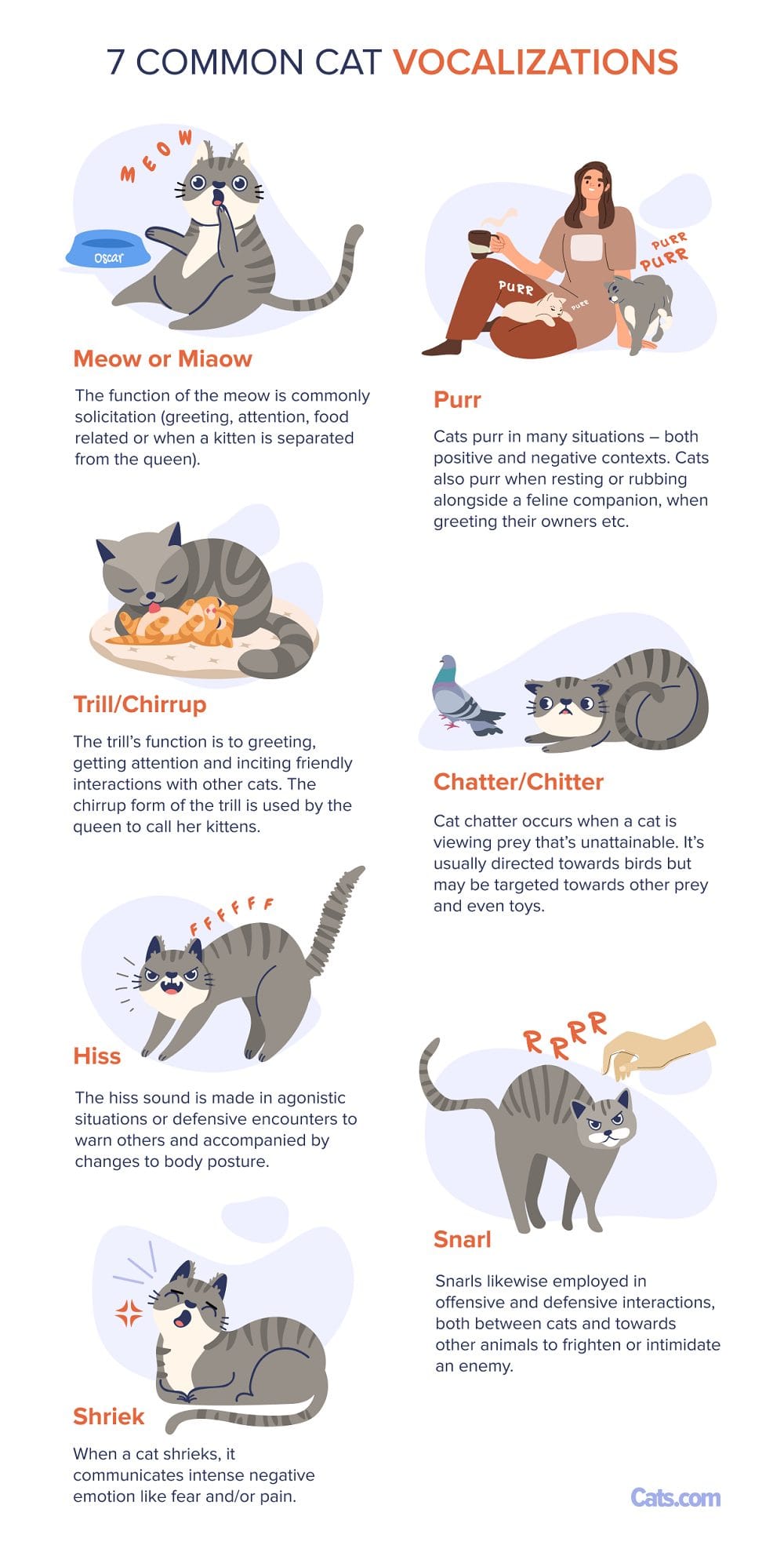
Does your cat’s constant meowing have you at your wit’s end? While it might be tempting to scold or even throw a soft toy, these methods are often ineffective and can even worsen the problem. Yelling at your cat or throwing objects can inadvertently teach them that meowing is an effective way to get your attention, especially if they’re seeking food. The key to managing a vocal feline is to reinforce the behaviors you desire, such as quietness, and withdraw attention from unwanted vocalizations. While this sounds straightforward in theory, implementing it in practice can be a lengthy process. To expedite the training, start by teaching your cat to sit for rewards, and then leverage this newfound skill when they become noisy.
Teaching Your Cat to Sit
Training a cat to sit is a remarkably simple process. Prepare a high-value treat, such as Greenies, a small amount of canned food on a spoon or syringe with the tip removed, cheese pieces, tuna, or a portion of their regular meal if it’s feeding time. Once your cat is focused on the treat, wait for them to sit. The moment they do, immediately offer the treat, placing it directly in front of their face so they can consume it while still in a seated position. Repeat this process, offering a series of treats if they remain seated. Cats generally find sitting and staying seated easier than dogs, who often pop up immediately after. Once they’ve mastered sitting on cue, you can begin walking a few steps away and repeating the process. The goal is for your cat to associate catching up to you with a quick sit and a subsequent treat, making sitting a highly rewarding behavior.
If your cat struggles with this method, you can use the treat to lure them into a sit. Move the treat from their nose upwards and slightly back, encouraging them to shift their weight onto their rear. Reward them quickly before they stand up. You can start by rewarding approximations of a sit, gradually increasing the criteria until they are reliably sitting all the way down.
Addressing Meowing During Training
If your cat meows while you are working on the “sit” command, you have two approaches: either wait for a moment of quiet before rewarding the sit, or reward them for sitting even if they meow, and then focus on rewarding quiet behavior later. It is generally easier to train one behavior at a time. Since cats typically learn to sit quickly, often within a couple of five-minute sessions if they are motivated by hunger, you can proceed to the next step even if they don’t become quiet on their own immediately.
Training Quiet Behavior
Once your cat has learned to maintain a calm, stationary position, you can begin rewarding quiet behavior. For instance, Dante, my cat, can be quite vocal, but he has learned that meowing is not necessary to get what he wants, as we have consistently rewarded him for sitting quietly. However, when circumstances change, such as having visiting dogs that require him to lay low, he tends to revert to his meowing habits. The following routine helps me retrain him over a couple of days.
The core principle is to wait out the prolonged meows and then quickly reward any moments of quiet, even if they only last a few seconds. Since Dante is a quick meower, it can be challenging to deliver a treat during a quiet interval before the next vocalization. To address this, I use a clicker to signal that he has earned a treat for being quiet. Initially, even 1–2 seconds of silence is sufficient. He quickly learns to extend these quiet periods. You might notice him looking around, trying to determine if a specific head position is earning the reward, as different positions have been rewarded in past training sessions. He may even become confused and try tentative meows, thinking they might work. However, by consistently avoiding rewarding meows and instead rewarding quiet behavior, he understands that quietness, not head movements or vocalizations, is what earns rewards.
The Following Day and Beyond
You can expect to spend time waiting out the meowing and rewarding quiet behavior multiple times a day, especially if you have a particularly vocal cat like Dante. However, with consistent application and by rewarding longer periods of silence with sequential treats, you can resolve excessive meowing within a few days. Because Dante has prior training, it only took him two sessions of rewarding quiet behavior to remember to remain quiet throughout the day, and he learned that being quiet, rather than shouting, is the effective way to get his needs met. For professionals seeking effective handling techniques, consider exploring resources like low-cost handling guides.
