
Toilet training your cat might seem like a daunting task, but with a little time, patience, and the right approach, it’s achievable. This guide outlines a 7-step process to gently transition your feline friend to using the human toilet, minimizing mess and maximizing convenience for both of you. Remember, the key is to let your cat set the pace and ensure they are comfortable at each stage.
Step One: Relocate the Litter Box
Begin by moving your cat’s current litter box to the bathroom, placing it directly beside the toilet. Allow your cat ample time to adjust to this new location. Consistency is crucial here; if your cat becomes confused or stressed, they might seek out alternative, less desirable places to relieve themselves, creating habits that are difficult to break. Patience is paramount throughout this entire toilet training journey.
Step Two: Gradually Elevate the Litter Box
Once your cat is comfortable with the litter box next to the toilet, start gradually raising its height. You can use stacks of newspapers or phone books for this purpose. With each increment in height, aim to slightly reduce the amount of litter in the box. Ensure the litter box is stable and won’t wobble or move when your cat jumps on or in it.
Step Three: Position the Litter Box Over the Toilet
Continue moving the elevated litter box incrementally closer to the toilet, about one inch each day, until it is positioned directly over the toilet seat. Maintain the process of gradually reducing the litter, ensuring there’s only a thin layer, no more than an inch deep.
Step Four: Introduce a Training Box
It’s time to replace the traditional litter box with a specialized “training box.” This training box needs to be sturdy enough to support your cat’s weight. You have a couple of options: you can purchase a commercial cat toilet training system or create your own.
To create a DIY training box:
- Cover the entire toilet seat with wax paper, securing it firmly.
- Add a layer of flushable litter onto the wax paper.
- Alternatively, secure a bowl or aluminum pan to the edges of the toilet seat using tape. Place the toilet seat down to hold the pan in place, and then add flushable litter to the pan.
Pro-Tip: Clean the training box after each use and consider adding a pinch of catnip to the fresh litter to make it more appealing.
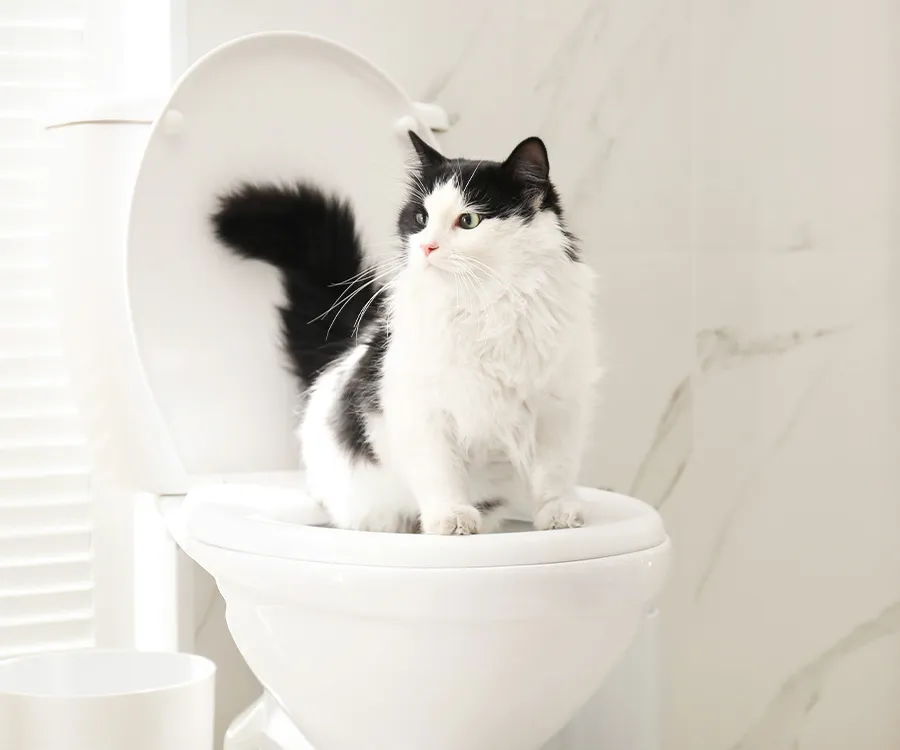 Cat using a training litter box on a toilet seat Rewarding your cat with treats for successful toilet use can significantly aid the training process.
Step Five: Transition to the Toilet Bowl
Now, gradually introduce a hole in the center of the wax paper or aluminum pan. Start with a small hole, about one inch in diameter, and slowly increase its size each day. Concurrently, reduce the amount of litter used, working towards a point where no litter is present when the cover or pan is removed entirely. This step encourages your cat to aim for the water in the bowl.
Step Six: Encourage Flushing (Without Teaching It)
Once your cat is consistently using the toilet, it’s time for you to flush after each use. It’s important not to teach your cat how to flush the toilet themselves. While some cats can learn this, they often find it amusing to flush repeatedly, leading to significant water wastage.
Step Seven: Reward Success!
Positive reinforcement is key. When your cat successfully uses the toilet, offer them a treat and praise. This reward system helps them associate using the toilet with a positive experience, reinforcing the desired behavior.
Pro-Tip: If your cat shows apprehension about the water in the bowl, you can add a small amount of litter to it. This can help them associate the scent with their familiar litter box, easing their transition.
Download the Infographic
For a visual guide, you can download our infographic on how to train a cat to use the toilet in 7 steps.
Click here to download the PDF of this infographic.
This comprehensive approach, focusing on patience and gradual changes, will help you successfully toilet train your cat, leading to a cleaner and more convenient home environment.
