
Jumping up on people is a common canine behavior, often born from excitement, attention-seeking, or simply an enthusiastic greeting. While endearing to some, it can be a nuisance or even dangerous, especially for children, the elderly, or those who dislike dogs. Understanding How To Teach Your Dog To Stop Jumping On People is crucial for polite social interactions and a harmonious household. This guide provides effective, positive reinforcement-based strategies to curb this behavior and foster better greeting manners in your dog. For a broader look at training dogs not to jump, explore our article on how to teach dog to not jump on people.
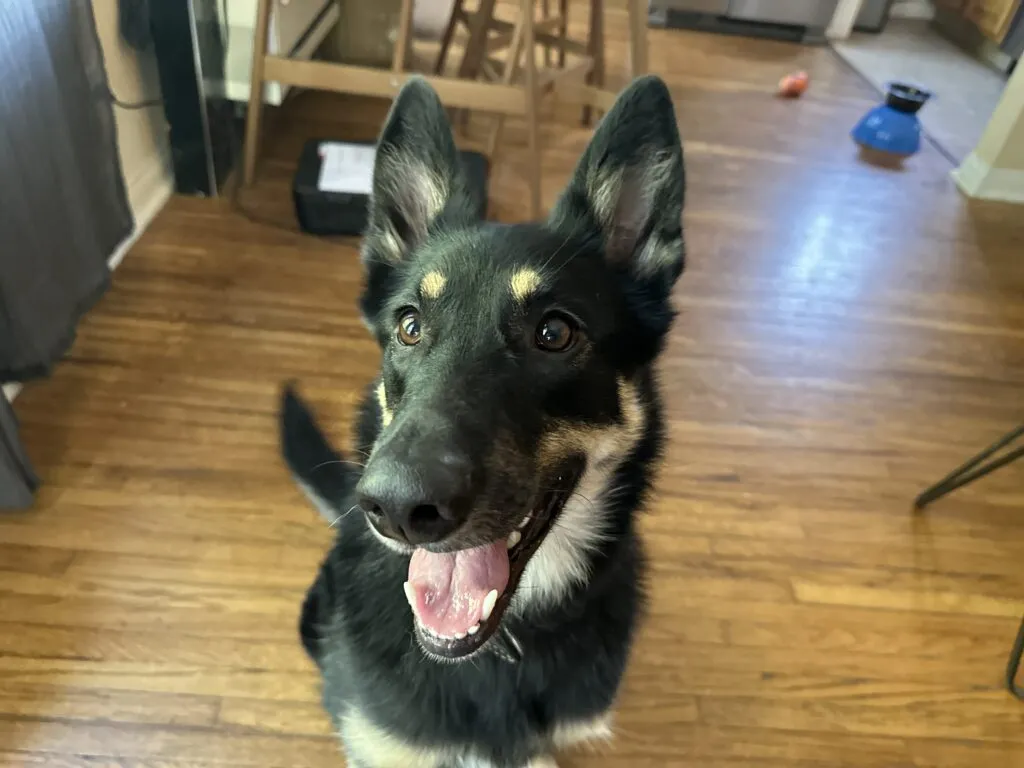 A German Shepherd Border Collie mix dog calmly interacts with a person, demonstrating polite greeting manners without jumping, key for how to teach your dog to stop jumping on people.
Understanding Why Your Dog Jumps
Dogs often jump as a natural part of their communication and greeting rituals within their pack. In the canine world, jumping can be an invitation to play or a way to get closer to a peer’s face. However, when directed at humans, who stand upright, this behavior can be perceived as rude or intimidating. Dogs don’t inherently understand human social etiquette; they just know that jumping sometimes gets them attention, even if that attention is a push-off or a scolding. Our goal is to teach them an alternative, more appropriate way to greet people.
Foundational Training: Setting the Stage for Success
Effective training begins with establishing clear communication and managing your dog’s environment. These foundational elements are critical for any behavior modification, especially when addressing an ingrained habit like jumping.
The Power of Marker Words
A marker word (like “yes!” or “good!”) is a quick, consistent signal that tells your dog, “That’s exactly what I wanted, and a reward is coming!” Used consistently, it helps your dog understand which specific actions lead to positive outcomes. Practicing with a marker word, often with a simple exercise like hand targeting, sharpens your timing and makes your communication much clearer. This clarity builds confidence in your dog, as they understand what is expected and how to earn rewards.
Rewarding Desired Behaviors (Celebrating)
Instead of focusing solely on what we don’t want our dogs to do, we must actively teach and reward the behaviors we prefer. This is what we call “celebrating” good behavior. When your dog chooses to sit calmly, offers eye contact, lies down, or comes to you, actively acknowledge and reward these actions. This communicates to your dog that these polite behaviors are valuable and will be reinforced. It requires conscious effort initially, but consistent celebration will quickly help your dog form new, desirable habits. This approach is fundamental for managing all sorts of behaviors, including how to stop your puppy from jumping up on you.
Managing Energy Levels Through Enrichment
High-energy dogs often jump out of an excess of excitement or unspent energy. Incorporating creative forms of exercise and mental stimulation can significantly reduce unwanted behaviors. Activities like feeding from snuffle mats or puzzle feeders, playing scent games (e.g., hiding treats), or engaging in structured play can effectively deplete mental and physical energy. A well-exercised and mentally stimulated dog is generally calmer and more receptive to training, making it easier to teach them not to jump on people. Understanding and addressing various Bernese Mountain Dog behavior problems often starts with appropriate energy management, as it does for all breeds.
Step-by-Step Guide: Teaching Your Dog Not to Jump
Now, let’s focus on practical steps to actively train your dog to stop jumping, especially during greetings.
Preventing Jumps Upon Arrival
When you first arrive home or greet your dog, their excitement can be overwhelming. To prevent immediate jumping, try holding high-value treats in your hands, keeping them positioned low and at your sides. This encourages your dog to sniff and engage at ground level rather than jumping up. This simple redirection can set a calmer tone for your interaction.
The Incompatible Behavior Approach
The most effective way to stop a dog from jumping is to teach them an “incompatible behavior” – an action they cannot perform simultaneously with jumping. For example, a dog cannot jump if they are sitting or lying down. This method teaches your dog polite greeting manners by giving them a clear alternative.
A highly effective exercise for this involves chaining multiple cues together. If your dog jumps when people come to the door, teach them to perform an alternative behavior, like a “sit” or “place,” instead. This structured approach helps stop my dog from jumping on visitors.
Hand Targeting for Polite Greetings
Hand targeting is an excellent exercise to teach your dog to greet people politely. This involves teaching your dog to touch their nose to your open hand on command. Here’s how to apply it to greetings:
- Practice in a calm environment: Start by practicing hand targeting when your dog is not excited. Ask them to touch your hand, mark the behavior, and reward.
- Introduce at the door (without guests): When you come home, before your dog gets overly excited, immediately ask for a hand target. Practice 5-10 repetitions each time you walk through the door. This helps your dog associate the doorway with the desired behavior.
- Gradual introduction of guests: After a week or two of consistent practice, invite a cooperative friend over. Explain the exercise to your friend and have them participate. As your friend approaches, ask your dog for a hand target. Your friend can then reward your dog if they remain calm and perform the target. It’s crucial to pick guests who will follow your instructions precisely.
Consistency is Key: Practice Schedule
Forming new habits, for both dogs and humans, takes time and consistent effort. For your dog to truly adopt a non-jumping greeting behavior, you’ll need to practice the hand targeting or incompatible behavior exercise multiple times daily for at least three months. Short, frequent sessions (1-2 minutes, 3-6 times a day) are more effective than long, infrequent ones. Over time, this dedicated practice will establish a strong, new behavior pattern, making polite greetings your dog’s default response.
Conclusion
Teaching your dog to stop jumping on people is a journey that requires patience, consistency, and a positive reinforcement approach. By understanding your dog’s motivations, establishing clear communication through marker words, celebrating desired behaviors, managing energy levels, and implementing structured training exercises like hand targeting, you can transform unruly greetings into polite interactions. Remember that consistency is paramount; daily practice will solidify these new habits. Embrace the process, and soon you and your canine companion will enjoy calm and respectful greetings with everyone. For managing other jumping behaviors around the house, like how to keep your dog from jumping on the couch, similar principles of consistent training and offering alternatives apply.
