
Many dog owners face the common dilemma of their beloved pets making themselves a little too comfortable on the family sofa. Whether you’ve just brought home a new puppy or have an older dog with established habits, deciding on clear ground rules for couch access is a significant part of effective dog training. Rest assured, training your dog to stay off the couch is a reasonably straightforward process that can yield results in as little as 2 to 4 days, depending on your consistency and dedication. This guide will walk you through the most effective methods to successfully teach your dog to stay off the couch, ensuring a harmonious home for both you and your furry friend. If you’re looking for broader guidance on teaching a dog to stay off furniture in general, these principles will also apply.
The Block Method: Preventing Access
One of the simplest and most immediate ways to keep your dog off the couch is by physically preventing their access. When you’re at home, this method can be as simple as occupying all available space on the sofa yourself. If there’s no room for your pup to jump onto, they won’t feel the urge to get on the couch in the first place. This strategy is particularly useful for older dogs who may have already developed a habit of lounging on furniture.
For times when you’re not actively supervising or if you need a more permanent solution, using physical barriers can be highly effective. Baby gates, large decorative objects, or even a strategically placed pile of pillows can serve as excellent deterrents. Many stylish pet gates are available today that won’t disrupt your home’s aesthetic. Another practical option is to temporarily move ottomans or chairs to block off the couch area. This method ensures your dog can’t even approach the forbidden zone, reinforcing the boundary without direct confrontation.
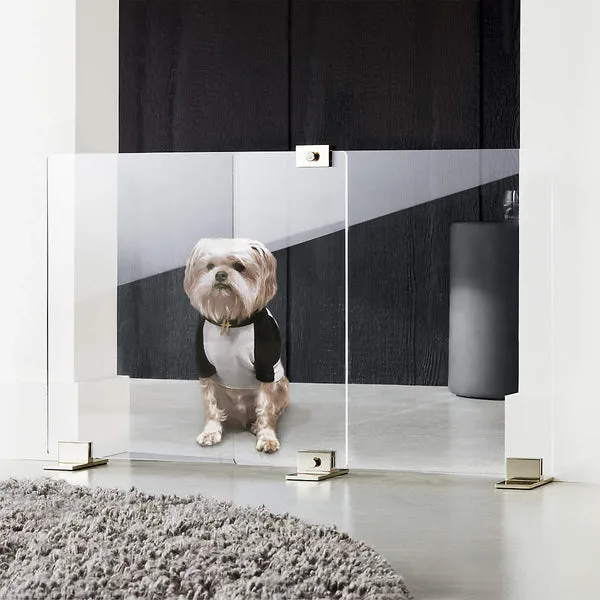 A stylish pet gate used to block access to a couch
The “Off” and “Up” Commands: Direct Communication
While physical blocking is practical, especially for breaking existing habits, it’s crucial to also teach your dog specific commands for staying off furniture. The “Off” command is fundamental for this training. To begin, sit in your living room and observe your dog. The moment they attempt to hop onto the furniture, immediately approach them with a treat or their favorite toy. Firmly say “Off” to indicate that you want them to get off the couch. Use the treat or toy to lure them down to the floor. Consistently repeat this process, rewarding them each time they respond correctly to the “Off” command, until they understand what the word means.
Some owners prefer to allow their dogs on the couch occasionally, under invitation. In such cases, teaching the “Up” command alongside “Off” can be beneficial. This teaches your dog that to join you on the couch, they need your explicit permission. You can designate a specific spot, perhaps with a cute blanket or a removable dog bed cover, for cuddle time while protecting your furniture. To teach “Up,” you might enlist the help of a leash. Excitedly say “Up!” and pat the desired spot. Wiggle a toy or treat to encourage them. If they hesitate, gently pull the leash upward. Once they reach the spot, reward them with praise and a treat. Using this opportunity to practice the “Off” command ensures your dog learns that couch access is conditional upon your invitation. For more tips on how to teach a dog not to jump on furniture, these commands are also highly relevant.
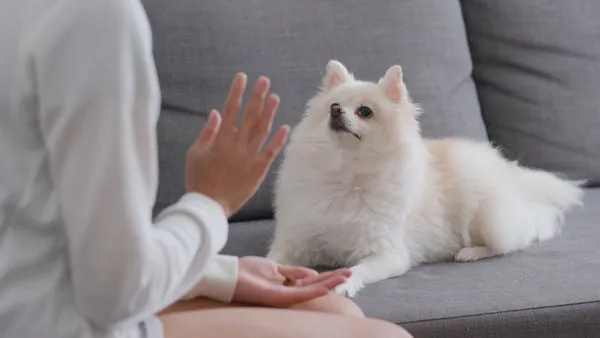 A dog getting off a couch with a person's guidance
The Spot or Place Method: Offering an Alternative
Another highly effective strategy for keeping your dog off the couch is to provide them with an appealing alternative. Consider placing a comfortable dog bed in the same room as your couch. Introducing the “Place” or “Bed” command can redirect your dog’s attention away from the sofa. Modern dog beds are often designed to complement home décor, making it easy to keep them close to your main living area without aesthetic clashes.
When your dog approaches the couch, immediately say “Place” and guide them towards their designated bed. You can use small treats along the way to reinforce this desired behavior. For more stubborn dogs, a gentle leash guidance can help direct them to their bed. As your dog begins to associate the “Place” command with their bed, gradually reduce the reliance on treats. The key is to shift to positive reinforcement. When you enter the living area and your dog goes directly to their bed instead of the couch, praise and reward them. This positive association helps your dog understand that their bed is a rewarding, acceptable zone, while the sofa remains off-limits. If you’re specifically trying to reinforce this behavior, training your dog to stay with you in a designated spot can be helpful.
 A dog resting comfortably on a modern dog bed on the floor
What to Do When You’re Not Home
Many dog owners find that even after consistent training, their dogs revert to old habits the moment they’re left unsupervised. Security cameras often reveal enthusiastic couch-jumping as soon as the door closes. Preventing your dog from getting on the couch when you’re not home is crucial for cementing the training.
The simplest solution is to block access entirely. This can involve placing a baby gate across the doorway leading to the living room or strategically arranging furniture to prevent them from reaching the couch. Alternatively, crate training your dog can be immensely beneficial. Crate training provides a safe, confined space for your dog when you’re away, preventing destructive behaviors and ensuring they stay off the furniture. While it can take time, learning how to crate train your dog offers peace of mind. Your dog’s bed can be a valuable tool in making the crate a comfortable and inviting space. If crating isn’t an option, consider using deterrents like specific scents or textures that dogs dislike, though these should be tested carefully for your dog’s reaction and effectiveness. Understanding how to train my dog to stay off the couch requires addressing both supervised and unsupervised behavior.
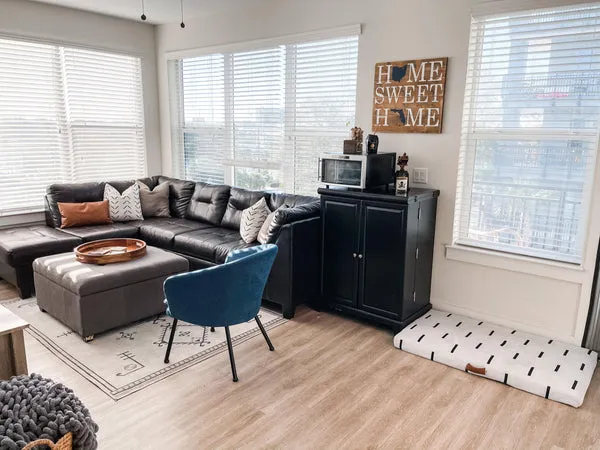 A comfortable dog bed placed on the floor in a living room
The Importance of Consistency and Reinforcement
The cornerstone of any successful dog training, especially when teaching your dog to stay off the couch, is unwavering consistency and positive reinforcement. Sending mixed signals will only confuse your dog and prolong the training process. It’s vital that every member of your household is on the same page regarding the rules and methods for keeping the dog off the couch. Ensure everyone practices the training methods consistently and reinforces good behavior.
Regularly praise and reward your dog when they choose their bed over the couch or respond correctly to “Off” and “Place” commands. Patience is key; some dogs may learn faster than others. By maintaining a consistent approach and positively reinforcing desired behaviors, you’ll establish clear boundaries and help your dog understand their role within the home. This commitment ensures a well-behaved companion and a tidy living space. If your dog also tends to jump on people, you might find related strategies on how to get a dog to stop jumping up helpful in overall behavior modification.
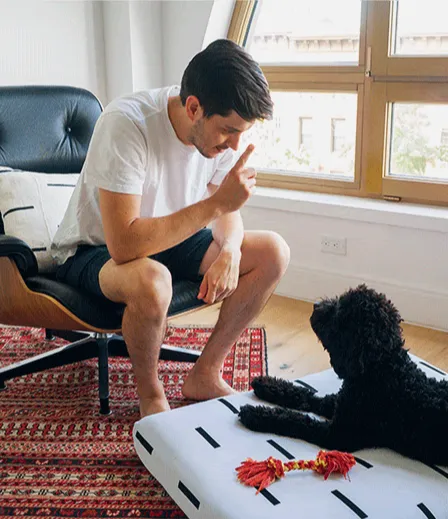 A dog looking attentively at its owner during a training session
Training your dog to stay off the couch is an achievable goal that enhances harmony in your home. By utilizing methods like physical blocking, teaching direct commands like “Off” and “Place,” and providing appealing alternatives, you can guide your dog toward appropriate behavior. Remember to address their habits even when you’re not home, using barriers or crate training. The ultimate success hinges on consistency from all family members and continuous positive reinforcement. With patience and a clear, unified approach, you and your dog can enjoy a comfortable and respectful living environment. If you’re looking for professional guidance and convenient learning, consider enrolling in an online dog training program to further hone your skills and address specific challenges.
