
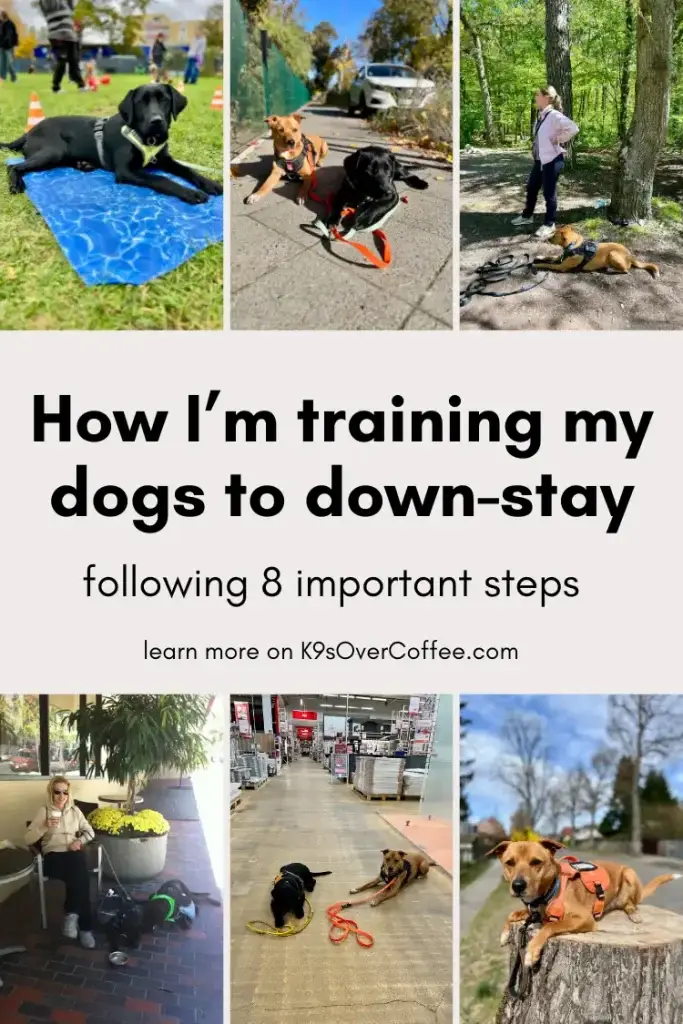
Teaching your puppy to lie down is a foundational skill that not only keeps them out of trouble but also encourages calmness. However, many puppies struggle with either getting into the down position or staying there. This guide provides three effective techniques to train your puppy to lie down, along with troubleshooting tips to ensure a smooth learning process.
The “down” command is crucial for managing your puppy’s behavior and promoting relaxation. While it might seem straightforward, some puppies resist this position or offer only a fleeting attempt. Fortunately, with patience and the right methods, you can successfully teach this essential command. Clicker training can be a valuable tool to clearly communicate to your puppy the exact moment they perform the desired action correctly.
Luring a Down
Luring is an intuitive training method where you use a high-value reward, such as a treat or a favorite toy, to guide your puppy into the desired position. This technique helps your puppy understand what you’re asking of them. For instance, moving a treat in a circular motion around your dog’s nose can elicit a spin. It’s vital to gradually fade the lure as soon as possible, transitioning your puppy to respond to a hand signal or a verbal cue instead of solely relying on the visual aid of the lure.
To maximize effectiveness, use a lure that genuinely excites your puppy, ensuring their willingness to follow.
Here are the steps to train a down using the luring method:
- Start with your puppy in a sitting position. Hold a treat close to their nose.
- Lower the treat between your puppy’s front paws. This encourages them to lower their head.
- Continue moving the treat along the ground away from your puppy, creating an “L” shape with your hand. As your puppy follows the lure, they should naturally lower their body into a down position.
- The instant your puppy is in the down position, use your clicker (if using) and offer verbal praise. Immediately follow up with the treat as a reward.
- After several successful repetitions, begin using a treat from your other hand as the reward, so the lure itself is no longer consumed.
- Progress to luring your puppy with an empty hand while rewarding them with a treat from your opposite hand. This successfully teaches a hand signal, typically a downward motion of your hand towards the ground.
- Once your puppy reliably responds to the hand signal, introduce the verbal cue by saying “Down” just before you present the hand signal. With consistent practice, your puppy will eventually respond to the verbal cue alone.
If your puppy has not yet mastered the “sit” command, you can initiate the down command from a standing position. Either lure a sit first, or bring the treat directly down between their front paws while they are still standing. However, since the distance to the ground is greater from a standing position, you might find the shaping technique more manageable.
Shaping a Down
Shaping involves breaking down a behavior into smaller, manageable steps, rewarding each successful progression. For the “down” command, this might involve teaching your puppy to look at the ground, then to lower their elbows, and finally to lie down completely, or any incremental steps your dog requires. The key is to set your puppy up for success by starting with an easily achievable step and gradually increasing the difficulty. It’s always better to err on the side of making it too easy than to frustrate both yourself and your puppy by demanding too much too soon.
Begin by using a lure to encourage your puppy to simply look at the ground. Click and praise this action, then reward. Once your puppy consistently looks down, lure their head lower towards the ground before clicking and rewarding. Subsequently, you can encourage bent elbows and so on, progressing through each small step. Do not focus on fading the lure or adding a verbal cue until the final behavior has been successfully taught.
Capturing a Down
Capturing is a training method where you reward your puppy for performing the desired behavior naturally, without any prompting. Always keep treats or a favorite toy readily accessible in your pockets. Whenever you observe your puppy lying down on their own, immediately click (if using a clicker) and praise them. Then, offer a reward while they are still in the down position. After consistently capturing these moments, your puppy will begin to lie down proactively, anticipating a reward. At this point, you can introduce a hand signal or verbal cue just before they are about to lie down. Your puppy will then associate your cue with their action. Soon, you’ll be able to request the “down” command at any time.
Tips for Training Down
Even with multiple training methods available, teaching the “down” command can present challenges. The following tips can significantly ease the process:
- Train when your puppy is tired: Avoid attempting to teach “down” when your puppy is full of energy. It’s most effective to practice this command after a walk or a play session when they are more relaxed.
- Never force your puppy: Resist the temptation to physically push your puppy into the down position. This can create resistance, making them more inclined to stand, or worse, frighten them, associating the command with an unpleasant experience.
- Use a lure to encourage crawling under legs: Create a “bridge” with your legs on the ground for smaller breeds or use a stool for larger dogs. Guide the lure from your puppy’s nose towards the ground and then pull it under your legs. Your puppy will need to lie down to reach the treat. Reward them immediately upon achieving the correct position.
- Reward in the down position: The placement of your reward is critical for clear communication. If you consistently reward your puppy only after they sit up, you are inadvertently reinforcing sitting, not lying down. This can lead to the “push-up” problem, where the puppy lies down briefly before quickly standing again. Ensure you are ready to deliver the reward while your puppy is still in the down position.
