
Canine companions, much like their human counterparts, thrive on the freedom to explore and stretch their legs without restraint. This fundamental need highlights the importance of off-leash dog training, a crucial aspect of ensuring your dog’s good behavior and safety, wherever local laws permit. This guide will equip you with the knowledge to train your dog for off-leash excursions, emphasizing safety for all involved, and introducing the benefits of a smart dog tracker for added security.
Key Takeaways
Successful off-leash dog training hinges on your dog’s mastery of basic obedience, a reliable recall, and strong impulse control. Ensure your dog is truly ready before embarking on off-leash activities, and always verify your local leash laws.
The freedom of going off-leash introduces potential risks, including the possibility of running away, encountering hazards, or causing unintended accidents.
In the event your dog runs off, maintaining a calm demeanor is paramount. Avoid chasing, utilize treats to encourage their return, and consider the invaluable safety net provided by a smart dog tracker with real-time GPS tracking for your off-leash adventures.
What is Off-Leash Dog Training?
A dog is considered off-leash any time they are not tethered. This applies to various scenarios, such as walks, hikes, camping trips, visits to nature parks, or any unfenced area. Off-leash dog training is therefore essential before engaging in any of these activities. While it builds upon basic obedience commands, it is a distinct skill set that requires dedicated training.
Best Dog Breeds for Off-Leash Training
Certain breeds, particularly those historically bred for hunting like Retrievers and Spaniels, often exhibit highly trainable natures, making them excellent candidates for good recall and off-leash activities. Breeds well-suited for wilderness hikes, camping, or hunting pursuits include:
- Border Collie
- Labrador Retriever
- Golden Retriever
- Australian Shepherd
- German Shorthaired Pointer
Conversely, breeds with a strong prey drive, such as Siberian Huskies, Shiba Inus, Rhodesian Ridgebacks, or Coonhounds, may not be ideal candidates for off-leash adventures. Similarly, dogs exhibiting aggressive tendencies might lack the appropriate temperament. While training is possible for these dogs, it may present a greater challenge depending on their individual personality.
💡Beyond reinforcing your dog’s recall, a GPS tracker serves as a critical safety measure when your dog is off-leash. Activating the “LIVE” feature on your Tractive device allows for real-time tracking of your dog’s movements, even if they vanish into dense undergrowth or out of sight.
How to Determine if Your Dog is Ready for Off-Leash Freedom
Before commencing off-leash training, evaluate your dog against the following criteria:
- Does your dog consistently respond well to basic obedience commands?
- Does your dog exhibit a reliable recall when called?
- Does your dog possess good impulse control? For instance, can they resist the urge to chase a squirrel when spotted?
- Does your dog interact positively with strangers, including other dogs and young children?
- Is your dog microchipped and wearing a clearly visible ID tag?
- Are your dog’s vaccinations and flea/tick prevention up-to-date?
- Are you thoroughly familiar with the leash laws in your specific area?
- Has your dog been spayed or neutered? (The instinct to mate can cause dogs to wander if they detect a female in heat.)
Answering “YES!” to all these questions indicates that you and your dog may be prepared to begin off-leash training.
Potential Risks Associated with Off-Leash Dog Training
If your dog has a history of running off – whether due to prey drive, incomplete obedience training, or even boredom – going off-leash necessitates thorough emergency preparedness.
Allowing your dog to be off-leash significantly increases the likelihood of them running away. A dog can become spooked by a myriad of triggers and bolt unexpectedly. Without a leash, your only recourse is voice commands for stopping or recalling your pet. This could lead to dangerous situations such as being hit by a car, conflicts with other animals, becoming lost, or ingesting toxic substances.
Furthermore, an unrestrained dog poses a risk to people and other animals. They might engage in fights with other dogs, bite a person, or dart in front of a cyclist, causing an accident. Individuals who are fearful of dogs may be distressed by an overly enthusiastic, unleashed pet approaching them.
The Importance of Local Leash Laws
Numerous jurisdictions enforce laws prohibiting dogs from roaming off-leash. Many cities and towns have enacted their own ordinances that may be even more stringent than state regulations. These local laws often mandate that a dog must be “under control,” which doesn’t always strictly mean on a leash but implies being under the owner’s command. Certain locations, such as city parks, may specify leash lengths, often no longer than six feet. Violations can result in fines.
Moreover, some countries may have outright bans on off-leash dogs. Others might impose additional requirements, such as mandatory leashes and muzzles, particularly when using public transportation. It is imperative to research these regulations before traveling with your dog.
Ultimately, laws vary significantly by location. It is crucial to understand the leash laws in your area and any place you plan to visit with your canine companion.
Getting Started with Off-Leash Dog Training
Laying the Foundation with Obedient Behavior
Prior to attempting off-leash training, your dog must be proficient in basic commands. Mastering these commands is vital for preventing precarious situations, such as encounters with wildlife, consuming inappropriate items, or venturing onto thin ice. Essential commands include:
- Sit: Your dog ceases their current activity and sits attentively, looking at you.
- Stay: Your dog remains in position, unaffected by surrounding distractions.
- Down: Your dog lies down at your feet.
- Go: Your dog moves to a designated spot, such as their bed or crate.
- Heel: Your dog walks beside you, maintaining a consistent position.
- Recall: Your dog promptly returns to you when called.
- Look: Your dog focuses their attention on a designated point, typically you.
- Drop it: Your dog releases an object from their mouth.
- Leave it: Your dog disengages from an object or ignores a potential chase.
These commands can be reinforced through voice prompts, hand signals, whistles, or the use of a clicker. Positive reinforcement, such as treats or praise, solidifies the learning process. Integrating a 10-minute training session into your dog’s daily routine helps maintain their skill level.
If you encounter difficulties with basic obedience training, consider consulting a professional dog trainer or utilizing online training resources. Do not proceed with off-leash training until your dog has demonstrated mastery of fundamental commands. Your role is to be a patient, calm, and assertive leader, maintaining control over your dog’s behavior and intervening when necessary.
Leveraging Treats for Motivation
When using treats for training, always carry some during off-leash outings. To capture your dog’s attention when they are nearby, present treats from your hand. If your dog is at a distance, crinkling the treat bag can effectively signal that rewards are available.
Utilizing a Long Leash
Before transitioning to a fully off-leash environment, attach a long or retractable leash to your dog’s harness and head outdoors. This allows your dog a degree of freedom while maintaining a physical connection. Throughout your excursions, practice commands such as heel, recall, or look at me with your dog. Repeat these exercises frequently during walks, having treats readily accessible.
After several outings with the long leash, assess your dog’s responsiveness to your commands. If your dog remains overly engrossed in exploration and disregards your cues, further training is necessary before proceeding to off-leash freedom.
Practicing Off-Leash in Safe Environments
Once your dog demonstrates readiness, practice off-leash commands in a securely fenced area, such as your backyard. Release the leash with confidence and assertiveness, issue commands consistently, and offer abundant praise for successful obedience.
Repeat this exercise the following day, introducing distractions by inviting family members or friends. Continue to focus on issuing commands and observing your dog’s reactions. If these sessions proceed positively, your dog may be prepared for genuine off-leash experiences.
Mastering Emergency Commands
In addition to routine check-ins, practice emergency “Sit” and “Down” commands. Implement these commands when your dog is both close by and has ventured ahead. For instance, if you encounter horses on a trail, recall your dog or instruct them to “Sit” until the horses have passed or you have reached their side. Avoid chasing your dog, as this may incite excitement or encourage them to run further.
Addressing Your Dog Running Away
Despite diligent training, no guarantee exists that an off-leash dog will never run off. If this situation arises:
- Remain Calm: As the pack leader, your composure is crucial. Call your dog in a firm, steady tone, avoiding any hint of anger or fear.
- Do Not Chase: This action can be misinterpreted as a game, prompting your dog to run faster. Direct pursuit is unlikely to be successful. Rely on their trained recall response.
- Utilize Treats: Present treats from your pocket or rustle the bag to regain your dog’s attention.
- Turn Away: Walk in the opposite direction while calling your dog’s name. Curiosity may prompt them to follow.
How a Smart Dog Tracker Prevents Emergencies
Even the most well-behaved dogs can exhibit unexpected behaviors. A sudden scent, a startling noise, or the sight of a particularly agile squirrel can cause them to vanish in an instant. This is precisely where a smart dog tracker with real-time GPS tracking can transform a moment of panic into a swift resolution.
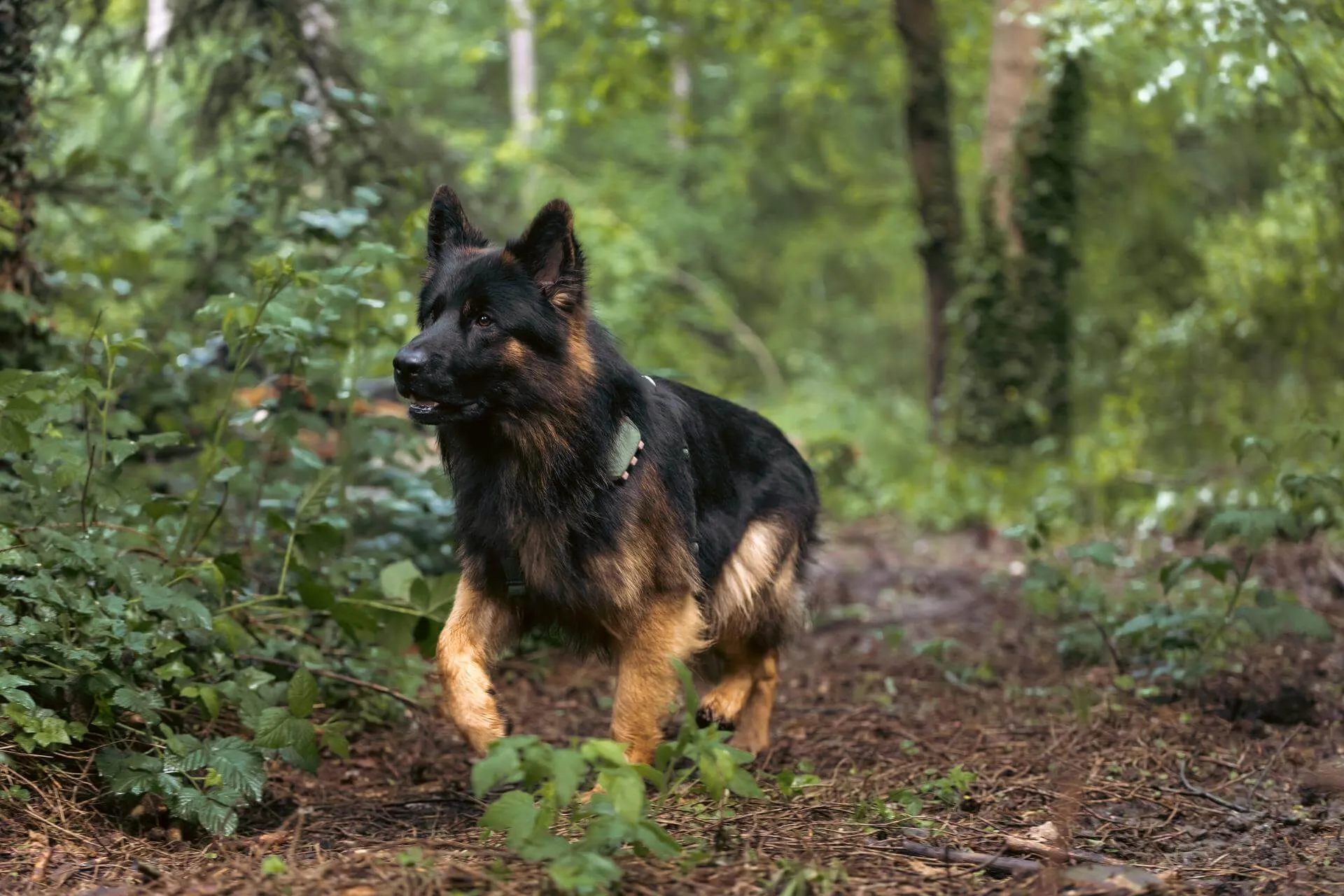 black dog in forestAttached to your dog’s collar, a Tractive device offers the following benefits:
Precise Real-Time Location: View your dog’s exact location on your phone with LIVE tracking that updates their position every few seconds. Any detours your dog takes will be immediately visible. Unlike limited-range trackers, Tractive offers extensive coverage.
Escape Alerts: Designate “safe zones” around your home or a specific park area within the app. If your dog ventures beyond these virtual boundaries, you’ll receive an immediate escape alert, allowing you to recall them promptly.
Insight into Favorite Spots: Utilize the Heat Map and Location History features to review your dog’s past adventures. In an emergency, this information can guide your search efforts.
Worry-Free Outdoor Activities: Tractive trackers are robust and fully waterproof, designed to withstand muddy terrains, unexpected downpours, and any other elements your adventurous companion encounters.
With consistent effort, patience, basic command reinforcement, and an abundance of treats, you’ll be well on your way to enabling your dog’s off-leash freedom, fostering a deep bond of trust, and enhancing your shared outdoor experiences. Remember to always verify local leash laws, begin with gradual introductions using a long line in quiet environments, and you will soon master off-leash dog training.
