
Toilet training your cat might seem like a daunting task, but with a bit of patience and the right approach, it’s achievable. This guide breaks down the process into seven easy steps, helping you transition your feline friend from a litter box to the toilet. Remember, the key is to let your cat set the pace and to reward their progress.
The journey to a toilet-trained cat involves gradually accustoming them to a new routine. By following these steps, you can gently mold your cat’s behavior, leading to a cleaner and more convenient situation for both of you. cat litter training tips.
Step One: Relocate the Litter Box
Begin by moving your cat’s current litter box to a location right beside the toilet. Ensure your cat is comfortable using the litter box in this new spot. Leave it there for as long as you feel necessary for your cat to adjust. It’s crucial to go slow during this phase; if your cat becomes confused, they might seek alternative, less desirable places to relieve themselves, creating difficult habits to break.
Step Two: Gradually Elevate the Litter Box
Once your cat is accustomed to the litter box’s position, begin to gradually raise its height. Each time you increase the height, use sturdy supports like phone books or stacks of newspapers. Secure the litter box to these supports to prevent it from shifting when your cat jumps on or off, which could startle them.
Step Three: Position the Litter Box Over the Toilet
Each day, move the elevated litter box one inch closer to the toilet. Continue this until the litter box is positioned directly over the toilet seat. Concurrently, start reducing the amount of litter in the box, aiming for a thin layer, no more than one inch deep.
Step Four: Introduce a Training Box
Replace the regular litter box with a specialized “training box” that can safely hold your cat’s weight. You can purchase commercial training devices or create your own. One method involves taping a piece of wax paper over the toilet seat, adding flushable litter to the paper, then placing a bowl or aluminum pan on top, securing it with the toilet seat. Fill this pan with flushable litter. Clean the training box after each use and consider adding a sprinkle of catnip to the fresh litter to make it more appealing.
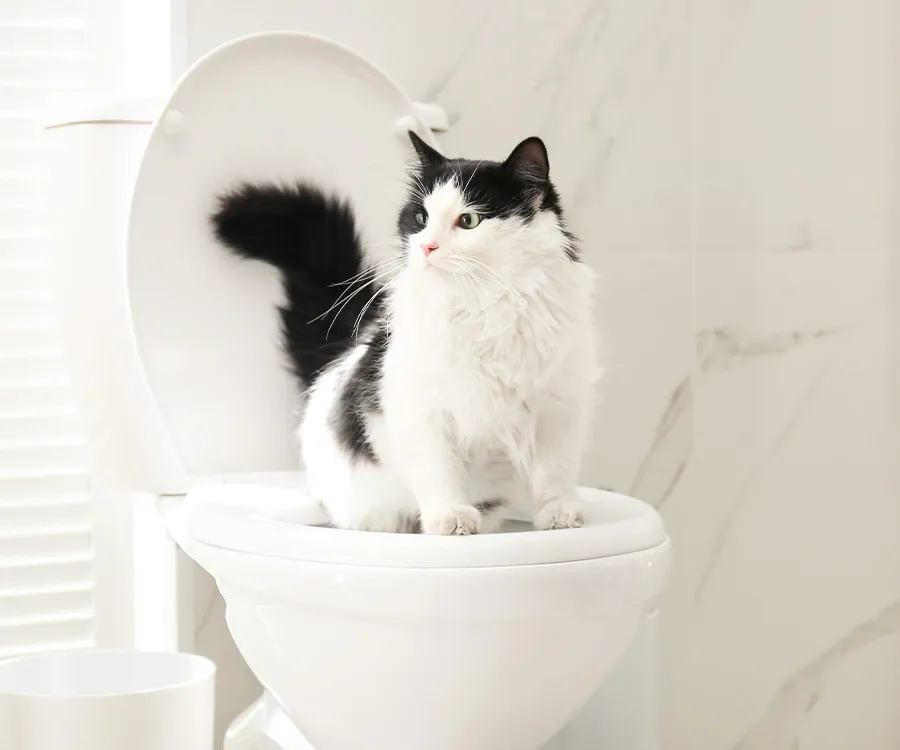 Cat using a training box on a toilet Rewarding your cat with treats after successful toilet use is a powerful motivator.
Step Five: Create an Opening
Begin transitioning your cat to using only the toilet. For the wax paper or pan setup, gradually enlarge the hole in the center. As you increase the size of the opening, decrease the amount of litter in the pan. The goal is to reach a point where there is no litter when the cover or pan is removed. how to train my cat to use litter box.
Step Six: Encourage Flushing (Indirectly)
Once your cat is consistently using the toilet, make sure to flush it after each use. However, it’s generally advised not to teach your cat how to flush the toilet themselves, as they may develop a habit of flushing repeatedly, leading to water wastage.
Step Seven: Reward Success
Positive reinforcement is key. When your cat successfully uses the toilet, offer them a treat and praise. If your cat seems hesitant about the water in the bowl, adding a small amount of flushable litter to the water can help them associate the scent with their litter box, easing their apprehension. kitten not using litter box.
For a visual guide, download our infographic on how to toilet train a cat in 7 steps.
Click here to download the PDF of this infographic.
To further support your cat’s needs, consider products like the Hartz Cattraction with Silver Vine & Catnip® Gator Scratch™ Cat Toy or Hartz® Disposable Cat Diapers with FlashDry® Gel Technology.
