
It’s natural for kittens to exhibit playful biting and scratching behaviors. However, as they grow, these actions can become problematic and even lead to injury. Teaching your feline friend appropriate play manners from a young age is crucial for a harmonious life together. This guide will walk you through effective strategies to redirect your kitten’s playful energies and establish healthy boundaries.
Redirect Playful Energy to Toys
Kittens often mistake hands and feet for toys, leading to nips and scratches. It’s essential to redirect this instinct towards appropriate play objects. When your kitten pounces on your ankles or playfully bites your hands, react with a firm “no!” and immediately redirect their attention to a toy. Never use your hands or feet as playthings. Instead, opt for toys that keep a safe distance between you and your kitten, such as feather wands, balls, or stuffed toys.
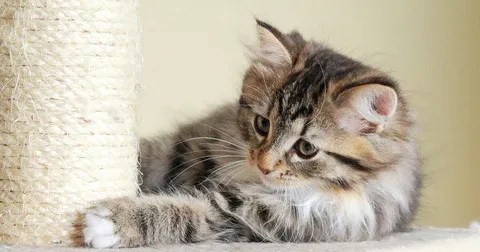 Cat with a scratching post
Provide Appropriate Scratching Outlets
Scratching is an innate behavior for cats, serving purposes like claw maintenance and territory marking. Playful aggression in kittens often involves using their claws. When your kitten uses claws during play, redirect them to a scratching post or suitable toys. Recognizing signs of an impending pounce, such as dilated pupils, a twitching tail, and flattened ears, can help you preemptively redirect their energy. Ensure each cat in your household has access to at least one scratching post, with an additional one recommended, to satisfy their scratching needs and keep their claws in check.
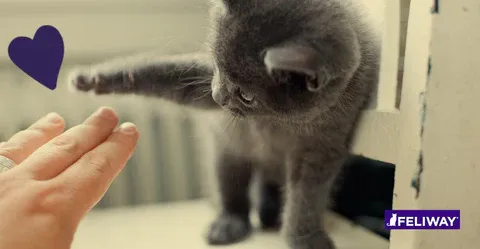 Kitten playing and scratching
Address Aggressive Behavior with Immediate Disengagement
If your kitten displays excessive biting or scratching, it’s vital to teach them that these behaviors are unacceptable. When such aggression occurs, cease all interaction and play immediately. Step away from your pet and out of their reach. Do not provide any attention or reward them in any way. Ignoring your cat for 5-10 minutes by calmly walking away and avoiding eye contact is an effective method to curb aggressive play. Consistency is key; they will soon learn that unwanted behavior leads to social isolation. This method is particularly effective for affectionate cats who miss your attention. Patience and positive reinforcement are essential throughout this training process.
Utilize Vocal Cues Effectively
Your voice can be a powerful tool in communicating your feelings to your cat. When your kitten nips, use a sharp “no!” or “ouch!” command. This vocal cue, paired with ignoring the behavior, reinforces that you are displeased. However, avoid shouting, as an angry reaction can induce fear or anxiety, potentially worsening the behavior. After a brief cooling-off period, resume play using a calm tone to reward good behavior and encourage gentle interaction. Always acknowledge and reward positive play and stop when your kitten becomes overly excited or rough.
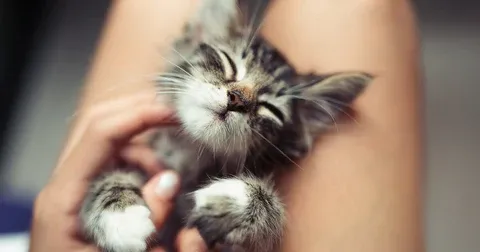 Cute kittens
Engage in Daily Play Sessions
Establishing a routine of daily play is crucial for your cat’s well-being. Engaging in 10-15 minute play sessions, two to three times a day, helps strengthen your bond, promotes relaxation, and expends excess kitten energy, thereby reducing aggression. Teaching your kitten to play calmly is an integral part of your relationship. By consistently reinforcing good play habits and ignoring undesirable ones, your kitten will gradually learn appropriate behavior.
Avoid Reinforcing Unwanted Behaviors
It may be tempting to continue playing with your kitten even after they’ve bitten or scratched you. However, this attention can inadvertently reinforce these behaviors, potentially leading them to seek attention through aggression. Always disengage and ignore your cat immediately when unwanted biting or scratching occurs.
 Kitten health illustration
Rule Out Underlying Health Issues
Persistent biting or scratching, or unusually aggressive behavior, warrants a veterinary check-up. Pain or illness can make a cat feel defensive, increasing their likelihood of attacking.
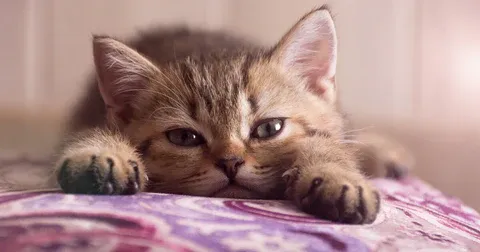
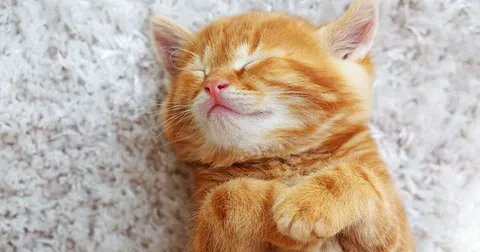 Calm kitten resting
Cultivate a Tranquil Environment
A stressed or anxious cat may exhibit increased biting and scratching. Ensure your kitten’s environment is conducive to calmness. Provide ample resources, including hiding spots, easy access to food, water, litter boxes, and scratching posts. Maintain a consistent routine for meals and playtimes, and minimize sudden noises or household changes. Consider using a FELIWAY Optimum diffuser in their primary living space to promote a calm atmosphere and help reduce scratching, spraying, and hiding behaviors.
Teaching your kitten to refrain from biting and scratching requires patience, consistency, and understanding. By implementing these strategies, you can foster a well-behaved companion and enjoy a playful, injury-free relationship with your feline friend.
