
Bringing a new cat or kitten into your home is an exciting experience, but it often comes with the challenge of redirecting natural feline behaviors away from your furniture. One of the most common issues cat owners face is preventing their pets from scratching sofas, chairs, and carpets. The key to resolving this lies in understanding why cats scratch and effectively training them to use a designated scratching post. This guide will walk you through selecting the right scratching post, choosing optimal placement, and employing positive reinforcement techniques to ensure your cat’s scratching needs are met without sacrificing your home’s decor.
Strategic Placement: The Foundation for Success
The first crucial step in training your cat to use a scratching post is selecting the best location for it. Cats scratch for several innate reasons, and understanding these motivations can help you make informed placement decisions.
- Territorial Marking: Cats use scratching to communicate with other cats, leaving behind visual marks and scent signals from glands in their paws. Therefore, they prefer prominent, high-traffic areas for scratching, not hidden corners. Placing scratching posts in visible spaces, like the center of a room or near their favorite napping spots, mimics this natural behavior. While aesthetics are important, you can gradually move the post to a less conspicuous location over several weeks once your cat reliably uses it.
- Stretching and Exercise: Scratching allows cats to stretch the muscles in their shoulders, toes, and feet, especially after waking up. Placing a scratching post near their preferred sleeping areas can encourage them to stretch and scratch upon waking.
- Addressing Existing Habits: If your cat consistently scratches a particular spot on your carpet or furniture, placing a scratching post or pad in that exact location can be highly effective. This shows your cat that you acknowledge her preferred scratching zone and redirects her to an appropriate alternative. To further deter scratching on furniture arms or sides, you can temporarily cover the area with a heavy blanket tucked in securely. Then, position the scratching post directly in front of the covered furniture. Once your cat consistently uses the post for a week or two, you can begin moving it gradually to your preferred location.
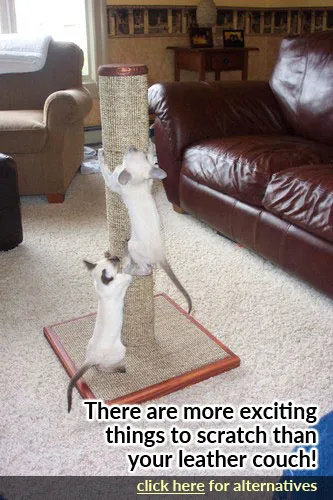 A cat scratching a post
Providing multiple scratching posts throughout your home increases the chances of your furniture remaining untouched. Observe where and how your cat scratches—whether it’s on vertical, horizontal, or angled surfaces, or in specific areas like under a bed or in a closet. This information can guide you in choosing the right types and placements for her scratching posts and pads.
Encouraging Interest in the Scratching Post
Some cats may not immediately take to a new scratching post. Don’t be discouraged; a little coaxing can help them discover how appealing the new post is.
- Catnip: For cats that respond to catnip, sprinkling some on the scratching post can be very effective. The scent can encourage them to knead and scratch, leading them to discover the post’s texture and function.
- Playtime: Engaging your cat in play around and on the scratching post can build positive associations. Using a wand toy, you can encourage your cat to reach for the toy on the post, prompting her to place her paws on it and eventually scratch. Placing a favorite toy on top of the post can also entice her to climb and engage with it.
- Horizontal Introduction: For cats new to scratching posts, try laying the post on its side initially. Combine this with catnip and play to encourage interaction. Once your cat is comfortable using it horizontally, you can gradually transition it to an upright position.
- Multiple Cats, Multiple Posts: If you have more than one cat, ensure there are ample scratching posts available. Encouraging play around the posts with toys can help them associate the posts with fun activities.
- Treats: Positive reinforcement with treats can significantly aid the training process. Offer a treat when your cat investigates the post, then when she places her paws on it, and finally when she scratches it. Placing treats on top of the post can also encourage climbing.
- Pheromone Sprays: Products like Feliway mimic feline facial pheromones that promote a sense of calm and well-being. Applying these sprays to household objects your cat is scratching can help signal that these are not appropriate scratching surfaces. Using this in conjunction with training can reinforce the desired behavior.
It’s important to note that physically forcing your cat’s paws onto the scratching post is generally not effective and can lead to avoidance. Kittens, however, may respond well to gentle guidance, especially if they have an older cat to model the behavior.
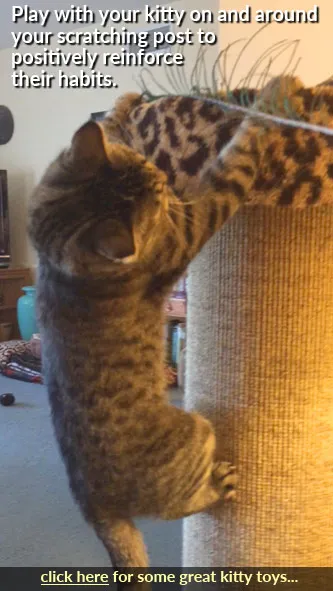 Cats playing with toys and scratching posts
The Pitfalls of Negative Training
Avoid using negative reinforcement methods such as squirting water, making loud noises, yelling, or hitting. These techniques are often ineffective with cats and can lead to stress, anxiety, and behavioral problems like inappropriate urination or defecation, increased scratching on other objects, or withdrawal. Focusing on positive reinforcement for desired behaviors, like using the scratching post, is a much more effective and humane approach.
Final Thoughts on Scratching Post Success
If your cat remains disinterested in a particular scratching post, try relocating it. A spot near a window with an engaging view of the outdoors can often spark a cat’s interest, leading to a scratching session. With patience, consistent positive reinforcement, and strategic placement, your cat will learn to favor her scratching posts over your furniture, creating a harmonious living environment for both of you.
[