
Walking your dog should be an enjoyable experience for both of you, a chance to explore the world together. However, for many dog owners, what begins as a pleasant stroll often turns into a frustrating tug-of-war, with their beloved companion dragging them down the street. Leash pulling is a common behavioral issue that can make walks stressful and even dangerous, potentially leading to injuries for both the dog and the handler. Understanding how to teach your dog to stop pulling on leash is crucial not only for your comfort but also for your dog’s safety and well-being, as being dragged or choked by a tight collar is far from ideal.
While it’s against the law to let your dog off-leash in most public areas, and also generally unsafe, keeping your dog leashed provides essential control. But that control becomes a struggle when your dog constantly pulls. The good news is that this common challenge can be overcome with simple, consistent techniques and a few adjustments to your walking routine. By implementing these 10 effective tips, you can transform your walks from a strenuous chore into a harmonious partnership, fostering a stronger bond with your furry friend. Soon, you and your dog will be walking together, rather than your dog walking you.
Always Reward Good Leash Behavior
It’s easy to take good behavior for granted, especially when you’re focused on correcting unwanted actions. However, dogs are highly motivated by rewards, and they are more likely to repeat behaviors that bring them positive reinforcement. Whether it’s a tasty treat, enthusiastic praise, a gentle pat, or even the chance to sniff something interesting, these rewards tell your dog they’re doing something right. If you only pay attention when your dog pulls, they might learn that pulling is the way to get your attention or move forward.
Make it a habit to reinforce polite leash walking. Carry treats with you on every walk and be ready to offer them generously whenever your dog walks calmly by your side with a loose leash. In the initial stages of training, reward heavily and frequently. As your dog’s skills improve, you can gradually reduce the frequency of food rewards, replacing them with “life rewards” like a moment to investigate a tree or a brief, controlled greeting with another dog. This positive reinforcement approach teaches your dog that walking nicely is far more rewarding than pulling.
Never Let Your Dog Walk When They Are Pulling
The primary reason a dog pulls on the leash is to get somewhere faster – they want to move forward. If you allow them to continue walking while they are pulling, you are inadvertently rewarding that behavior, effectively teaching them that pulling works. This will only reinforce the habit and make it harder to break in the long run. The golden rule for teaching a dog not to pull is simple: if they pull, you stop.
As soon as you feel tension on the leash, stop immediately and plant your feet. Do not move forward. Wait patiently for your dog to either stop pulling and return their attention to you, or for the tension on the leash to loosen. This simple act communicates clearly that pulling does not achieve their goal of moving forward.
Wait for a Loose Leash Before You Walk
Once you’ve stopped because your dog pulled, the next crucial step is knowing when to resume walking. The signal to restart should always be a loose leash. The leash should hang in a relaxed “J” shape, indicating there’s no tension. Additionally, wait for your dog to disengage from whatever they were fixated on and turn their attention back to you. This might take a few moments, especially when you first start, but your dog will eventually look back to see why you’ve stopped.
At that exact moment, when the leash is slack and their attention is on you, offer praise and a treat right at your side, then immediately continue walking. Initially, you might find yourself stopping and starting every few steps, but with consistency, your dog will quickly learn that a tight leash means a halt, while a loose leash allows the walk to continue. This creates a clear cause-and-effect relationship for your dog.
Incorporate Life Rewards on Your Walk
Beyond just a bathroom break, walks should be an enriching experience that provides both physical exercise and mental stimulation for your dog. While you’re focusing on no-pull training, it can feel restrictive. To make the training more engaging and rewarding, incorporate “life rewards”—everyday things your dog genuinely enjoys. These can include sniffing a particularly interesting patch of grass, greeting a friendly stranger, or investigating a new scent.
For example, if your dog walks politely for 10 feet with a loose leash, reward them by allowing a few minutes of controlled sniffing. These bonus rewards serve as powerful motivators, convincing your dog that walking politely truly pays off. This approach not only enhances their walking experience but also strengthens their understanding that good behavior leads to good things. To expand on your dog’s outdoor manners, consider these tips on how to train a stubborn dog to potty outside.
Walk at a Good Pace
Many dogs pull on the leash simply because they want to move faster than their human companions. Humans often walk at a leisurely pace, which can be frustrating for dogs, whose natural gait is typically quicker, even for smaller breeds. A mismatched pace contributes significantly to leash pulling as your dog constantly tries to increase speed.
To help your dog feel more engaged and less inclined to pull, try to find a walking pace that is comfortable and brisk for both of you. While you can certainly train your dog to match your speed eventually, during the initial training phase, a quicker pace can make it significantly easier for them to learn not to pull. It helps them feel like they’re making progress and reduces the urge to forge ahead.
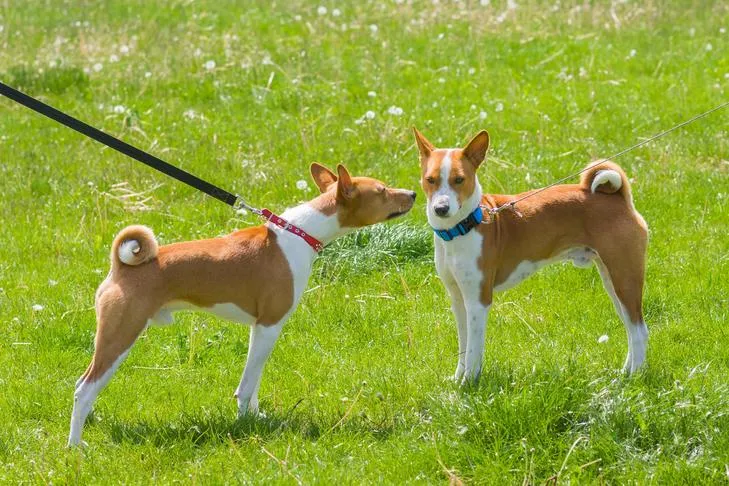 Basenjis meeting in a field outdoors, one on leash.
Be Consistent With Your No-Pulling Rule
Consistency is paramount in dog training. It can be incredibly tempting to let your dog pull when you’re in a hurry, perhaps running late for work, or if it’s freezing outside and you just want a quick potty break. However, every single time you allow your dog to pull, you reinforce the unwanted behavior and set your training back to square one. Dogs thrive on predictable rules; if the rules are inconsistent, they become confused and less likely to learn.
You must adhere to your “no-pulling” rule in every situation, without exception. Until your dog consistently walks politely for more than just a few feet, it might be necessary to let them relieve themselves in the yard or at the curb. Save the longer walks for when you have ample time to dedicate to training. Remember, a few minutes of consistent training is more effective than an hour of allowing bad habits to form. For new pet owners, understanding puppy pad training vs outside can also be a key part of establishing early routines.
Keep Training Sessions Short and Fun
Working with a determined leash puller can be incredibly frustrating, especially in the early stages when progress seems minimal. You might find that you don’t get much further than the end of your driveway during an entire training session. Pushing your dog (or yourself) until you’re both tired and annoyed with the lack of progress is counterproductive. Instead, keep your training sessions brief, positive, and upbeat.
Puppies, in particular, have very short attention spans, and asking too much too soon will only lead to frustration and diminish their willingness to learn. The goal isn’t to cover a certain distance; it’s to achieve a loose leash, even if that means only walking a few yards. End each session on a positive note, celebrating small successes, and both you and your dog will be more eager to continue next time. If you’re working with a young dog, managing expectations for potty training a 12 week old puppy requires similar patience and short, positive interactions.
Be Interesting and Engaging on Walks
For a dog, the world is a sensory wonderland, brimming with fascinating sights, captivating sounds, and an irresistible array of smells. All these external stimuli compete fiercely for your dog’s attention, making it easy for them to get distracted and pull you towards the next exciting discovery. If you’re disengaged, perhaps absorbed in your phone, your dog has little reason to focus on you.
To counteract these distractions, make yourself the most interesting thing on the walk. Talk to your dog, offer unexpected treats, take quick breaks for a mini-training game, or change directions unpredictably. By keeping your dog guessing and engaged with you, they will be more likely to pay attention to your cues and follow your lead, making polite leash walking a more natural outcome.
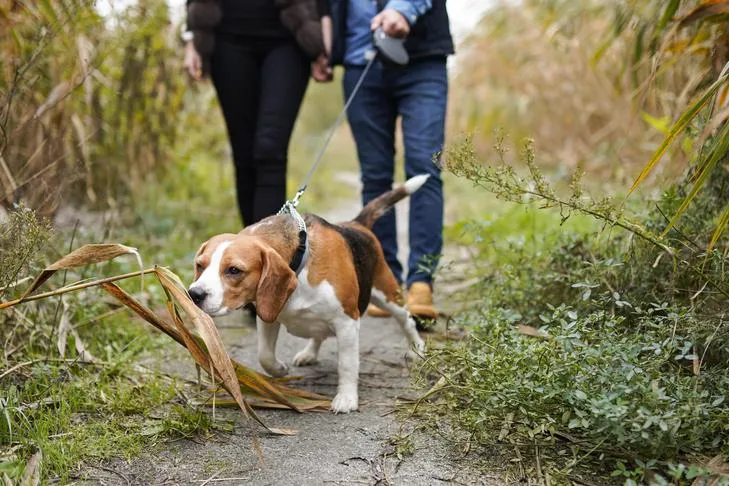 Beagle pulling on the leash to sniff while on a walk outdoors.
Stay Calm
Walks can present a variety of emotionally charged situations, whether it’s the excitement of seeing a favorite neighbor, the approach of a barking dog, or something entirely unexpected. Both positive and negative emotions can impact your dog’s behavior, leading to increased pulling or anxiety. Dogs are incredibly adept at reading human emotions, and your mood can easily transmit down the leash, either escalating their excitement or intensifying their fear.
To help your dog remain calm and focused, it’s essential that you stay calm yourself. Projecting a relaxed demeanor shows your dog that there’s nothing to be overly excited or worried about. A calm dog is much more likely to listen to your commands and exhibit appropriate leash manners. Managing your own reactions is a powerful tool in guiding your dog’s behavior. For instance, successfully training breeds like a Husky, who often have strong prey drives, requires consistent calmness, especially when learning how to train a husky puppy to pee outside.
Engage Your Dog In Distracting Situations
Distractions are inevitable on walks. Other dogs, squirrels, unfamiliar people, or even strange noises can easily cause your dog to forget their leash manners and start pulling. Your dog might pull to investigate something intriguing, or they might pull to retreat from something they find suspicious or frightening. In either scenario, polite leash walking can quickly go out the window.
The key to managing distractions is to proactively engage your dog and redirect their focus to you. Before your dog spots a distraction, try to get their attention. Offer treats calmly, initiate a simple game, or ask for a known command like “sit” or a “hand target.” These exercises are familiar and easy for your dog to perform, helping them stay engaged with you as the distraction passes. You can also teach a “watch me” cue, encouraging your dog to make eye contact with you, which gives you control over where their attention is directed. The goal is to grab their attention before they even notice the distraction, ideally allowing it to pass by without incident.
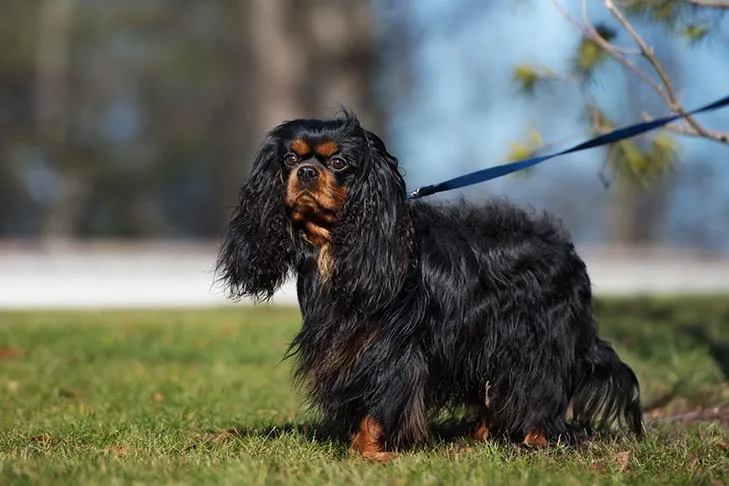 Cavalier King Charles Spaniel on a lead outdoors.
Teaching your dog to stop pulling on the leash is a process that requires patience, consistency, and a positive approach. By implementing these 10 tips, focusing on rewarding good behavior, maintaining consistency, and making yourself an engaging presence, you can transform your walks from a challenging tug-of-war into a joyful, connected experience. Remember, every successful walk, no matter how short, builds confidence and reinforces the desired behavior. With dedication, you’ll soon enjoy peaceful strolls with a well-behaved companion by your side.
