
Is your feline friend determined to explore the great outdoors, making a dash for freedom every time a door opens? Dealing with an escape artist cat can be a constant source of stress for pet owners. Fortunately, there are several proven strategies to help your kitty understand that home is where they belong. This guide provides five effective methods to keep your cat safely indoors, drawing upon expert advice and practical experience.
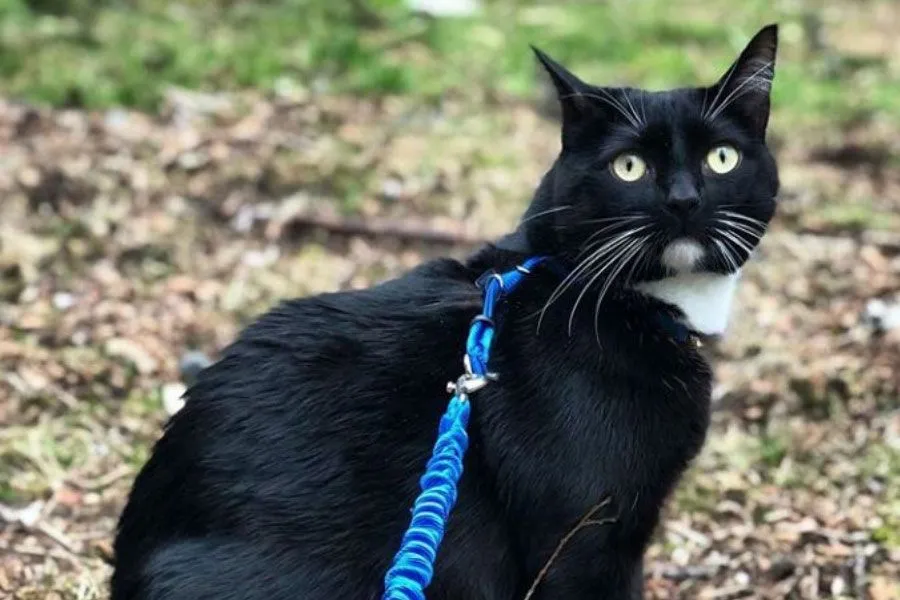 A cat wearing a harness and leash outdoors
1. Designate a Single Exit for Outdoor Adventures
Help your cat learn to associate a specific door with venturing outside. Choose a door you use less frequently, like a back or side entrance, and place your cat’s harness and leash set nearby. By consistently using this designated door for outdoor access, your cat will begin to link it with exploration and be less inclined to dart for any open doorway.
When your cat is outside, ensure they remain on their leash and harness until you are confident they won’t stray. For added security and to allow your cat safe, contained outdoor time, consider an in-ground cat fence. This system helps create a safe boundary within your yard, providing peace of mind.
For example, one owner successfully trained their cat, Skittles, to use the back door exclusively by associating it with outdoor freedom. Skittles wore her collar near the back door before going out, and because she only connected that door with her excursions, she stopped attempting to leave through the front.
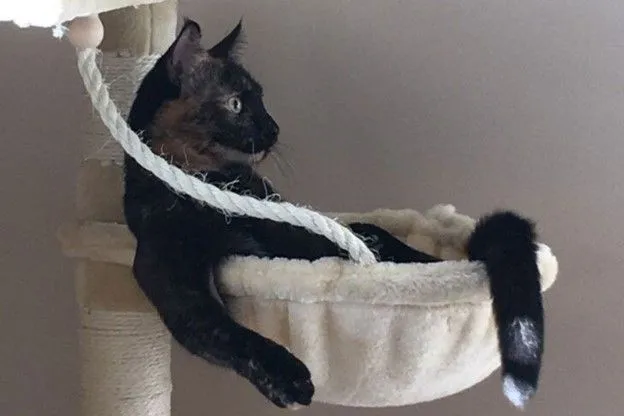 A cat lounging comfortably in a hammock
2. Install a Cat Door for Controlled Access
A cat door offers your cat a degree of outdoor access while maintaining control. The significant advantage of a cat door is the ability to lock it at your discretion. You can allow your cat outside during the day or when you are home, and secure it at night to protect them from dangers like stray animals, predators, and nighttime traffic.
Electronic cat doors provide an excellent solution for managing pet access. These doors can be programmed with a special key worn on a dog’s collar, allowing only the dog to enter or exit. If your cat lacks the designated key, the door remains inaccessible to them. You can even set specific times for each pet to use the door, ensuring controlled movement between indoors and outdoors.
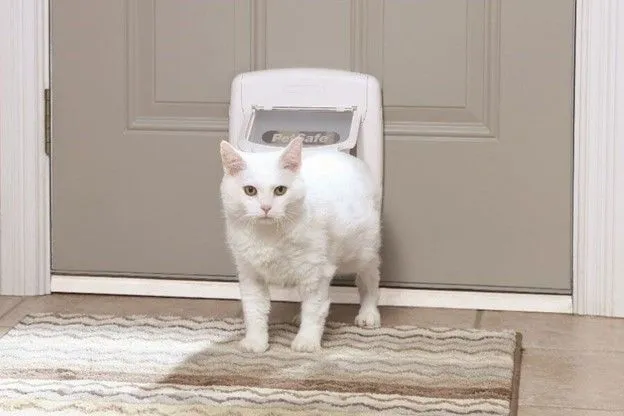 A cat using a cat door
3. Distract Your Cat from Doorways
Before you leave your home, engage your cat with a treat to guide them towards their preferred indoor resting area, such as a cat tower or tree. Offer a few more treats as they settle in and toss a couple more as you depart. This positive reinforcement helps distract your cat from the act of leaving and, over time, they may learn to ignore the opening door.
Another effective method to divert your cat’s attention from doors is to encourage playtime with interactive toys or laser pointers as you are preparing to leave. These engaging activities can keep your kitty entertained for extended periods, helping them to forget about escaping altogether.
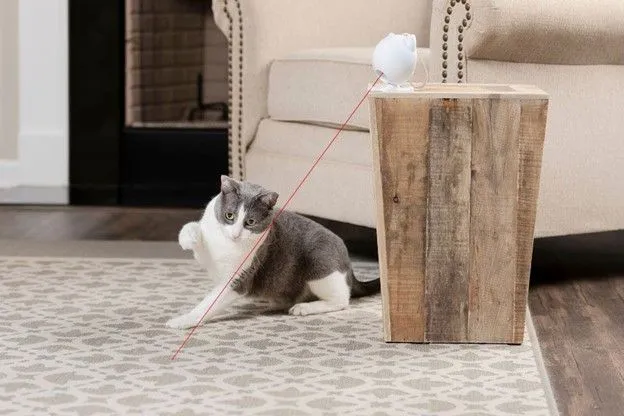 A cat actively playing with a toy
4. Utilize Pet-Proofing Barriers or Sprays
While a squirt bottle or a can of pennies can deter your cat from approaching the door, these methods require consistent application every time they near the exit. Pet-proofing barriers and sprays offer a more automated and convenient way to keep your cat away from doors.
A spray deterrent emits a short burst of harmless spray when a pet approaches the device. Alternatively, a barrier system involves a special collar for your cat. This collar emits a warning beep when the cat gets too close to the door. If the cat continues, it delivers a gentle, static correction, reinforcing the boundary and teaching them to stay away. This safe and consistent approach is highly effective for training door-dashing cats.
5. Spay or Neuter Your Cat
Intact cats, those not spayed or neutered, exhibit a stronger tendency to roam compared to their fixed counterparts. Unspayed or unneutered cats may travel significant distances from home in search of mates. Spayed or neutered cats generally remain closer to home, as their breeding instincts are diminished. Additionally, ensuring your cat is fixed contributes positively to managing the pet overpopulation crisis.
Additional Safety Measures for Outdoor and Indoor Escape Artist Cats
- Observe Behavior: Pay close attention to when your cat attempts to dart out and identify any pre-escape signals.
- Visitor Alert: Post a visible note near your door reminding visitors to be cautious of your cat before opening it.
- Identification: Ensure your cat always wears a visible collar with identification tags.
- Vaccinations: Keep your cat’s vaccinations current, particularly for rabies and Feline Leukemia.
- Preventatives: Administer monthly heartworm medication, flea treatments, and other necessary preventatives.
- Containment: Reinforce your cat’s safety by teaching them to stay within your yard using an in-ground fence.
By implementing these strategies, you can significantly reduce the risk of your cat escaping and ensure their continued safety and well-being.
