
Teaching a puppy to walk politely on a leash is not an innate skill; it’s a learned behavior essential for enjoyable outings and the safety of your furry companion. Mastering this fundamental skill lays the groundwork for a harmonious relationship and stress-free adventures. Dog training expert and AKC Family Dog columnist Kathy Santo emphasizes that a solid foundation in leash training is invaluable for every dog owner. This guide will walk you through the essential steps to successfully teach your puppy to leash walk, addressing common challenges along the way, ensuring you and your dog can enjoy every stroll together. Remember, consistency and patience are key for every aspect of puppy education, including important lessons like how to teach a puppy to come and stay.
Laying the Foundation: Essential Steps for Leash Training
Building a strong foundation for leash walking begins with positive introductions and clear communication.
1. Introducing Collar, Harness, and Leash
Start by helping your puppy become comfortable with their new gear. Allow them to wear a collar or harness and a leash for short periods inside your home. Make these initial experiences positive by engaging them in play and offering tasty treats. The goal is for your puppy to associate wearing their collar and leash with fun and rewards, establishing a happy connection from the start.
2. Teaching a Sound Cue
Introduce a consistent sound cue that signals “food is coming!” This could be a clicker, a specific word like “yes,” or a tongue cluck. In a quiet, distraction-free environment, with your puppy wearing their collar and leash, make the sound. The moment your puppy looks at or turns towards you, immediately reward them with a treat. With repetition, your puppy will not only look at you but also come over, anticipating their reward. This cue becomes a powerful tool for gaining their attention during walks.
3. Encouraging Your Puppy to Come To You
Once your puppy understands the sound cue, encourage them to follow you. While they are on their way to you, back up a few paces, then reward them upon arrival. Gradually increase the distance, reinforcing the behavior each time. Continue this progression until your puppy consistently comes to you and walks alongside you for several steps after hearing the cue. Keep these sessions brief and positive, ending before your puppy becomes mentally exhausted, as puppies have short attention spans.
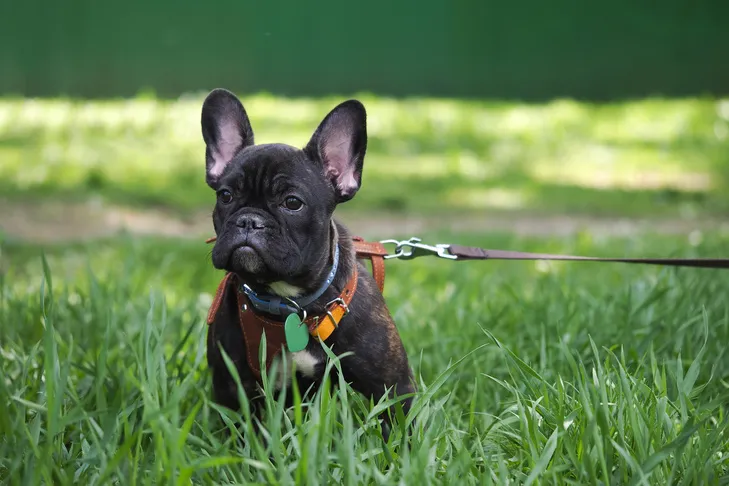 French bulldog puppy in a harness sitting in tall green grass on a leash for a walk.
4. Practicing Leash Walking Indoors
Now, apply these skills in a low-distraction indoor setting. The sensation of the leash around them will be a significant challenge in itself. Continue to offer praise and treats as your puppy learns to come to you and walk a few steps while on the leash. This controlled environment allows them to focus on the task without the overwhelming stimuli of the outdoors.
5. Transitioning to Outdoor Walks
With a good indoor foundation, you’re ready to venture outside. Be prepared for new challenges, as the sounds, smells, and sights of the outdoors will be incredibly intriguing for your puppy. Keep these initial outdoor walks short and be patient. Maintain constant vigilance. If your puppy shows signs of becoming distracted or about to lunge towards something, use your sound cue, take a few steps away, and reward them with a treat for refocusing on you. Outdoor experiences also play a crucial role in other training, such as how to train a stubborn dog to pee outside.
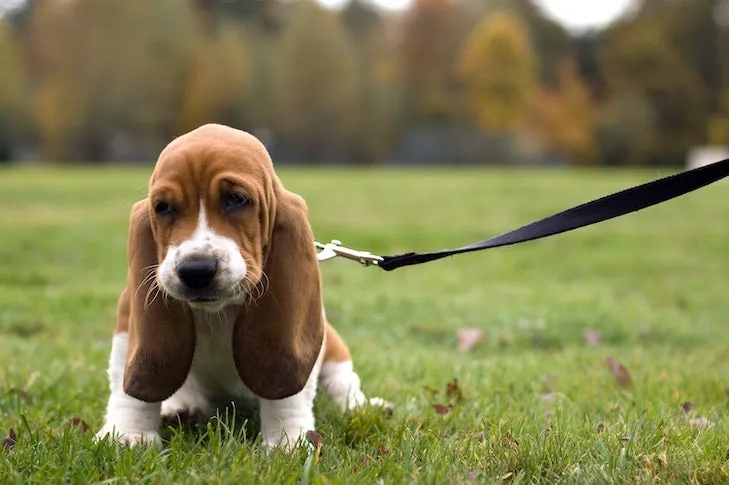 Basset Hound puppy sitting in the grass on lead.
Troubleshooting Common Leash Training Challenges
Even with thorough training, puppies can encounter issues as they grow and face new environments. Addressing these proactively will help achieve loose-leash walking, making walks more pleasant for both of you.
If Your Puppy Pulls
When your dog pulls vigorously in the opposite direction, immediately stop moving and become “a tree.” Stand completely still and refuse to budge until your dog returns to your side and the leash slackens. Never yank or jerk the leash, or drag your dog along. For persistent pullers, alternative tools like front-hook harnesses or head halters can be effective training aids designed to discourage pulling. If you’re dealing with persistent issues in outdoor training, you might find guidance on how to train a stubborn dog to potty outside helpful for understanding stubborn behaviors.
If Your Puppy Lunges
If your dog targets something specific during a walk—another dog, a car, or a skateboarder—act proactively. Before they have a chance to lunge, redirect their attention with a treat. Increase the distance between your dog and the object of their fixation. Stay alert and anticipate these situations, preparing to intervene before your dog’s frustration escalates. While this behavior can be common in herding breeds, any dog can be startled or overstimulated. For more intense behavioral challenges, understanding how to train out aggression in dogs can provide valuable insights.
If Your Puppy Barks
Excessive barking at other dogs during walks can sometimes stem from insufficient mental and physical exercise. Ensure your dog receives the appropriate amount of stimulation for their age and breed. If barking persists, employ a similar strategy as for lunging: create distance from the trigger and offer treats to redirect their focus. Over time, your dog will learn to associate seeing other dogs with turning their attention back to you for a reward, breaking the barking habit.
Successfully teaching your puppy to leash walk requires dedication and consistent positive reinforcement. By following these steps and addressing challenges with patience, you’ll establish a strong foundation for a lifetime of enjoyable walks. Always keep treats handy to reinforce good behavior randomly, ensuring your puppy continues to associate leash walking with positive experiences.
