
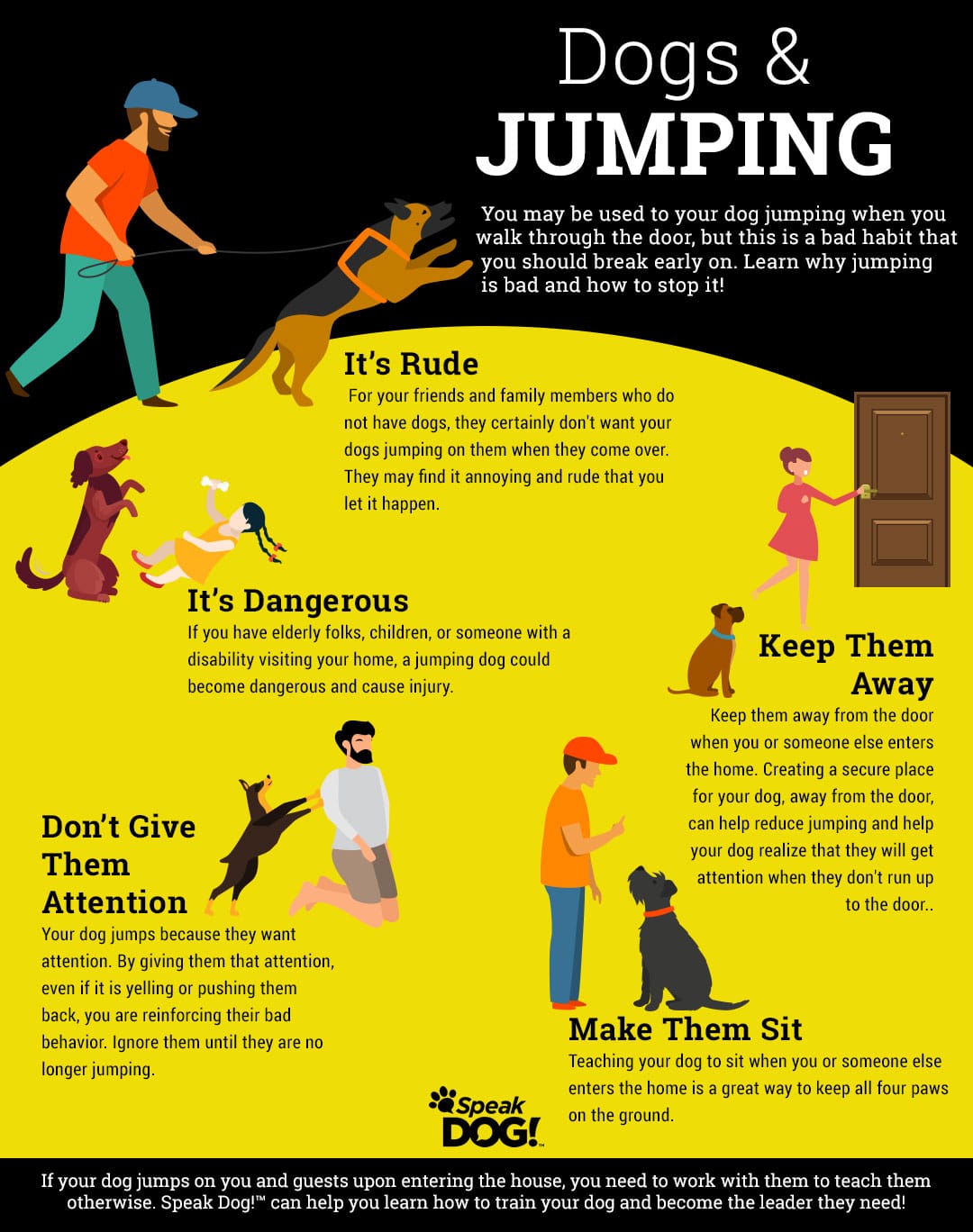
Jumping is a common behavior in dogs, often stemming from excitement, a desire for attention, or as a natural greeting. While it might seem endearing from a puppy, it can quickly become problematic as dogs grow larger and more boisterous. This guide will walk you through effective methods to train your dog to stop jumping on people, focusing on positive reinforcement and understanding your dog’s motivations.
Understanding Why Dogs Jump
Before diving into training techniques, it’s crucial to understand why your dog jumps. Dogs often jump as a way to:
- Greet people: It’s their way of getting closer to your face to give a proper sniff and greeting.
- Seek attention: If jumping up results in you pushing them away or even yelling, it can still be a form of attention they crave.
- Express excitement: When they’re happy to see you or a visitor, jumping can be an outlet for their over-the-top enthusiasm.
Many dog owners mistakenly believe their dog understands that jumping is “rude.” However, dogs often jump on each other during play and enthusiastic greetings. The key is to teach them the appropriate way to greet people. This involves rewarding desired behaviors rather than solely focusing on punishing unwanted ones.
Foundational Training for Better Manners
Consistent use of a marker word, such as “yes” or a clicker, combined with rewards, can significantly improve your dog’s understanding of what you want. When an action is followed by a marker word and a treat, the dog is more likely to repeat that behavior. This helps build desirable behavior patterns and boosts your dog’s confidence, as they learn what actions lead to rewards.
Celebrating desired behaviors is an easy yet powerful technique. This means actively rewarding your dog when they offer behaviors you like, such as sitting, making eye contact, or coming to you. For instance, if your dog jumps up, redirect them to sit and then reward the sit. This communicates that sitting is the behavior that earns positive attention.
Creative Ways to Manage Energy Levels
High-energy dogs, like Moody, a German Shepherd/Border Collie mix, often benefit from activities that expend excess energy. Incorporating snuffle mats, puzzle feeders, and enrichment games can be highly effective. Hiding treats in boxes, using paper towel rolls, or engaging in scent games can mentally and physically tire your dog, leading to a calmer demeanor. A well-exercised dog is often perceived as a well-behaved dog, and setting your dog up for success through proper exercise is a key step in managing jumping behavior.
How to Train Your Dog to Stop Jumping
A clear plan and a step-by-step approach are essential for successfully training your dog to stop jumping. The most effective method is to teach your dog the behavior you do want them to exhibit.
Teaching an Incompatible Behavior
One excellent strategy is to teach your dog an “incompatible behavior”—an action that they cannot do while jumping. A common and effective technique is teaching your dog to sit. When someone approaches, ask your dog to sit. Reward them generously for sitting instead of jumping. This teaches them that greeting people politely (by sitting) results in positive attention.
For dogs who tend to jump on guests at the door, practicing a “hand targeting” exercise can be beneficial. This involves teaching your dog to touch your hand with their nose. Practice this consistently, especially when you arrive home. By rewarding your dog for offering this specific behavior at the door, you’re redirecting their excitement into a more acceptable action.
Consistency is Key
Habits, both good and bad, take time and consistent practice to form. Changing a jumping behavior pattern can take around three months. Therefore, your dog’s guardian will need to practice these techniques multiple times daily for several months. Short, frequent practice sessions are more effective than infrequent, long ones.
Introducing New People
After consistent practice when no guests are present, you can gradually introduce visitors. It’s crucial to select friends or family members who understand your training goals and are willing to cooperate. Inform them about the specific cues you’re using and how you want them to respond. This ensures everyone is on the same page and reinforces the desired behavior.
Long-Term Success and Reinforcement
Remember that stopping a dog from jumping is an ongoing process. Continue to reward your dog for polite greetings and appropriate behavior. With patience, consistency, and positive reinforcement, you can successfully train your dog to greet people without jumping.
References:
