
Cats are often underestimated when it comes to training, but with patience and the right motivation, they can learn commands just like dogs. Teaching your feline friend to sit is not only a fun trick but also a practical skill that can be incredibly useful for various aspects of their care. This guide will walk you through a step-by-step process to successfully train your cat to sit on command using positive reinforcement. Discover how to train cats to stay away from plants.
Why Train Your Cat to Sit?
Training your cat to perform a “sit” command can be beneficial in numerous ways:
- Grooming Introduction: A calm, seated cat is easier to groom, making sessions more pleasant for both of you.
- Handling Acclimation: Teaching your cat to sit on cue can help them become more accustomed to being handled and petted.
- Mealtime Management: It can be helpful to have your cat sit still while you prepare their food, reducing excitement and potential accidents.
- Building a Bond: Training sessions are a fantastic way to strengthen the bond between you and your cat through positive interaction.
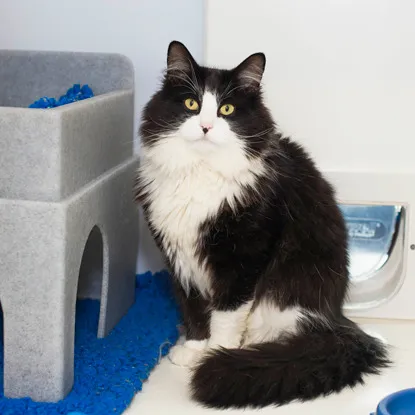 A black and white cat sitting in an adoption center pen.
What You’ll Need for Training
Before you begin, ensure you have the following:
- A Physically Able and Confident Cat: While many cats can be trained, older cats or those with health issues might find certain movements difficult.
- A Quiet Environment: Choose a room with minimal distractions to help your cat focus.
- Tasty Treats: Opt for small, high-value treats that your cat loves and that don’t require much chewing. This will keep training sessions efficient.
- Patience: Training takes time and consistency. Celebrate small successes and don’t get discouraged by setbacks.
11 Steps to Train Your Cat to Sit on Command
Follow these steps diligently, and you’ll be amazed at your cat’s ability to learn.
- Prepare the Treat: Hold a small, desirable treat between the tip of your index finger and thumb. Your palm should be facing upwards.
- Position Yourself: Stand or kneel in front of your cat. The distance should be comfortable for both of you; some cats prefer you not to loom over them.
- Lure the Gaze: Bring the treat close to your cat’s nose (about 1-2 cm away). Slowly lift the treat upwards, encouraging your cat to follow it with their eyes.
- Guide the Sit: As the treat moves about five centimeters up from their nose, slowly guide it a short distance back towards your cat’s tail. This motion should naturally encourage them to lower themselves into a seated position. Be patient, as it might take a few moments for them to understand.
- Reward and Reinforce: The instant your cat sits, say a clear marker word like “Yes!” and immediately give them the treat. If your cat is food-motivated and tends to move a lot, you can gently toss the treat a short distance away after they sit. This encourages them to stand up and reset, ready for the next repetition. If they don’t move, simply feed them the treat, allow them to stand up, and restart.
- Build Familiarity: Repeat steps 1-5 a few times during a session. This helps your cat associate sitting on the floor with receiving a reward. Learn how to train a cat to use a litter box.
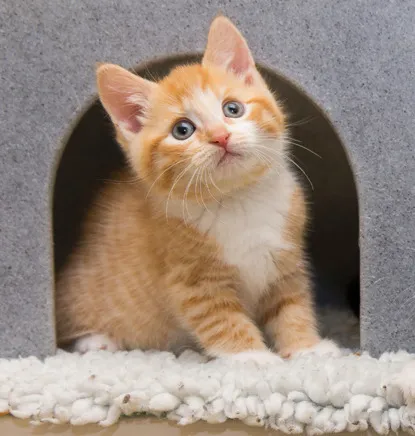 A ginger kitten sitting in a cat house, looking up at the camera with blue eyes.
- Transition to Hand Signal: Once your cat is consistently sitting with the lure, begin to change your hand movement. Hold the treat in front of them and then flick your wrist upwards, creating a visual cue. Reward with a “Yes!” and the treat when they sit.
- Fade the Treat: After several successful repetitions with the hand signal, start reducing your reliance on visible treats. Go through the motions of reaching for a treat, but don’t actually take one out. If your cat sits in response to the hand signal, praise them (“Yes!”) and then retrieve a treat for them. It’s crucial to always provide a reward.
- Independent Hand Signal: Once your cat reliably sits for the pretend treat gesture, try presenting your hand without any treat visible. If they sit, immediately follow up with praise and a real treat. This step tests their understanding of the hand signal alone.
- Introduce the Verbal Cue: Now, you can add a verbal command. About a second before you give your usual hand signal, say your chosen cue word (e.g., “Sit,” “Down,” or even something fun like “Banana”). Your cat will associate the sound with the action. After several repetitions, they will likely begin to sit when they hear the word, even before the hand signal. Understand how to stop food aggression in cats.
- Increase Duration and Distance: Once your cat reliably sits on the verbal cue, you can start practicing at greater distances or encourage them to remain in the seated position for longer periods.
Training Session Tips
Keep training sessions short and sweet, ideally no more than three minutes long, with breaks in between. Aim for three short sessions per day. With consistency, many cats can master the sit command within a week. However, remember that every cat is an individual; some may learn faster than others, and some may take more time or not grasp it fully.
If you find yourself becoming frustrated, it’s best to take a break and return to training later. Never physically force your cat into a seated position, as this can cause stress and lead to behavioral or medical issues. Training should always be a positive and enjoyable experience for both you and your cat. Utilize positive reinforcement, and always allow your cat the choice to disengage if they feel uncomfortable. For more guidance on indoor cat behavior, learn how to train a cat to stay indoors. You can also explore fun training methods like learning to toilet train your cat.
Conclusion
Teaching your cat to sit on command is an achievable and rewarding endeavor. Through patience, consistency, and positive reinforcement, you can enhance your cat’s trainability and strengthen your relationship. Remember to celebrate every success and approach training as a fun bonding activity. If you encounter difficulties or want to explore other behavioral aspects, consulting resources from veterinary professionals or reputable animal behavior organizations is always recommended.
