
Walking your dog should be a joyful and relaxing experience for both of you. However, a dog that consistently pulls on its lead can quickly turn a pleasant stroll into a stressful struggle, posing risks of injury to both the dog and the handler. Understanding How To Stop A Dog Pulling On Its Lead is crucial for ensuring safe, enjoyable, and harmonious walks. This guide will provide practical steps and insights into why dogs pull and how you can effectively curb this common behavior, transforming your walks into quality time together. Successfully training dog not to pull on leash not only enhances your walks but also strengthens the bond with your canine companion, building trust and mutual understanding.
Essential Equipment for Leash Training
Choosing the right equipment is the first step towards successful loose-leash walking. The tools you use can either aid your training efforts or inadvertently encourage pulling.
What You Need
A regular leash is essential. Opt for a standard, fixed-length leash, preferably 4 to 6 feet long, made from durable material. Avoid retractable leads, as they teach your dog that pulling extends their range and can be dangerous if the dog suddenly lunges or if the thin cord wraps around a person or animal. You will also need a harness or a collar. While a flat collar is standard, many trainers recommend a well-fitting harness, especially for dogs prone to tracheal collapse or those with sensitive necks.
What to Avoid
It’s crucial to avoid equipment that relies on causing pain or discomfort. Prong collars are designed to inflict a sharp, pinching sensation and can cause physical injury and psychological distress, potentially damaging your dog’s trust in you. Such tools often suppress behavior through fear rather than teaching desired actions. Similarly, while some suggest front-clip harnesses, it’s worth discussing this with your vet. While they can redirect a dog’s pulling by turning them sideways, there are concerns that the consistent sideways pressure might affect your dog’s gait or cause long-term musculoskeletal issues. Always consult with a veterinary professional to determine the best and safest equipment for your individual dog.
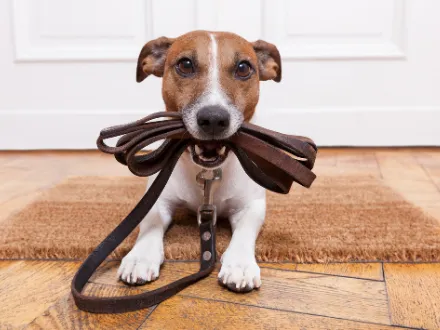 Jack Russell laying on the mat holding a leash in its mouth
The Effective 3-Step Method to Stop Leash Pulling
This straightforward three-step method forms the foundation for teaching your dog to walk politely on a leash. Consistency and patience are key to its success.
- Start Your Walk: Begin by walking with your dog in a low-distraction environment, such as your backyard, a quiet park, or a calm street.
- React to Tension: The moment your dog starts to pull or creates tension on the lead, gently but firmly pull the lead back and immediately use a clear command like “heel” or “let’s go.” The goal is to make the act of pulling undesirable.
- Reward Relaxation/Redirect: Within a few seconds, if your dog relaxes the tension on the leash, immediately continue walking and offer praise or a treat. If they do not relax the tension, change direction abruptly and call them to follow you. This teaches them that pulling gets them nowhere, but walking beside you (or with a loose leash) allows the walk to continue.
If you find yourselves constantly walking in circles, it may indicate that your current environment is too stimulating for your dog. Try moving to a quieter area with fewer triggers, or consider exercising your dog with some off-leash play before attempting leash training to reduce their excess energy.
Emphasize Patience
Teaching loose-leash walking is not an overnight process. It will be frustrating at times, requiring you to stop repeatedly and change directions. It’s important to remember that walking with a loose leash is not an intuitive behavior for dogs; it’s a skill they must learn. Just like humans aren’t perfect at new skills on the first try, your dog needs time and consistent guidance.
Utilize High-Value Rewards
Motivation is crucial in dog training. Dogs, like people, have preferences for rewards. Keep a variety of high-value treats and favorite toys on hand during your training sessions. Reward your dog not just with food, but also with affection and the freedom to continue their walk when they exhibit desired behavior. Positive reinforcement makes learning enjoyable and effective.
Ensure Consistency
Inconsistent training can undo all your hard work. If you occasionally allow your dog to pull without correction, you confuse them and reinforce the pulling behavior. Make sure to stop or change direction every single time your dog creates tension on the leash. If you ever need your dog to pull (e.g., for specific dog sports like canicross or tracking), use a different harness and a distinct command to avoid confusing them. This clear differentiation will help your dog understand when pulling is acceptable and when it is not. A well-trained dog understands boundaries, and consistent application of rules helps them learn what is expected. For puppies, early training is key; resources like how to stop my puppy from pulling on the leash can offer tailored advice for younger dogs.
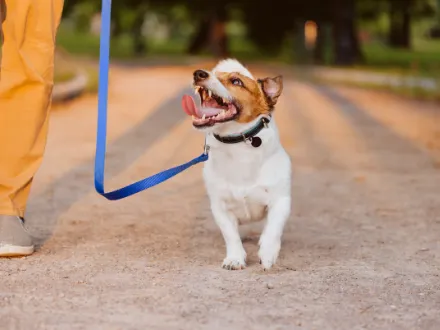 Jack Russell walking loosely on lead in park
Understanding Why Dogs Pull on the Leash
Effective training is often rooted in understanding the underlying reasons for a dog’s behavior. Knowing why your dog pulls can significantly inform your training approach.
Reason 1: Seeking a Specific Target
Many dogs pull because they are focused on reaching something specific – another dog, a person, a interesting smell, or even a perceived prey item. These dogs might walk politely for most of the time but then lunge intensely when a trigger appears. The core lesson here is teaching self-control and impulse management. You’ll need to train your dog specifically around these triggers.
Identify what your dog reacts to, then start training from a distance where your dog notices the trigger but is not yet reactive. Reward calm behavior as you gradually decrease the distance to the trigger. If your dog becomes overstimulated or reactive, calmly increase the distance again. For dogs with high prey drive or aggression towards triggers, consider muzzle training for safety while working on desensitization and counter-conditioning, which teaches them to associate the trigger with positive experiences. For dogs who react strongly, a command like how to teach stay command to dog can be a valuable tool for gaining control and focus in distracting environments.
Reason 2: Excess Energy
Dogs with an abundance of pent-up energy often struggle with self-control on a leash. They might respond to commands fleetingly before becoming overwhelmed by their desire to move. The best strategy is to help them expend some of that energy before the leash walk. A game of fetch in the backyard, a vigorous play session, or even a run can help them be calmer and more receptive to training during the walk. For energetic dogs that still want to go faster, try alternating between walking and jogging during your training sessions. This allows them to release some energy while still learning to walk politely on a loose leash.
Reason 3: Lack of Training
Some dogs simply haven’t been taught how to walk on a leash politely. If a dog has never experienced the concept of a loose leash, they won’t understand that tension on their neck or harness can be avoided by walking calmly beside you. For these dogs, you are introducing an entirely new way of interacting with the leash. This requires significant consistency and patience, as you are essentially re-educating them on a fundamental aspect of walking.
Reason 4: Anxiety
Terrified or anxious dogs often pull continuously on the lead, either attempting to flee from perceived threats or finding a sense of security in the pressure of the harness or collar. Training an anxious dog to stop pulling presents a unique challenge, as they may be less responsive to typical rewards due to their emotional state.
Begin training in an extremely calm and low-stress environment where your dog feels safe. Practice loose-leash walking and lavish them with rewards. Introduce calming commands like ‘sit’ or ‘down’ during these relaxed sessions, which can serve as a mental anchor in more stressful situations. Gradually introduce your dog to slightly more stimulating environments, always being prepared to retreat to a comfortable zone if they become too anxious or unresponsive to your commands and rewards. Patience and empathy are paramount when working with an anxious dog. Furthermore, general behavioral issues like how to stop dog barking at nothing can also stem from anxiety, highlighting the importance of addressing the root cause.
Reason 5: Habit from Retractable Leads
Dogs accustomed to retractable leads learn that pulling extends their range, creating a constant slight tension. This conditions them to pull harder to get what they want. To correct this, simply switch to a standard fixed-length leash and consistently apply the three-step training method outlined earlier. You’ll need to teach them that the absence of tension is the desired state.
Reason 6: Conditioned to a Tight Leash
If your dog has consistently been walked on a tightly held leash, they may have learned that a tight leash is the normal or only way to walk. This habit can inadvertently encourage pulling. The solution, again, is to re-teach them that a loose leash is the goal. Implement the three-step method consistently, rewarding them for maintaining a slack lead and correcting any tension immediately.
When You Need Extra Support: Advanced Tools
For dog owners who are genuinely struggling to capture their dog’s attention in distracting outdoor environments, especially if safety is a concern, advanced tools might offer additional support. A remote training collar, used correctly and humanely, can provide a gentle distraction when your dog is completely unresponsive to verbal cues or leash corrections. This allows you to regain their focus and issue a known command, like “heel.” It’s important to understand that such tools are not for punishment but for creating a momentary interruption that redirects your dog’s attention back to you, offering a safety net in potentially hazardous situations. If considering a remote training collar, always seek guidance from a professional trainer to ensure proper, ethical, and effective use.
Conclusion
Teaching your dog to walk politely on a leash is a rewarding journey that requires commitment, patience, and consistency. By understanding the reasons behind pulling, choosing the right equipment, and applying the three-step training method, you can transform stressful walks into enjoyable outings. Remember to use positive reinforcement, be consistent with your corrections, and always prioritize your dog’s safety and well-being. With dedication, you and your furry companion can look forward to many years of pleasant, loose-leash walks together, strengthening your bond and enhancing the joy of dog ownership. If you encounter persistent challenges, don’t hesitate to consult with a professional dog trainer or behaviorist for personalized guidance.
