
Walking your dog should be an enjoyable experience for both of you, a time for fresh air, exercise, and bonding. However, for many dog owners, the reality is far from pleasant, often involving a strenuous battle against a dog that constantly pulls on the lead. This common issue not only makes walks less enjoyable but can also lead to physical strain for the owner and, in some cases, even injury. It’s crucial to address this behavior not only for your comfort but also for your dog’s safety and well-being. Keeping your dog leashed is a legal requirement in most public spaces and provides essential control over their interactions and environment. While an off-leash dog might seem free, it poses risks like encounters with other animals or traffic, or simply running away. Learning How To Stop A Dog Pulling On His Lead is a fundamental aspect of responsible dog ownership, ensuring safer, more pleasant outings for everyone involved.
While a pulling dog can be a source of frustration, it’s a behavior that can be effectively managed and corrected with consistent training and a few key adjustments to your approach. Dogs often pull because they are eager to explore, move faster than their human companions, or haven’t learned that a loose lead is the key to forward momentum. Understanding these motivations is the first step toward implementing successful training techniques. By focusing on positive reinforcement and clear communication, you can transform your walks from a struggle into a harmonious partnership. Here are 10 essential tips to help you teach your dog appropriate leash behavior and enjoy relaxed, pull-free walks.
1. Always Reward Good Leash Behavior
Never underestimate the power of positive reinforcement. Dogs are naturally inclined to repeat behaviors that bring them rewards, whether it’s a tasty treat, verbal praise, or the opportunity to sniff an interesting scent. If you consistently overlook calm, polite walking and only react when your dog is pulling, you’re inadvertently teaching them that undesirable actions get your attention. This can lead your dog to replace good behavior with less appropriate methods to achieve their desired outcome.
Make it a habit to reinforce good leash behavior every single time. Carry treats with you on walks, or be ready with affectionate pets and encouraging words. Be generous with your rewards, letting your dog know you appreciate their choice to walk politely. Initially, reward frequently and heavily to solidify the desired behavior. As your dog’s understanding improves, you can gradually reduce the food treats and substitute them with “life rewards” like a chance to investigate a patch of grass or greet another dog (if appropriate). This ensures that teaching dog to poop outside or simply enjoying the environment becomes a reward for good behavior.
2. Never Let Your Dog Walk When They Are Pulling
The fundamental reason dogs pull is their desire to move forward. If you allow your dog to continue walking while pulling, you are essentially rewarding the very behavior you want to stop. This sends a mixed message and will reinforce the pulling in the long run. Therefore, it’s crucial to stop all forward momentum the moment your dog begins to pull on the lead.
As soon as you feel tension on the leash, immediately stop walking. Plant your feet firmly and wait. Do not move again until your dog either returns to your side or the tension on the leash completely loosens. This might feel slow and frustrating at first, especially if your dog is a determined puller, but it’s a vital step in teaching them that pulling leads to the cessation of the walk, while a loose leash allows progress.
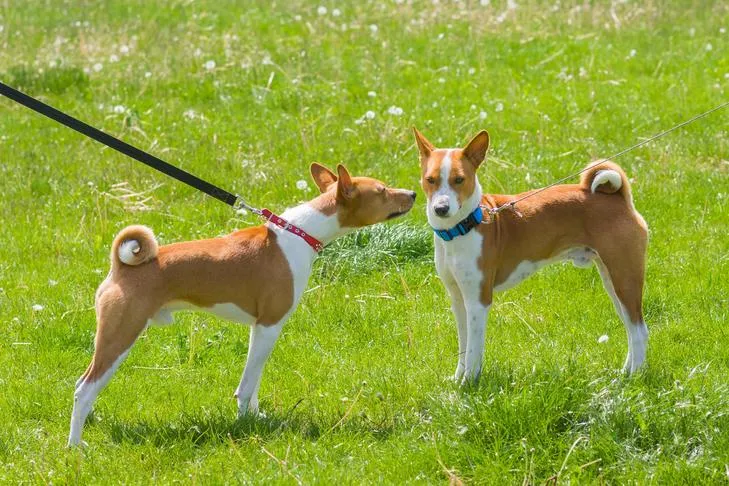 Basenjis meeting in a field outdoors, one on leash.
3. Wait for a Loose Leash Before You Walk
The key to knowing when to resume your walk after stopping due to pulling is to wait for a completely slack leash. The lead should hang loosely, ideally forming a gentle J-shape, and your dog should ideally turn their attention back to you. In the initial stages of training, this waiting period might feel quite long, as your dog processes why the walk has stopped.
Eventually, your dog will likely glance back or walk towards you, wondering what’s causing the delay. The moment you see that slack leash and their attention shifting, praise and reward them with a treat right at your side. Then, calmly continue your walk. You might find yourself stopping and starting every few steps initially, but your dog will quickly learn that a tight leash stops the fun, and a loose leash allows the adventure to continue. This ‘stop-and-go’ method is highly effective in teaching dogs the direct consequence of pulling.
4. Incorporate Life Rewards on Your Walk
Walks are more than just potty breaks for your dog; they are an essential source of physical exercise and mental stimulation. However, during the intensive phase of how can i teach my dog to poop outside and anti-pulling training, it can sometimes feel less enriching. To boost your training effectiveness and enhance your dog’s overall walking experience, integrate “life rewards” for good behavior. These are everyday things your dog naturally enjoys, such as the chance to sniff a bush, investigate a lamppost, or politely greet a friendly stranger.
For instance, if your dog manages to walk a set distance (e.g., 10 feet) without pulling, release them with a verbal cue like “Go sniff!” and allow them a few minutes to explore. These bonus rewards powerfully communicate to your dog that walking politely truly pays off, making the training process more enjoyable and reinforcing. This method ensures that the walk remains a positive experience, not just a training drill.
5. Walk at a Good Pace
Often, humans naturally walk at a slower pace than what feels comfortable for many dogs. Even smaller breeds can have a surprisingly brisk natural gait. This discrepancy in desired speed is a common reason why dogs start to pull – they simply want to get where they’re going faster. Adjusting your pace can significantly contribute to a more harmonious walk.
While you can certainly teach your dog to match your speed, during the initial training phase for leash pulling, picking up your pace slightly can make a big difference. Choose a brisk, comfortable pace for both of you. A quicker tempo can make it easier for your dog to stay engaged and reduce their inclination to surge ahead, helping them to focus on maintaining a loose lead rather than trying to drag you along.
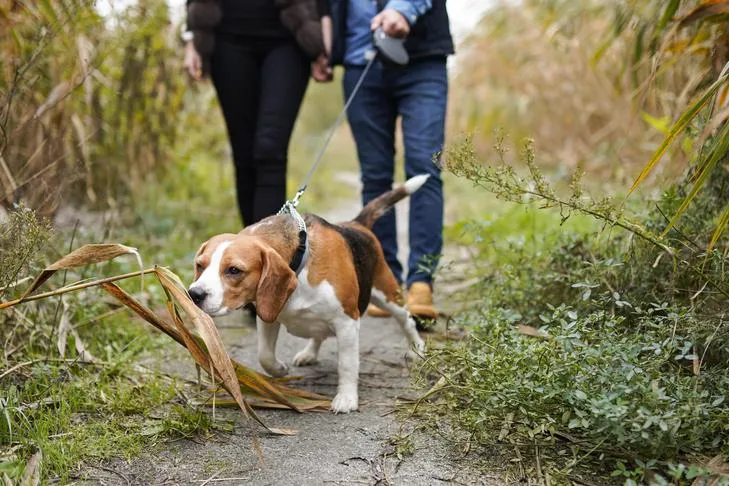 Beagle pulling on the leash to sniff while on a walk outdoors.
6. Be Consistent With Your No-Pulling Rule
Consistency is paramount in any dog training, and especially when addressing leash pulling. It can be incredibly tempting to let your dog pull occasionally, perhaps when you’re in a hurry, late for an appointment, or the weather is unpleasant, and you just want to get the potty break over with. However, every single time you allow your dog to pull, you are effectively undermining all your previous training efforts and setting yourself back to square one.
The “no-pulling” rule must be applied consistently, regardless of the situation or your personal schedule. Until your dog can reliably walk a significant distance with a loose leash, consider letting them relieve themselves in your yard or at the nearest curb if you’re truly pressed for time. Save the longer, more enriching walks for when you have ample time and patience to dedicate to consistent training. This unwavering approach is critical for your dog to understand the rule clearly. This also applies when focusing on how to get a female dog to pee outside during these walks.
7. Keep Training Sessions Short and Fun
Working with a persistent leash puller can be frustrating, and in the beginning, you might find that you don’t make it much further than your driveway. Instead of pushing your dog until both of you are feeling irritated by the lack of progress, it’s far more effective to keep your training sessions brief, positive, and enjoyable.
Dogs, especially puppies, have short attention spans. Asking too much too soon will likely lead to frustration and diminish positive results. Remember, the goal isn’t to cover a certain distance; it’s to achieve loose-leash walking, even if that means only making it to the neighbor’s house and back. End on a high note, even if it’s a small success, to keep your dog enthusiastic about the next session.
8. Be Interesting and Engaging on Walks
For a dog, the world outside is an overwhelming symphony of new sights, sounds, and most importantly, smells. These myriad distractions constantly compete for your dog’s attention, making them eager to investigate and potentially drag you down the street. If you are distracted by your phone or otherwise disengaged during the walk, your dog has little incentive to pay attention to you.
To counteract external distractions, you need to become the most interesting thing on the walk. Talk to your dog, offer sudden praise, change direction unexpectedly, or initiate quick, fun training breaks like a short game of “find it” with a treat. By being unpredictable and engaging, your dog will be more likely to stay focused on you, constantly wondering what exciting thing you’ll do next, making them less prone to pulling towards external stimuli.
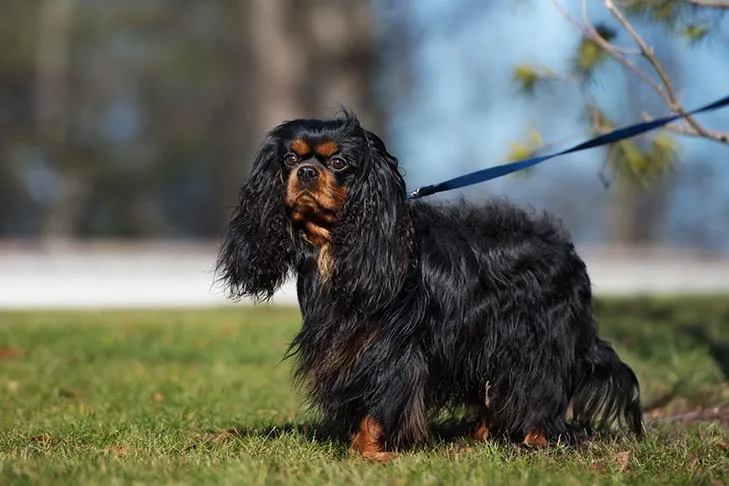 Cavalier King Charles Spaniel on a lead outdoors.
9. Stay Calm
Walks can bring about a variety of emotional situations, from the excitement of seeing a favorite person at the end of the block to the anxiety of encountering a barking dog. Regardless of whether the situation is thrilling or frightening for your dog (and sometimes for you), it’s crucial that you maintain control over your own emotions. Dogs are incredibly perceptive and are experts at reading human emotions; your mood can easily transmit down the leash and influence your dog, either escalating their excitement or intensifying their fear or anxiety.
To help your dog remain calm and receptive to your cues, you must stay calm yourself. Show your dog that there’s nothing to be overly excited or worried about. The more relaxed and composed you are, the more likely your dog will be able to listen to your commands and exhibit appropriate behavior, making the walk a much more pleasant experience for both of you. This calmness also helps in situations like how to train dog to potty on command during walks.
10. Engage Your Dog In Distracting Situations
When faced with powerful distractions like other dogs, squirrels, or even unfamiliar people, it’s easy for your dog to forget all their leash manners and start pulling. Similarly, if your dog finds certain situations suspicious or makes them nervous, they might pull intensely either to approach or to flee. In these moments, all the training can seem to disappear.
To help your dog cope, shift their focus from the distraction back to you. Calmly offer high-value treats or initiate a simple, familiar game or command. For example, ask for a “sit,” a “touch” (hand target), or a “watch me” cue to establish eye contact. These exercises are simple for your dog to perform and will keep them engaged with you as the distraction passes. The key is to be proactive: grab your dog’s attention before they fully register the distraction. By doing so, you can often guide them past the stimulus without them even noticing it, maintaining a loose lead throughout. This is particularly useful when practicing pee pad training to outside in potentially distracting environments.
Mastering loose-leash walking is a rewarding journey that strengthens the bond between you and your dog. By consistently applying these ten tips, focusing on positive reinforcement, and maintaining a calm, engaging presence, you can transform your walks from a chore into a cherished activity. Remember that patience and persistence are key, and every small step of progress is a victory. If you find yourself needing more personalized guidance or have further training questions, expert resources like the AKC GoodDog! Helpline offer invaluable support from experienced trainers. They can provide live, personalized assistance to address any training challenges, from puppy house-training to addressing unwanted behaviors in senior dogs. Investing in this training not only improves your walks but also enhances your dog’s overall quality of life and your relationship with them.
