
Navigating the world of dog ownership often comes with the fundamental challenge of house training. While traditionally this meant preventing indoor accidents, the realities of modern life – longer workdays, apartment living, and physical limitations – have introduced new complexities. For many dog owners, the question isn’t just about if their dog can hold it, but where they can comfortably and safely relieve themselves when direct outdoor access is limited or inconvenient. This guide explores effective strategies for creating an outdoor dog litter box, a solution that offers convenience and addresses specific owner needs without compromising your dog’s well-being.
It’s important to understand that establishing a designated outdoor potty area, similar to a litter box concept, requires patience and a consistent approach. Unlike cats, who naturally gravitate towards digging and eliminating in soft substrates, puppies and even adult dogs may need more structured guidance. The goal is to create a positive association with a specific outdoor location, making it an appealing and reliable alternative to indoor accidents or the challenges of traditional outdoor potty breaks. Exploring solutions like this can significantly enhance the lives of both you and your canine companion, especially when traditional methods present difficulties. For a deeper dive into early puppy training, consider checking out tricks for potty training a puppy.
Understanding the Need for an Outdoor Dog Litter Box
The concept of an outdoor dog litter box isn’t about replacing outdoor potty breaks entirely but rather about providing a viable and convenient alternative for specific circumstances. Traditional house training often assumes readily available outdoor access. However, for individuals living in high-rise apartments, those with mobility issues, or even owners of puppies during inclement weather, this isn’t always practical. The “paper chase” of newspapers and puppy pee pads, while offering some solutions, often comes with its own set of drawbacks, such as substrate confusion or puppies treating the pads as chew toys. This is where the ingenuity of an outdoor dog litter box shines, offering a dedicated, manageable space for your dog’s needs.
Designing Your Outdoor Dog Litter Box
When considering How To Make A Dog Litter Box Outside, the key is to replicate the appeal of natural substrates while maintaining ease of cleanup and management. The market offers a few innovative approaches:
The “Patio Potty” Concept with Live Grass
One highly effective method involves a grass-based system, often referred to as a “patio potty.” These systems typically consist of a box containing soil with live turfgrass planted on top.
- How it Works: Dogs are naturally inclined to relieve themselves on grass. This system capitalizes on that instinct by providing a patch of real grass that your dog can access. The soil beneath absorbs urine, and its natural microbial action helps neutralize odors. Feces are easily picked up.
- Benefits:
- Natural Substrate: Most dogs readily recognize and accept grass as a suitable place to go.
- Odor Control: The soil and microbial action offer good odor management.
- Easy Cleanup: Solid waste is simple to remove.
- Considerations:
- Sunlight and Maintenance: Live grass requires sunlight to thrive and will need occasional watering. Depending on the frequency of use, the sod may need to be replaced every few months.
- Outdoor Use Primarily: These systems are best suited for outdoor patios, porches, or balconies where they can receive adequate sunlight. While some owners have experimented with grow lights indoors, success is far more likely with outdoor placement.
- Weight: These units, especially when watered, can be heavy, making them less portable.
 A dog using a grass-based outdoor potty system on a patio
Commercially Available Dog Litter Boxes
Several companies have developed specialized litter boxes and litter for dogs, aiming to mimic the feline litter box experience.
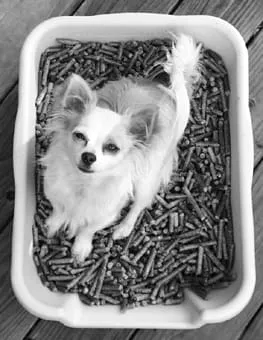
- “Second Nature” Dog Litter System: This product uses recycled newspaper pellets as litter. The pellets are designed to be absorbent and control odor. The litter boxes come in various sizes suitable for smaller to medium-sized dogs.
- Benefits: Offers a contained solution for dogs who may not have access to a yard. The recycled material is an eco-friendly option.
- Drawbacks: The pellet size can be an issue for some dogs, and cleaning wet pellets without removing dry ones can be challenging. Male dogs who lift their legs may also urinate over the sides of the box.
- Other Litter Options: Some owners opt to use plain cat litter, though it’s crucial to choose unscented, clumping-free varieties to ensure safety for your dog.
Litter Training Your Dog: A Step-by-Step Approach
Whether you’re starting with a puppy or training an adult dog, consistency and positive reinforcement are paramount. If you’re embarking on this journey with a young pup, remember that puppy potty training tips and tricks are invaluable.
Training a Puppy to Use an Outdoor Litter Box
Starting early is the easiest approach. Integrate the outdoor litter box into your standard housetraining program.
- Introduction: Take your puppy to the designated litter box area frequently – every hour, and especially after waking up, eating, or playing.
- Cue Word: Use a consistent cue word like “go potty” as they start to eliminate.
- Reward: The instant they finish, use a clicker (if you use one) or a verbal marker like “Yes!” followed immediately by a high-value treat and praise. Be sure they’ve finished completely before offering the reward to avoid interruption.
- Supervision: When not in their crate or a confined area, puppies need constant supervision to prevent accidents. Immediately after successful potty breaks, they can have short periods of supervised freedom.
- Consistency: Gradually increase the time between potty breaks and the duration of supervised freedom as your puppy matures and earns your trust. For additional guidance, explore how to potty train a puppy indoors and outdoors.
Training an Adult Dog to Use an Outdoor Litter Box
Training an adult dog who is already accustomed to eliminating outdoors can be more challenging.
- Introduce the Substrate: If using pellets, scatter some in your dog’s usual outdoor potty spot. Gradually increase the amount as they become comfortable. If using a grass box, simply place it in their established area.
- Leash Introduction: Take your dog to the outdoor litter box on a leash. Lure them into it with treats if necessary and use your “go potty” cue.
- Reinforce Success: Click and reward enthusiastically the moment they use the box.
- Transition Indoors (If Applicable): Once they are reliably using the box outdoors, you can gradually transition it to a more convenient indoor location (e.g., a covered patio, balcony, or mudroom). This transition should ideally be done over a weekend when you can dedicate time to supervision.
- Patience is Key: If your dog is hesitant, don’t force them. Keep the process positive and upbeat. If they haven’t used the box after a few attempts, return it to the outdoor location for a while longer before trying the indoor transition again. For owners dealing with more persistent challenges, tips and tricks for potty training a puppy can offer broader insights into overcoming resistance.
Addressing Common Challenges
- Male Dogs Lifting Their Legs: Strategically place the litter box where any over-spray is easy to clean. You might also consider a box with higher sides or a specialized design to accommodate this behavior.
- Accidents: If an accident occurs, resist the urge to punish. Instead, analyze your training program: Were the intervals between potty breaks too long? Was there too much freedom too soon? Clean the area thoroughly with an enzymatic cleaner to eliminate odors that might attract your dog back to the same spot. Interrupting an accident with a cheerful “Oops!” and immediately taking your dog to the litter box is the most effective approach.
- Dog Doesn’t Use the Box: Ensure the box is accessible and appealing. If you’re using a grass box, make sure it’s fresh. For pellet boxes, try adding a scent attractant if needed. Sometimes, a dog might need to be able to train your dog to potty inside and outside to bridge the gap between indoor and outdoor habits.
Creating an outdoor dog litter box is a practical solution for many dog owners facing unique circumstances. By understanding your dog’s needs and implementing a consistent, positive training approach, you can successfully establish a reliable potty area that enhances your daily routine and your dog’s comfort.
References:
- Whole Dog Journal. (n.d.). Litter boxes for dogs: A review.
- Whole Dog Journal. (n.d.). Tips on house training your dog.
- Whole Dog Journal. (n.d.). House training for adult dogs.
