
Welcoming a new dog into your home is an exciting time, but it often comes with the daunting task of potty training. Whether you’re dealing with a playful puppy or an adopted adult dog adjusting to a new environment, mastering the art of outdoor potty breaks is crucial. This guide offers five essential tips to help you successfully train your dog to do their business outside, ensuring a cleaner home and a happier pet.
The journey to a reliably house-trained dog may seem challenging, but with consistency, repetition, and a positive approach, it’s an achievable goal. Understanding your dog’s needs and establishing a routine are the cornerstones of effective potty training. This guide will walk you through the process, offering practical advice and strategies to help your furry friend succeed. We’ll cover everything from the importance of spending time with your dog to managing accidents and transitioning from indoor pads to outdoor relief.
Tip #1: Prioritize Quality Time
The initial period with a new dog is a whirlwind of emotions for both of you. Your dog is navigating a new world, experiencing a mix of excitement, curiosity, and perhaps some anxiety. The best way to help them acclimate is by simply spending ample time together. This not only strengthens your bond but also lays a critical foundation for successful training. Effective training hinges on establishing a consistent routine and reinforcing positive behaviors through repetition. Therefore, dedicating your time is paramount.
Tip #2: Embrace the Crate as a Safe Haven
When an untrained dog has the freedom of the entire house, unexpected messes can become a frequent occurrence. Confinement, particularly using a crate, is a valuable tool in preventing accidents and guiding your dog toward appropriate potty spots. It’s important to remember that dogs are naturally den animals, and a crate can serve as their personal sanctuary. Avoid using the crate as a punishment, as this can create negative associations. Instead, make it a comfortable and positive space, which will enhance its effectiveness in your potty training regimen. For guidance on selecting the right crate, consult our comprehensive guide on crate training.
Tip #3: Establish a Consistent Schedule
Early in the training process, it can be challenging to predict when your dog will need to go outside. Your best approach is to establish a predictable schedule, taking your dog out at times they are most likely to need to relieve themselves. This typically includes immediately after waking up, shortly after meals, and after periods of play. Young puppies, in particular, require more frequent potty breaks due to their smaller bladders and developing digestive systems. If you are unable to be home during the day, enlist the help of a friend, neighbor, or family member for midday potty breaks and meals.
Here are examples of a typical potty schedule:
Potty Schedule for a 5-Month-Old Puppy (Pet Parent Works Outside the Home)
- 7:30 a.m.: Potty break
- 7:40 a.m.: Feed puppy breakfast
- 7:50 a.m.: Potty break. Place puppy in crate.
- 8:30 a.m.: Pet parent leaves for work
- 12:30 p.m.: Helper provides potty break
- 12:40 p.m.: Helper feeds puppy midday meal
- 12:45 p.m.: Helper provides potty break. Place puppy in crate.
- 5:30 p.m.: Pet parent arrives home. Potty break.
- 6:30 p.m.: Potty break
- 7:30 p.m.: Dinner time
- 7:40 p.m.: Potty break
- 9:00 p.m.: Potty break. Remove water bowl to help puppy hold bladder overnight.
- 10:00 p.m.: Final potty break. Place puppy in crate for the night.
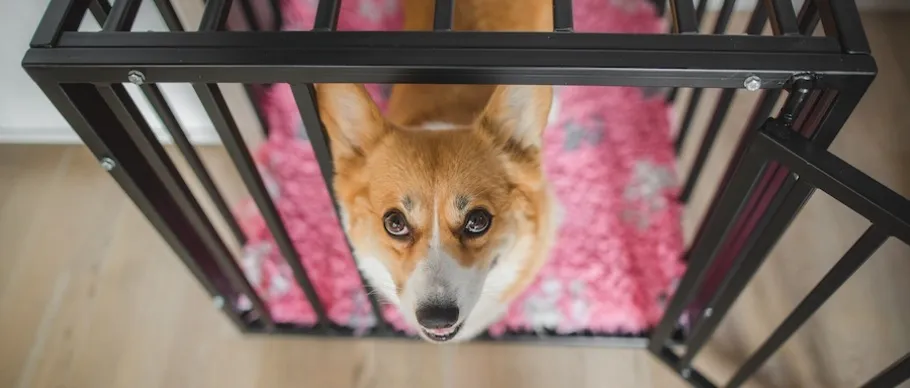 Dog looking up from inside crate
Potty Schedule for a 2-Year-Old Untrained Dog (Pet Parent Works Outside the Home)
- 7:30 a.m.: Potty break
- 7:40 a.m.: Feed dog breakfast
- 7:50 a.m.: Place dog in crate
- 8:30 a.m.: Pet parent leaves for work
- 5:30 p.m.: Pet parent arrives home. Potty break.
- 7:00 p.m.: Potty break
- 7:30 p.m.: Dinner time
- 7:40 p.m.: Potty break
- 10:00 p.m.: Final potty break. Place dog in crate for the night.
Tip #4: Utilize the Leash for Controlled Outings
Taking your dog out on a leash, even in your own yard, allows you to manage their space and minimize distractions. While it’s tempting to let your dog roam freely, keeping them on a leash during potty breaks helps them focus on the task at hand. Ensure the outing is solely for potty purposes; leave play and toys inside to maintain a clear association.
Designating a specific potty spot in your yard can also aid in training. Consistently taking your dog to the same area will help them associate that location with elimination. As they begin to go, use a verbal cue, such as “go potty,” to create a strong link between the action and the command.
 Puppy lying on floor
Allow sufficient time for your dog to relieve themselves, but avoid excessively long outings. If your dog doesn’t go after a reasonable period, bring them back inside and place them in their crate. This helps prevent accidents indoors, as dogs are reluctant to soil their den. Watch for common signs that your dog needs to go: whining, barking, scratching at the door, pacing, circling, or squatting. Be prepared to quickly take them back outside if these signs appear.
Tip #5: Handle Accidents with Care
Your response to potty accidents significantly impacts your training progress. Avoid the common mistake of rubbing your dog’s nose in their mess; this teaches them fear, not proper behavior, and can even lead to undesirable habits like coprophagia (eating stool). If you discover an accident after it has happened, express your displeasure calmly without yelling, as this can make your dog fearful of eliminating altogether. Focus your energy on thoroughly cleaning the area to eliminate any scent cues that might encourage repeat offenses.
If you catch your dog in the act, startle them with a clap or a loud “hey!” to interrupt the behavior, and immediately take them outside to finish. Offer plenty of praise and a reward when they successfully eliminate in the appropriate outdoor spot.
Transitioning from Pads to Outdoors
If your dog has been trained to use potty pads, transitioning them to outdoor relief requires a gradual approach. Begin by placing a pad in a corner near the door. Over time, incrementally move the pad closer to the door, a foot or two at a time. Eventually, place the pad just outside the door in the designated potty area. During this transition, consistently take your dog to this spot at regular intervals. Products like Wee-Wee® Ultimate Attractant Pads with Grass Scent can be beneficial, as the grass scent helps dogs associate the smell with potty time, making the outdoor transition smoother. These pads are also useful for situations where outdoor potty breaks are not feasible, such as during travel or inclement weather.
Key Takeaways: Consistency, Positivity, and Patience
Successfully training your dog to pee outside relies on unwavering consistency, a positive attitude, and a great deal of patience. Remember that factors such as your dog’s breed, size, temperament, and previous experiences can influence the training timeline. With dedication and the strategies outlined above, your dog will soon master the art of outdoor potty breaks, making it second nature for them. If you’re seeking further guidance or support, consider contacting a professional dog trainer.
