
So, you’ve got a feline friend and you’re wondering if leash training is actually possible. Many people think cats are too independent or stubborn to take for a walk, but with the right approach, you can absolutely introduce your cat to the joys of exploring the outdoors safely on a leash. It’s not just about satisfying your curiosity; it’s about providing mental stimulation and a richer environment for your cat. This guide will walk you through everything you need to know to get started.
Understanding Your Cat’s Readiness for Leash Training
Before you even think about putting a harness on your cat, it’s crucial to assess their personality and current comfort level. Not all cats are built for the same adventures, and that’s perfectly okay.
- Confident and Curious Cats: If your cat is naturally bold, enjoys exploring new spaces in the house, and isn’t easily startled by everyday noises, they might be a good candidate. These are the cats who often follow you from room to room and show a keen interest in the world outside the window.
- Shy or Anxious Cats: Cats that are more reserved, easily frightened by loud noises, or prefer to hide when guests visit, may find leash training a stressful experience. Pushing a timid cat into an unfamiliar situation can lead to fear and a damaged bond. For these cats, enriching their indoor environment might be a better long-term solution.
- Age and Health: While kittens can adapt more readily, older cats can also be trained. However, always consider your cat’s overall health. Any underlying medical conditions, especially those affecting mobility or breathing, should be discussed with your veterinarian before starting any outdoor training.
Remember, the goal is to enhance your cat’s life, not to force them into something they dislike. Patience and understanding are key.
Essential Gear for Leash Training Your Cat
Getting the right equipment is half the battle. Unlike dogs, cats require specialized harnesses because their bodies are different, and a collar alone is not safe for leash walking.
- Cat Harness: This is non-negotiable. Look for a harness specifically designed for cats, often referred to as an “H-style” or “vest” harness. These distribute pressure across the chest and back, preventing escape and avoiding discomfort or injury to the neck. Adjustable straps are a must to ensure a snug, secure fit. The best harnesses for cats are those that offer good coverage and are difficult for them to slip out of.
- Leash: A lightweight, 4-6 foot leash is ideal. Avoid retractable leashes, as they offer less control and can be dangerous for both you and your cat. A standard nylon or fabric leash works best.
- Comfortable Collar (Optional but Recommended): While the harness will be the primary restraint, a lightweight, breakaway collar with an ID tag is a good safety measure. This ensures that if your cat ever does manage to slip out of the harness, they are still identifiable.
- High-Value Treats: Think tiny, delicious morsels that your cat absolutely loves – small pieces of cooked chicken, tuna flakes, or specialized cat treats. These will be your primary tool for positive reinforcement.
- Patience and Positive Reinforcement: This is the most crucial element. Training should be a positive experience for your cat, never forced.
Choosing the Right Harness
When selecting a cat harness, consider these factors:
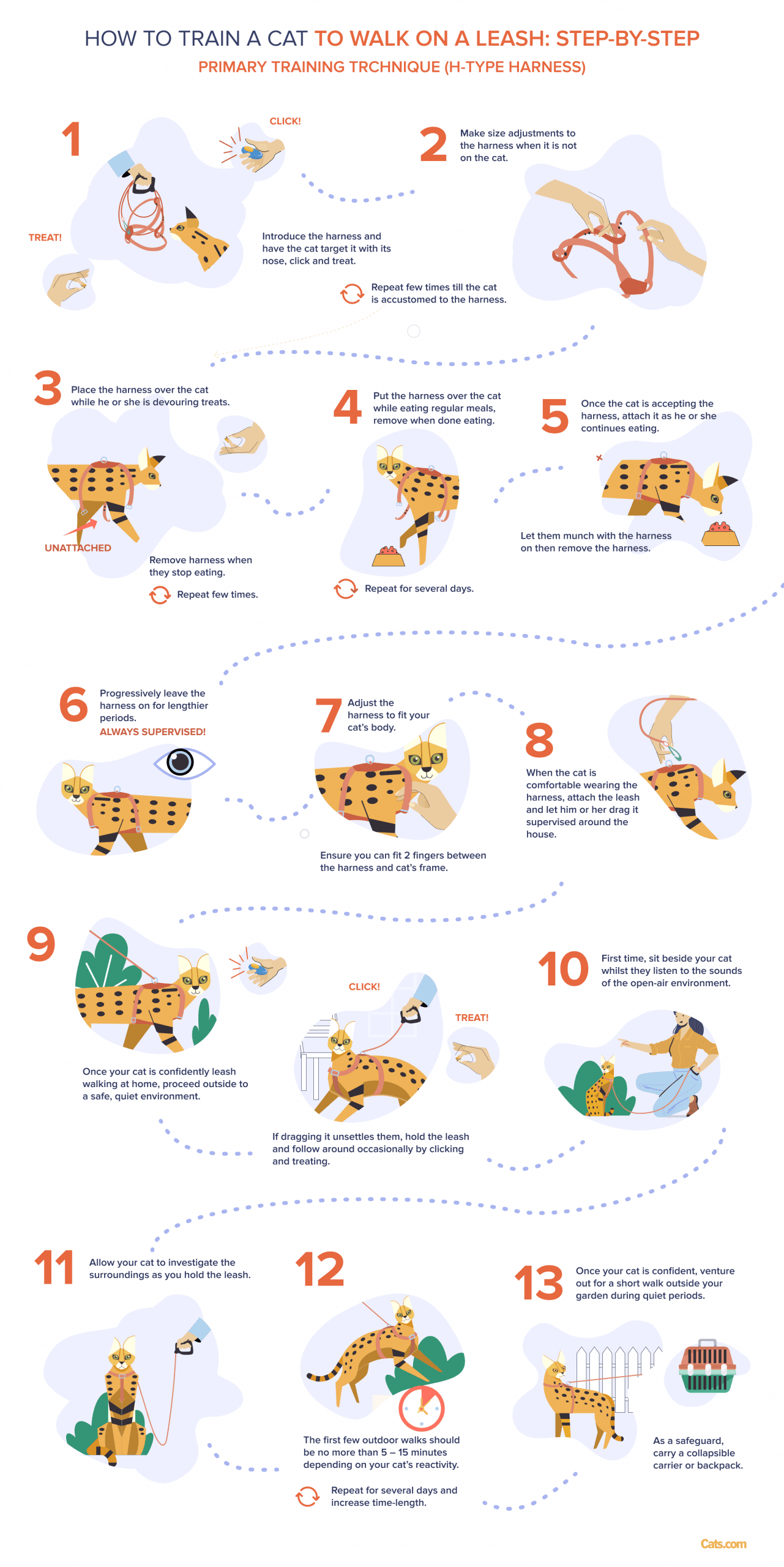
- Fit: It should be snug enough that your cat can’t slip out, but not so tight that it restricts breathing or movement. You should be able to fit two fingers comfortably between the harness and your cat’s body.
- Material: Soft, breathable materials are best for comfort. Avoid anything too stiff or abrasive.
- Adjustability: Multiple adjustment points ensure you can get the perfect fit for your cat’s unique body shape.
- Security: Look for sturdy buckles and D-rings.
Step-by-Step Guide: How to Leash Train Your Cat
Leash training is a gradual process that requires patience and consistency. Don’t rush it! Your cat’s comfort and safety are paramount.
Phase 1: Introduction to the Harness
- Let Them Sniff: Place the harness on the floor near your cat’s food bowl or favorite resting spot. Let them investigate it at their own pace. Reward them with treats and praise for showing curiosity. Do this for a few days.
- Positive Association: Gently drape the harness over your cat’s back for a few seconds, immediately giving them a treat and praise. Remove it quickly. Repeat this several times a day, gradually increasing the duration the harness is on. The goal is for them to associate the harness with good things.
- Fasten the Harness: Once your cat seems comfortable with the harness being draped on them, try fastening it. Do this for very short periods (1-2 minutes) while distracting them with play or treats. If they show any signs of distress (e.g., freezing, trying to bite it, excessive grooming), unfasten it immediately and go back a step.
- Wearing the Harness: Gradually increase the time your cat wears the harness indoors. Let them wear it during meals, playtime, or while lounging. This helps them get used to the feeling of restriction and weight. Ensure they are supervised during this phase to prevent chewing or entanglement.
Phase 2: Attaching the Leash
- Leash Introduction: Once your cat is fully comfortable wearing the harness for extended periods, it’s time to introduce the leash. Let the leash drag on the floor behind your cat while you supervise them indoors. This allows them to get used to the feeling of something attached to their harness without any tension.
- Gentle Guidance: After a few sessions of the leash dragging, pick up the end of the leash. Hold it loosely, allowing your cat to move freely. Do not pull or tug. Your role at this stage is simply to be attached, not to guide. If your cat becomes uncomfortable, release the tension immediately.
- Short Indoor Walks: Begin taking short, “walks” around your home. Let your cat lead the way. Follow them, keeping the leash loose. Offer treats and praise frequently, especially when they move willingly with the leash attached. This helps them understand that moving with you attached is a positive experience.
Phase 3: First Outdoor Adventures
- Choose a Safe Space: Select a quiet, low-traffic area for your cat’s first outdoor experience. Your backyard, a quiet park during off-hours, or a secluded patio can be good options. Ensure the area is securely fenced or free from hazards like busy roads, aggressive animals, or toxic plants.
- Short and Sweet: Keep initial outdoor sessions very short – just 5-10 minutes. The goal is to introduce them to the new sights, sounds, and smells without overwhelming them.
- Let Them Explore: Allow your cat to explore at their own pace. They might want to sniff every blade of grass or hide under a bush. Your job is to follow their lead and ensure their safety. Resist the urge to force them to walk or explore areas they seem hesitant about.
- Positive Reinforcement Outdoors: Continue offering treats and praise for calm behavior and exploration. Associate the outdoors with positive experiences.
- Gradual Exposure: As your cat becomes more comfortable, you can gradually increase the duration of your outdoor excursions and explore slightly more stimulating environments. However, always be mindful of their cues. If they seem stressed, it’s time to go back inside.
Tips for Successful Leash Training
- Consistency is Key: Train regularly, even if it’s just for a few minutes each day. Short, frequent sessions are more effective than long, infrequent ones.
- Read Your Cat’s Body Language: Pay close attention to signs of stress, such as flattened ears, a tucked tail, dilated pupils, hissing, or excessive vocalization. If you see these, stop the session and try again later.
- Never Force Your Cat: Pushing your cat beyond their comfort zone will only create fear and hinder progress. Training should always be voluntary.
- Make it Fun: Use playtime and treats to keep training sessions engaging and enjoyable.
- Supervision is Crucial: Always supervise your cat when they are wearing a harness and leash, both indoors and outdoors, to prevent accidents or escape.
- Consider Clicker Training: A clicker can be an effective tool for marking desired behaviors instantly, which can speed up the training process. Each time your cat performs a desired action (like tolerating the harness or walking a few steps), click the clicker and immediately provide a treat.
Addressing Common Challenges
- Cat Freezes and Won’t Move: This is very common. Don’t pull. Instead, try enticing them with a treat, a favorite toy, or by gently rattling their treat bag. Sometimes, simply waiting patiently is the best approach.
- Cat Tries to Escape the Harness: Ensure the harness is fitted correctly. If they are persistent, the harness may not be the right type or fit for your cat. Go back to Phase 1 and re-evaluate the fit.
- Cat is Scared of Outdoor Stimuli: Start in a very controlled, quiet environment. Gradually expose them to more stimuli as they gain confidence. You can even bring recordings of outdoor sounds (birds, distant traffic) indoors at a low volume to help desensitize them.
The Benefits of Leash Training
Leash training opens up a world of possibilities for your feline companion. It allows them to experience the richness of the outdoors in a safe and controlled manner. This can include:
- Enhanced Mental Stimulation: New sights, sounds, and smells provide a significant mental workout, reducing boredom and preventing destructive behaviors.
- Physical Exercise: Leash walks offer a great way for your cat to get exercise, which is crucial for maintaining a healthy weight and overall well-being.
- Bonding Experience: Training together strengthens the bond between you and your cat, fostering trust and mutual understanding.
- A Safer Alternative to Free-Roaming: For cat owners who worry about the dangers of free-roaming cats (traffic, predators, disease), leash walking provides a secure way for their cat to enjoy the outdoors.
Leash training your cat is a rewarding journey that requires dedication and understanding. By following these steps and prioritizing your cat’s comfort and safety, you can successfully introduce them to the exciting world beyond your doorstep. Happy trails to you and your adventurous feline!
