
Feeling like you’re at the end of your rope with potty training? You’re not alone. Trying to figure out How To House Train A Stubborn Dog can test the patience of even the most devoted pet parent. It’s a frustrating cycle of accidents, cleaning, and wondering what you’re doing wrong. But here’s the good news: it’s not a lost cause. Stubbornness in dogs is often a misunderstanding, not a deliberate act of defiance. With the right strategies, consistency, and a whole lot of patience, you can turn things around.
This guide is designed to provide you with a clear, frustration-free roadmap. We’ll break down why your dog might be struggling and give you actionable, positive methods to finally achieve a clean home and a happy, well-behaved companion. Let’s get started. For a deeper dive into the end goal, you can explore what does house trained mean for a dog.
Why Is My Dog So Stubborn with Potty Training?
Before you can fix the problem, you need to understand the root cause. A dog that seems “stubborn” is usually struggling with one of several underlying issues.
Ruling Out Medical Issues First
First and foremost, a sudden change in potty habits or an inability to be trained could signal a medical problem. Urinary tract infections (UTIs), bladder stones, kidney issues, or even digestive upset can make it difficult or painful for your dog to hold it. Before you double down on training, schedule a visit with your veterinarian to rule out any health concerns.
Understanding Their Background
If you have a rescue dog, their past experiences can heavily influence their current behavior. They may have been forced to eliminate in their crate or living space, never learned the proper rules, or developed anxiety that leads to accidents. Understanding their history can foster empathy and help you tailor your training approach.
Breed Tendencies and Personality
Let’s be honest: some breeds are simply harder to housebreak than others. Terriers, hounds, and many small breeds are known for their independent, sometimes stubborn, streaks. This doesn’t make them untrainable; it just means you’ll need to be extra consistent and find what truly motivates them.
The Foundation: House Training Basics Revisited
Even with a difficult dog, success hinges on mastering the fundamentals. Sometimes, going back to square one with a more structured approach is all it takes.
Establish a Rock-Solid Routine
Dogs are creatures of habit. A predictable schedule is the cornerstone of successful house training.
- Frequent Potty Breaks: Take your dog out first thing in the morning, last thing at night, after every meal, after every nap, and after playtime. For puppies, a good rule of thumb is that they can hold it for their age in months plus one hour.
- Consistent Feeding Times: A regular feeding schedule leads to a regular potty schedule. Avoid leaving food out all day.
- Choose a Command: Use a consistent verbal cue like “go potty” or “do your business” every time you take them to their designated spot.
The Power of Positive Reinforcement
Punishing a dog for an accident is one of the most counterproductive things you can do. Yelling or rubbing their nose in it will only create fear and anxiety, teaching them not to potty in front of you, even outside. Instead, focus on rewarding the right behavior. When your dog eliminates in the correct spot, throw a party!
- Offer high-value treats immediately after they finish.
- Shower them with enthusiastic praise like “Good dog!”
- Engage in a minute of fun play as a reward.
Crate Training as a Safe Haven
A crate is an invaluable tool. Dogs have a natural instinct not to soil their den. The crate should be a safe, comfortable space, not a punishment.
- Proper Size: The crate should be just large enough for your dog to stand up, turn around, and lie down comfortably. If it’s too big, they may use one end as a bathroom.
- Make it Positive: Introduce the crate with treats and toys. Feed them their meals inside it.
- Limit Time: Don’t leave your dog in the crate for longer than they can reasonably hold their bladder.
While considering your dog’s temperament, it can be useful to know are female dogs harder to potty train as gender can sometimes play a small role in training dynamics.
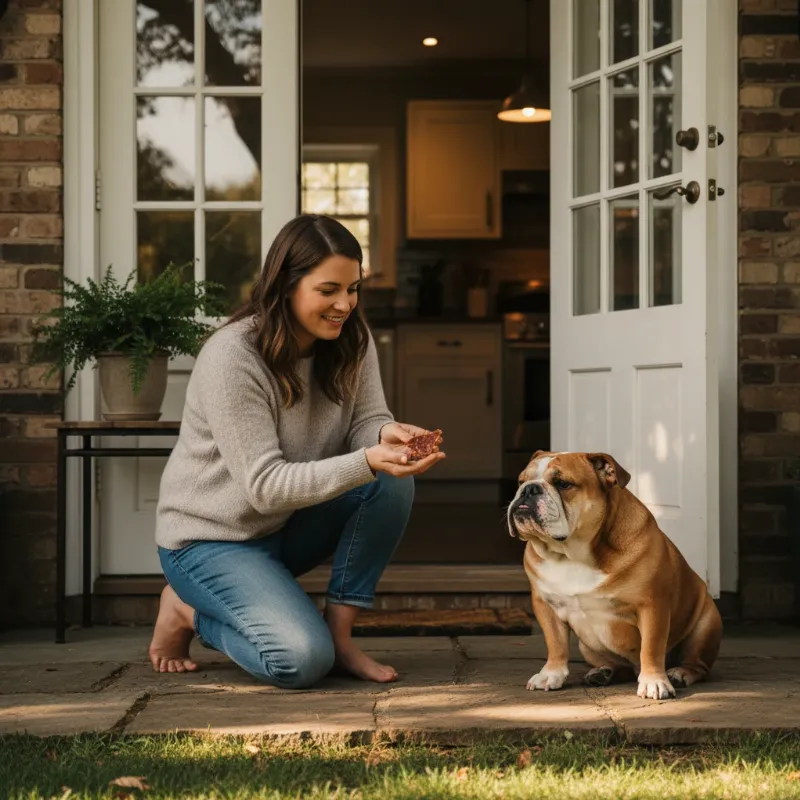 A frustrated but loving dog owner trying to teach their stubborn bulldog how to house train, using treats as a reward.
Advanced Strategies for a Stubborn Dog
If the basics aren’t enough, it’s time to introduce some advanced techniques designed for more challenging cases.
The Umbilical Cord Method
This method involves keeping your dog leashed and attached to you whenever they are out of their crate. This drastically reduces the chance of them sneaking off to have an accident. It helps you learn their pre-potty signals (like sniffing, circling, or pacing) so you can get them outside immediately.
Supercharge Your Rewards
For a dog who isn’t food-motivated by their regular kibble, you need to up the ante. Use special, high-value treats that they only get for successful potty breaks. Think small pieces of cooked chicken, cheese, or store-bought training treats that they find irresistible. The reward must be immediate and exciting.
As certified dog behaviorist Dr. Eleanor Vance notes, “Stubbornness in dogs is often just a communication gap. Our job is to bridge that gap with consistency and clear, positive signals.”
Bell Training for Clear Communication
Teach your dog to ring a bell hanging from the doorknob to signal they need to go out. You can do this by dabbing a bit of peanut butter on the bell or by gently guiding their paw to touch it every time you go outside, followed by praise. This gives them a clear way to communicate their needs to you.
Meticulous Accident Cleanup
Dogs are drawn to eliminate where they’ve gone before. If you’re not cleaning accidents properly, their powerful noses will pick up lingering scents, signaling that it’s an acceptable potty spot. Use an enzymatic cleaner specifically designed to break down and eliminate pet urine odors. Regular household cleaners won’t cut it.
Of course, some dogs learn faster than others, and it’s worth exploring the easiest breed of dog to train to understand how breed characteristics influence learning speed.
What Not to Do: Common Mistakes to Avoid
Your actions can either help or hinder the training process. Avoid these common pitfalls:
- Punishment: Never scold, hit, or punish your dog for an accident. This creates fear and damages your bond.
- Too Much Freedom: Do not give an untrained dog free roam of the house. Limit them to a specific, easy-to-clean area until they have been accident-free for at least a month.
- Inconsistency: Everyone in the household must be on the same page with the routine, commands, and reward system. Consistency is non-negotiable.
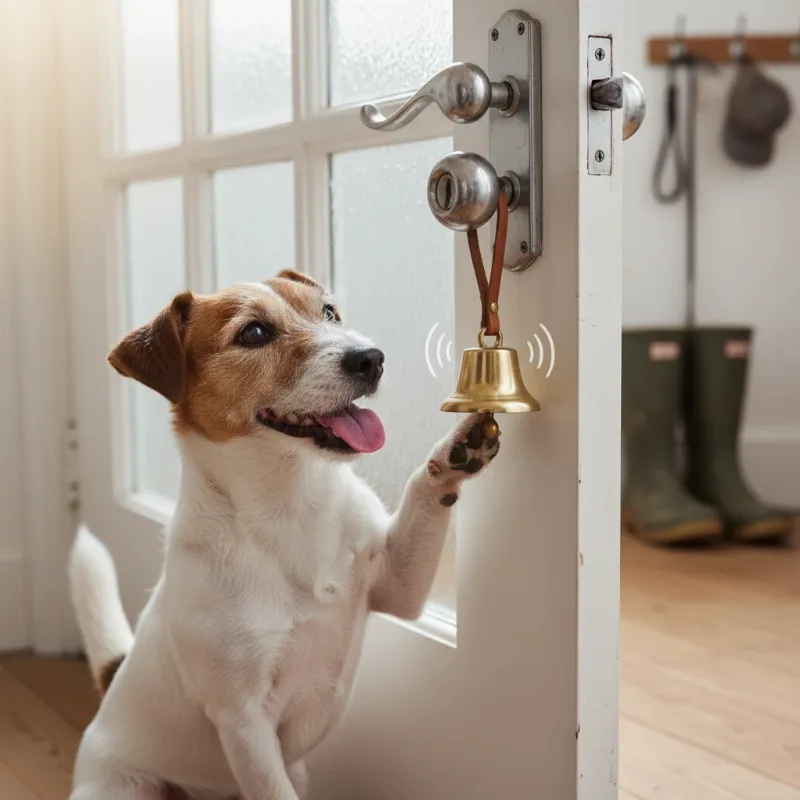 A happy Jack Russell Terrier successfully ringing a potty training bell hanging on a doorknob, demonstrating a successful house training method for a stubborn dog.
Frequently Asked Questions (FAQ)
1. Can an older stubborn dog be house trained?
Absolutely. It may take more time and patience than with a puppy, but adult dogs are fully capable of learning new rules. The key is to be consistent and establish a clear routine, just as you would with a young dog.
2. Why does my dog pee inside right after coming in from outside?
This is a common frustration! It could be that they get distracted outside and don’t fully empty their bladder. It might also be a medical issue. To combat this, stay outside with them on a leash and wait until they have finished. Reward them profusely when they do.
3. Should I use puppy pads for a stubborn dog?
Using puppy pads can be confusing for a dog, as it teaches them that it’s sometimes okay to potty inside. It’s generally best to focus exclusively on outdoor training to avoid sending mixed messages.
4. What are the best high-value treats for potty training?
The best treats are small, soft, smelly, and something your dog absolutely loves and doesn’t get at any other time. Examples include freeze-dried liver, tiny pieces of hot dog, or commercial training treats.
5. What if I’ve tried everything and nothing works?
If you have ruled out medical issues and have been consistently applying these training techniques without success, it may be time to consult a professional. A certified dog trainer or a veterinary behaviorist can provide a personalized plan for you and your dog.
Your Path to Success
Learning how to house train a stubborn dog is a journey that requires commitment and a positive mindset. Remember to celebrate small victories, stay patient during setbacks, and focus on building a strong, trusting relationship with your canine companion. By understanding their needs and communicating clearly and consistently, you can overcome this challenge and enjoy a peaceful, accident-free home.
