
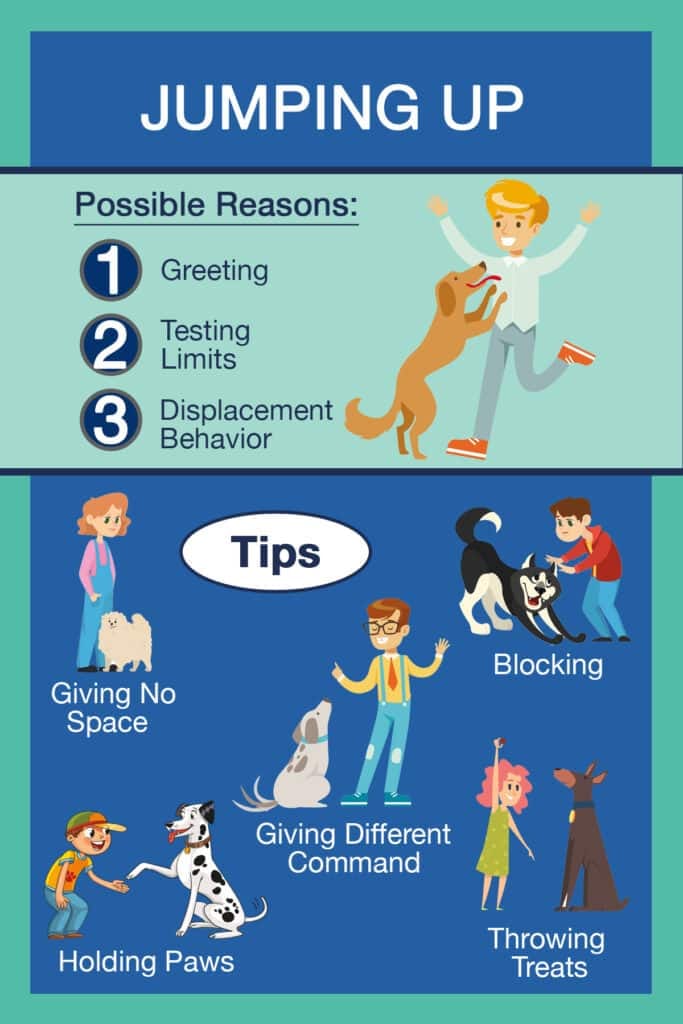
Greeting your dog at the door should be a joyous occasion, but for many owners, it’s a moment of frustration due to excessive jumping. This common dog behavior problem can be more than just an annoyance; for larger breeds, it can pose a safety risk, potentially knocking over children and seniors. Even smaller dogs can scratch or leave muddy paw prints. While your dog’s excitement and desire to greet you face-to-face are natural, their jumping behavior, which is often an effective way to solicit attention, needs to be redirected. Fortunately, by implementing consistent training strategies, you can teach your dog a more appropriate and polite way to say hello.
This guide will provide you with 10 practical tips to help your dog learn appropriate greeting manners. By understanding and applying these techniques, your canine companion will soon master the art of a calm and respectful welcome.
1. Reward a Four-On-the-Floor Greeting
The most effective method for modifying unwanted behaviors is to teach your dog an alternative, incompatible action. This means focusing on what you want your dog to do, rather than solely on what you don’t want. For jumping, this translates to teaching your dog to keep all four paws on the floor during greetings. They simply cannot jump and keep their feet on the ground simultaneously. You can also train them to sit or lie down when greeting people. Crucially, only offer attention and affection when your dog adheres to your chosen rule. Consistency is key; for example, don’t allow jumping when you’re dressed casually but discourage it when you’re in formal attire.
2. Reinforce Immediate Compliance
Dogs tend to repeat behaviors that yield positive outcomes. Therefore, as soon as your dog follows your greeting rule, such as keeping their front paws on the floor, provide immediate praise and petting. Your dog seeks the reward of your attention, so ensure they receive it the moment they exhibit the desired behavior, especially during the learning phase. Avoid delaying your greeting to remove your coat or shoes, as this can lead to impatience and an attempt to regain your attention through jumping.
3. Withdraw Attention When Jumping Occurs
Conversely, the most direct way to extinguish jumping is to cease rewarding it. Never reinforce a behavior you wish to eliminate. If your dog jumps on you, promptly remove the desired element – your attention. Try turning your back or calmly walking away, signaling to your dog that jumping has the opposite effect of what they intend. As soon as your dog has all four paws on the floor again, turn back and quietly offer praise and petting. This teaches your dog that their behavior acts as a switch, controlling the flow of your attention.
dexter_cz/Shutterstock
4. Engineer Success with Training Aids
While ignoring jumping and rewarding proper greetings is effective, it can be a trial-and-error process that may lead to frustration for your dog. To facilitate their learning, set your dog up for success by making it easier for them to follow your greeting rule. If the rule is to sit for greetings, ask them to sit as soon as you enter. If the rule is four paws on the floor, encourage them to remain standing.
A highly effective strategy is to scatter treats on the floor. Most dogs find it hard to resist these readily available rewards, and they cannot jump and sniff the ground simultaneously. By providing food before your dog even considers jumping, you can reward a four-on-the-floor stance with both attention and treats. Your dog will quickly grasp your greeting rule, and you can gradually phase out the food rewards.
5. Consistently Reward Correct Greetings
Your dog will learn proper greeting behavior more rapidly if their actions have an immediate impact on your attention. Front paws on the floor should result in attention, while jumping should lead to its withdrawal. Therefore, always reward your dog when they adhere to your greeting rule. Never withhold your attention if your dog finally places their feet on the ground, even if you’ve endured a prolonged period of jumping. Inconsistency will confuse your dog, as the rule must be reinforced without exception.
6. Avoid Physical Corrections
Remember that your dog’s jumping is an attempt to gain your attention. Even negative responses, such as grabbing your dog, holding their paws, or pushing them away, still constitute attention and thus reinforce the jumping behavior. This can paradoxically lead to more frequent jumping in the long run. Furthermore, physical interactions can be misinterpreted by some dogs as an invitation to roughhouse play, potentially causing them to return with even more enthusiastic jumping, believing it’s part of the game.
©OlgaOvcharenko – stock.adobe.com
7. Refrain From Using Your Knee as a Barrier
The suggestion to block a dog’s chest with your knee as they jump may seem like a solution, but it can be interpreted as attention or play by some dogs, leading to the opposite of the desired effect. More concerningly, this action can erode trust and damage the human-canine bond. Your dog is simply trying to greet you, and responding with what could be perceived as punishment can lead to distrust and potentially other behavioral issues, such as a failure to come when called.
8. Maintain Calm Greetings During Training
A dog’s excitement upon seeing you can make it difficult for them to control their impulse to jump. It requires significant emotional self-control to resist the urge and follow the new greeting rule. To aid this process, keep greetings low-key. Dogs are sensitive to our emotions, so a calm demeanor from you will help your dog remain calm. As your dog begins to understand and comply, you can gradually increase your enthusiasm, mirroring their excitement once they’ve mastered the greeting rule.
9. Manage Guest Interactions
Your dog’s jumping behavior isn’t solely reinforced by you; family members, guests, and even strangers can inadvertently reward it. To prevent this, implement management techniques such as using a leash to control your dog’s approach. A more effective strategy is to send your dog to their designated place, like a mat or bed, or confine them to their crate so they are away from the door. A baby gate can also be used to create a barrier in the entry hall.
©Jana Behr – stock.adobe.com
10. Instruct Guests on Greeting Protocols
Do not hesitate to clearly communicate your dog’s greeting expectations to guests and strangers. While your dog is in training, ask individuals to completely ignore your dog until you deem it appropriate. It may be beneficial to avoid interactions with strangers until your dog has successfully mastered greetings with cooperative friends and family. Alternatively, use a “watch me” cue or distract your dog with a hand touch or toy as strangers pass by.
For personalized advice from experienced trainers or further assistance with your dog’s training needs, explore the AKC GoodDog! Helpline page for online chat options or to enroll in the program. The AKC GoodDog! Helpline is celebrating a decade of dedicated support for dog owners. Experts are available via phone or video to address all your training inquiries, from puppy housetraining to managing behavioral issues in senior dogs. Join the nearly one million dog owners who rely on the AKC GoodDog! Helpline.
