
Bringing a new dog into your home, whether a playful puppy or a rescued older dog, is an exciting time. A crucial part of settling them in is teaching them to do their business outdoors. This process, while sometimes challenging, is fundamental for a harmonious home. This guide will walk you through five essential tips to successfully train your dog to pee outside, ensuring a clean and happy environment for both you and your canine companion.
Tip #1: Dedicate Quality Time to Your Dog
The initial period with a new dog is filled with adjustment. Your dog will experience a wide range of emotions as they acclimate to their new surroundings. The most effective way for them to feel comfortable and secure is by spending ample time with you. This bonding is not just about building a relationship; it’s the cornerstone of successful training. Mastering how to train a dog to pee outside requires a consistent routine, repetition, and unwavering patience. Therefore, dedicating your time is the most critical first step.
Tip #2: Utilize a Crate Effectively
Allowing an untrained dog unrestricted access to your home can lead to unwelcome “surprises.” Confinement is a vital training tool, and a crate offers a safe and effective way to manage your dog’s environment and prevent accidents. It’s important to remember that dogs are naturally den animals, often seeking out cozy, enclosed spaces. A crate should be viewed as your dog’s personal sanctuary, not a punishment. Avoid using the crate as a place for your dog to go when they’ve misbehaved, as this will create negative associations. Instead, ensure the crate is a positive and comfortable space, which is crucial for its role in teaching your dog to eliminate outdoors. For detailed advice on selecting the right crate, consult our comprehensive guide on crate training.
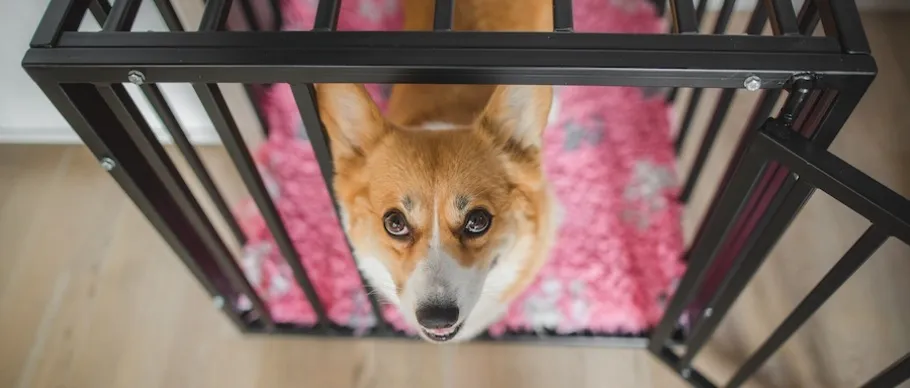 Dog looking up from inside crate
Tip #3: Establish a Consistent Schedule
Initially, recognizing your dog’s cues for needing to go outside can be challenging. Therefore, establishing a predictable schedule for potty breaks is paramount. Assume your dog will need to relieve themselves immediately upon waking, after meals, after playtime, and even after bursts of energy. Puppies, in particular, require more frequent feeding and thus more frequent potty breaks. This is why dedicating time to your dog, as mentioned in Tip #1, is so crucial. If you cannot be home during the day, enlist the help of a trusted friend, neighbor, or family member for mid-day feeding and potty breaks.
Here are examples of potential schedules for training:
Potty Schedule for a 5-Month-Old Puppy (Pet Parent Works Outside the Home)
- 7:30 a.m. Potty break
- 7:40 a.m. Feed puppy breakfast
- 7:50 a.m. Potty break. Crate puppy.
- 8:30 a.m. Pet parent leaves for work
- 12:30 p.m. Helper provides potty break
- 12:40 p.m. Helper feeds puppy midday meal
- 12:45 p.m. Helper provides potty break. Crate puppy.
- 5:30 p.m. Pet parent arrives home. Potty break.
- 6:30 p.m. Potty break
- 7:30 p.m. Dinner time
- 7:40 p.m. Potty break
- 9:00 p.m. Potty break. Remove water bowl to help puppy hold bladder overnight.
- 10:00 p.m. Final potty break. Crate puppy for the night.
Potty Schedule for a 2-Year-Old Dog (Pet Parent Works Outside the Home)
- 7:30 a.m. Potty break
- 7:40 a.m. Feed dog breakfast
- 7:50 a.m. Crate dog
- 8:30 a.m. Pet parent leaves for work
- 5:30 p.m. Pet parent arrives home. Potty break.
- 7:00 p.m. Potty break
- 7:30 p.m. Dinner time
- 7:40 p.m. Potty break
- 10:00 p.m. Final potty break. Crate dog for the night.
Tip #4: Master the Leash for Potty Breaks
Using a leash, even in your own yard, helps control your dog’s range and minimize distractions. Keep the focus solely on potty time; leave toys inside and maintain a calm demeanor. Designating a specific potty spot in your yard can help your dog associate that area with elimination. Use a verbal cue, such as “go potty,” as they begin to relieve themselves.
Allow your dog sufficient time to go, but avoid prolonged outings. If they don’t go within a reasonable time, return inside and place them in their crate. This encourages them to hold it, as most dogs are reluctant to soil their den. Vigilantly watch for signs that your dog needs to go, including whining, barking, scratching at the door, pacing, circling, or squatting. Be prepared to promptly take them outside to finish.
Tip #5: Handle Accidents with Care
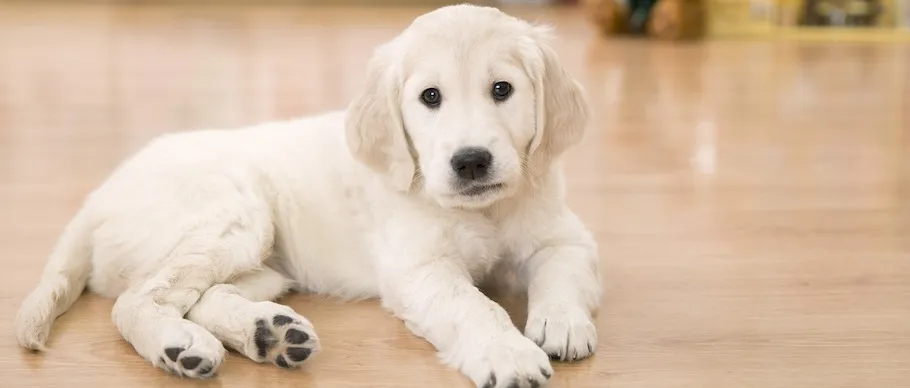 Puppy lying on floor
How you manage accidents significantly impacts your training progress. Avoid punishing your dog by rubbing their nose in a mess; this only creates fear and can lead to more problematic behaviors like coprophagia (eating stool). If you discover an accident after it has happened, express your displeasure calmly. Yelling will only confuse your dog into thinking all urination is wrong. Focus your energy on thorough cleaning, as residual odors can encourage them to mark the same spot again.
If you catch your dog in the act, startle them gently with a clap or a loud “hey!” and immediately escort them outside to finish. Crucially, offer abundant praise and a treat when they successfully eliminate in the designated outdoor area.
Transitioning from Pads to Outdoors
For dogs already accustomed to using potty pads, transitioning to outdoor elimination requires a gradual approach. Use quality potty pads and place them in a quiet corner. Slowly move the pads closer to the door over time. Eventually, place the pad outside in the desired location and begin taking your dog there regularly. Products like Wee-Wee® Ultimate Attractant Pads with Grass Scent can assist by providing a familiar grass scent, reinforcing the association between the smell and potty time. This can also be useful for indoor potty needs during travel or inclement weather. For more tips on yard cleanliness, see our guide on What’s the Best Way to Clean Up Dog Poop in the Yard?.
Consistency, positive reinforcement, and patience are key to successful house training. Remember that factors like breed, size, temperament, and past experiences can influence the training timeline. With dedication, your dog will soon master answering nature’s call outdoors.
