
Transitioning an outdoor cat to an indoor lifestyle can be a rewarding experience, but it often comes with a significant concern for new cat parents: litterbox training. Fortunately, with the right approach and a bit of patience, most outdoor cats can be successfully trained to use a litterbox indoors. This guide will walk you through the essential steps to ensure a smooth transition for your feline companion.
The Importance of the Right Environment
Before you even introduce a litterbox, consider your cat’s potential preferences and needs. A common recommendation is to have one more litterbox than the number of cats in your household. For a new cat, this means setting up at least two litterboxes. Strategically place these boxes in areas your cat might naturally gravitate towards. One should be near the door leading outside, mimicking her previous elimination spot, while the other should be in a more private, secluded area. Some cats feel more secure in hidden locations, so placing a litterbox behind a cat-safe plant or another visual barrier can be beneficial. To deter your cat from using the plant’s soil as a toilet, temporarily cover it with tin foil.
Choosing the Ideal Litterbox
The type of litterbox you select plays a crucial role in your cat’s acceptance. While many owners prefer covered litterboxes for aesthetic reasons, they can be frightening for cats. These boxes restrict escape routes and trap odors, potentially deterring your cat from using them. Many cats prefer uncovered litterboxes that offer a clear view and less concentrated scent.
For cats who need a bit more space or tend to urinate while standing, a larger plastic storage box with sides approximately 6 inches high can be an excellent alternative. If your cat is older or has joint issues, you may need to cut down one or more sides of the box to make entry and exit easier.
Selecting the Perfect Cat Litter
The choice of cat litter is equally important. While scented litters might appeal to humans, they can be offensive to a cat’s sensitive nose. It’s best to opt for unscented, clumping litter, which is generally preferred by most cats. If your outdoor cat is accustomed to a specific substrate like dirt, you can ease her transition by mixing a small amount of her preferred litter with the outdoor soil. Gradually reduce the amount of soil over time until she is exclusively using the litter.
To discover your cat’s ultimate preference, offer a couple of different types of litter (clumping and non-clumping) in separate boxes. Allow your cat to choose her favorite, and donate the less-preferred option to a local animal shelter. Once you’ve identified her preferred litter, experiment with different depths to find the perfect amount. Consistency in both litter type and depth is key to encouraging proper litterbox habits.
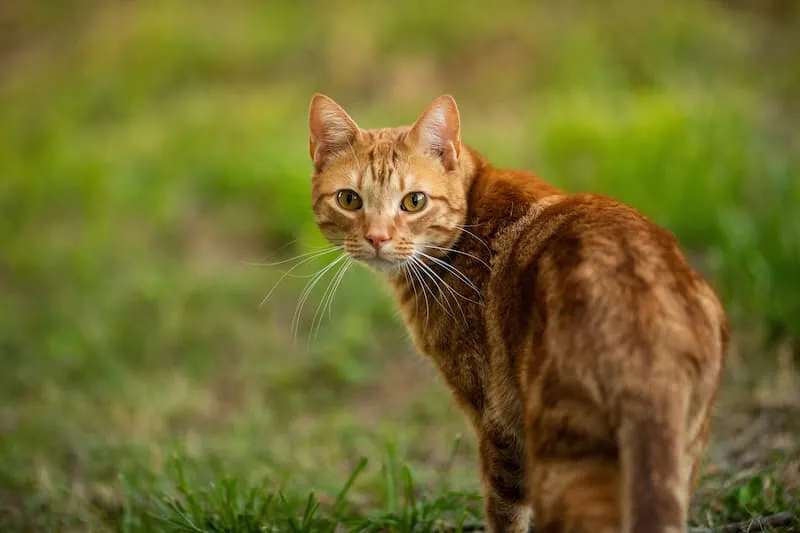 An orange outdoor cat looks curiously at the camera, sitting in a sunny spot.
Effective Litterbox Training Techniques
Positive reinforcement is the most effective method for litterbox training. Avoid punishing your cat for accidents, as this can lead to stress and damage your bond, ultimately hindering the training process. Instead, reward her with praise, a favorite toy, or a treat immediately after she successfully uses the litterbox.
For cats unfamiliar with litterboxes, confining them to a smaller, enclosed space temporarily can be helpful. This could be a large dog pen, a sectioned-off area with baby gates, or even a closed bathroom. Ensure this space is equipped with all her essentials: a resting area, food, water, toys, and, of course, the litterbox. Consistent interaction with you throughout the day is also important. As your cat becomes more comfortable and successful with the litterbox, you can gradually expand her living area.
Keeping some of the scent inside the litterbox initially can also serve as an environmental cue for your cat. After her first successful bowel movement, avoid scooping it out immediately. Leaving it for a short period can encourage her to return to the same spot. Once she has used the box a couple of times, regular scooping is crucial to maintain cleanliness and encourage continued use.
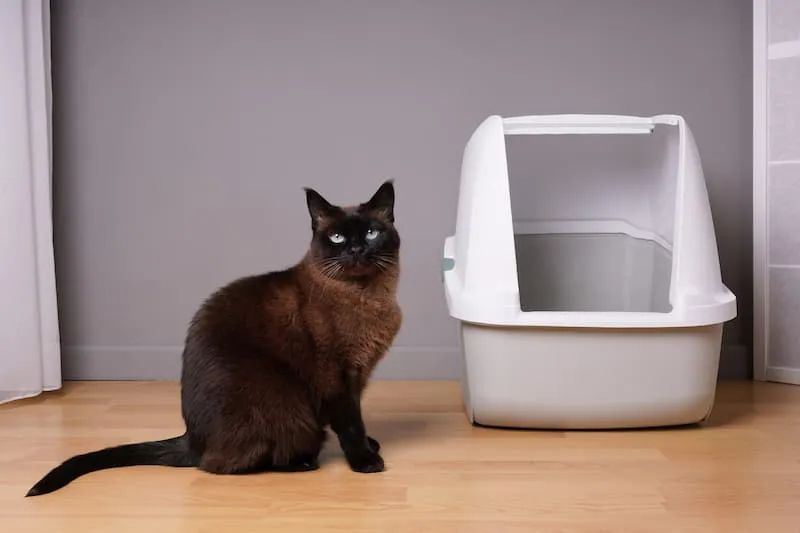 A Siamese cat is sitting alertly next to a clean litterbox in a home environment.
Additional Tips for Litterbox Success
Consider using feline pheromone sprays in your cat’s living area. These sprays can help reduce anxiety during the transition from outdoors to indoors, promoting a sense of calm that encourages appropriate litterbox use.
If accidents do occur, clean the affected areas thoroughly with a pet-safe enzyme cleaner. These cleaners break down old scents, preventing your cat from returning to the same spot in the future.
Always keep the litterbox separate from your cat’s food and water bowls. Cats are naturally fastidious creatures and are unlikely to eliminate in areas where they eat and drink.
If your cat continues to struggle with litterbox use despite your best efforts, consult your veterinarian. Various medical issues can contribute to inappropriate elimination. Your vet is an invaluable resource for diagnosing and addressing any underlying problems, ensuring your cat can successfully use her litterbox.
