
Do you find yourself constantly battling your dog on walks, leaving you feeling defeated and irritable? Many dog owners struggle with leash pulling, trying various methods only to find little success. If you’ve been searching for a solution to How To Get My Dog To Stop Pulling, you’re not alone. This article is for you if you’ve felt like a failure, or your dog is just stubborn, despite trying everything to curb pulling. It’s also for you if training walks leave you annoyed, or you’ve given up entirely because the frustration outweighs the joy of walking with your dog.
There’s a lot of advice out there about stopping leash pulling. While some of it is effective, a significant portion can drive both owners and dogs to the brink. Instead of adding to the overwhelming pile of “helpful tips,” let’s lighten your burden by identifying five common tactics you can confidently stop doing today. These are methods I personally tried with my own dogs, only to find them frustrating and ineffective for everyone involved. It can be challenging to let go of these ingrained ideas, but understanding their flaws is the first step toward effective training and building a stronger bond with your dog. How to get your puppy to sleep through the night is a common puppy challenge, but leash pulling can persist throughout a dog’s life if not addressed effectively early on.
1. Enforcing “Loose Leash Rules” on Every Walk, Regardless of Your Dog’s State
The mantra “be consistent, be clear, don’t confuse the dog!” often leads owners to enforce strict loose leash rules on every single walk. This usually translates to stopping every time your dog pulls. While consistency is a good principle, blind adherence to this rule often drives owners “absolutely insane” within a week, and for good reason. The fundamental flaw lies in asking too much, too soon.
Good dog training dictates starting at an easy level and gradually increasing difficulty. Imagine trying to teach a complex trick to your dog in a highly stimulating environment like a busy street right after a long day indoors. It’s unreasonable, yet we often expect dogs to master leash skills in such scenarios. This is where selective consistency becomes far more effective. Dogs are highly sensitive to context. You can teach them that when the leash is clipped to their collar, rules are enforced, but when it’s on their harness, they have more freedom to explore. This approach allows you to “level up” training systematically, making the process quicker and more sustainable for how to get my dog to stop pulling.
2. Training in Your Driveway or Front Yard as the First Step
Many trainers, including myself in my early days, once recommended starting no-pull training in the driveway or front yard. However, for most dogs, this is actually one of the worst places to begin. The front yard is often a transition zone – a place dogs quickly move through on their way to more exciting destinations. They are typically already excited, distracted, and impatient, making it an incredibly challenging environment for nascent leash skills.
Imagine diligently stopping every time your dog pulls, only to take 30 minutes to get out of your driveway, leaving both you and your dog frustrated before the walk even truly begins. It’s madness. You have permission to let your dog pull (on a harness, as discussed previously) through the driveway until they have developed proficiency in leash skills in less distracting environments. This small adjustment can significantly reduce early training frustration and make the journey to how to get my dog to stop pulling much more positive.
 A person in a striped shirt sits on the ground with a golden retriever, holding a leash.
3. Making Your Dog Walk Right at Your Side for Dominance Reasons
The outdated notion that a dog walking ahead of you indicates an attempt to be “in charge” stems from the long-debunked “pack leadership” theory. This myth, deeply entrenched in popular culture, suggests owners must be strong alphas to prevent their dogs from assuming a dominant role. This approach often leads to walking dogs on very short leashes, preventing sniffing or exploration, all in the name of asserting control. How long can dogs stay in a crate might be a practical question for containment, but dictating a dog’s walking position based on debunked dominance theory is counterproductive to building a good relationship.
Such walks are not only physically taxing for the owner but also often leave dogs less happy. The truth is, whether your dog walks next to you, behind you, or ahead of you, it has absolutely nothing to do with status or dominance. Behavioral science confirms this is a fairy tale. In fact, allowing your dog to walk ahead and explore by sniffing is incredibly beneficial for their mental enrichment and overall well-being. While a structured “Heel” cue is useful for navigating crowded areas or past significant distractions, it’s a trained skill, not a moral imperative. Letting go of this outdated belief can significantly improve your walks and contribute positively to how to get my dog to stop pulling in a force-free way.
4. Waving a Treat in Your Dog’s Face to Get Attention When Distracted
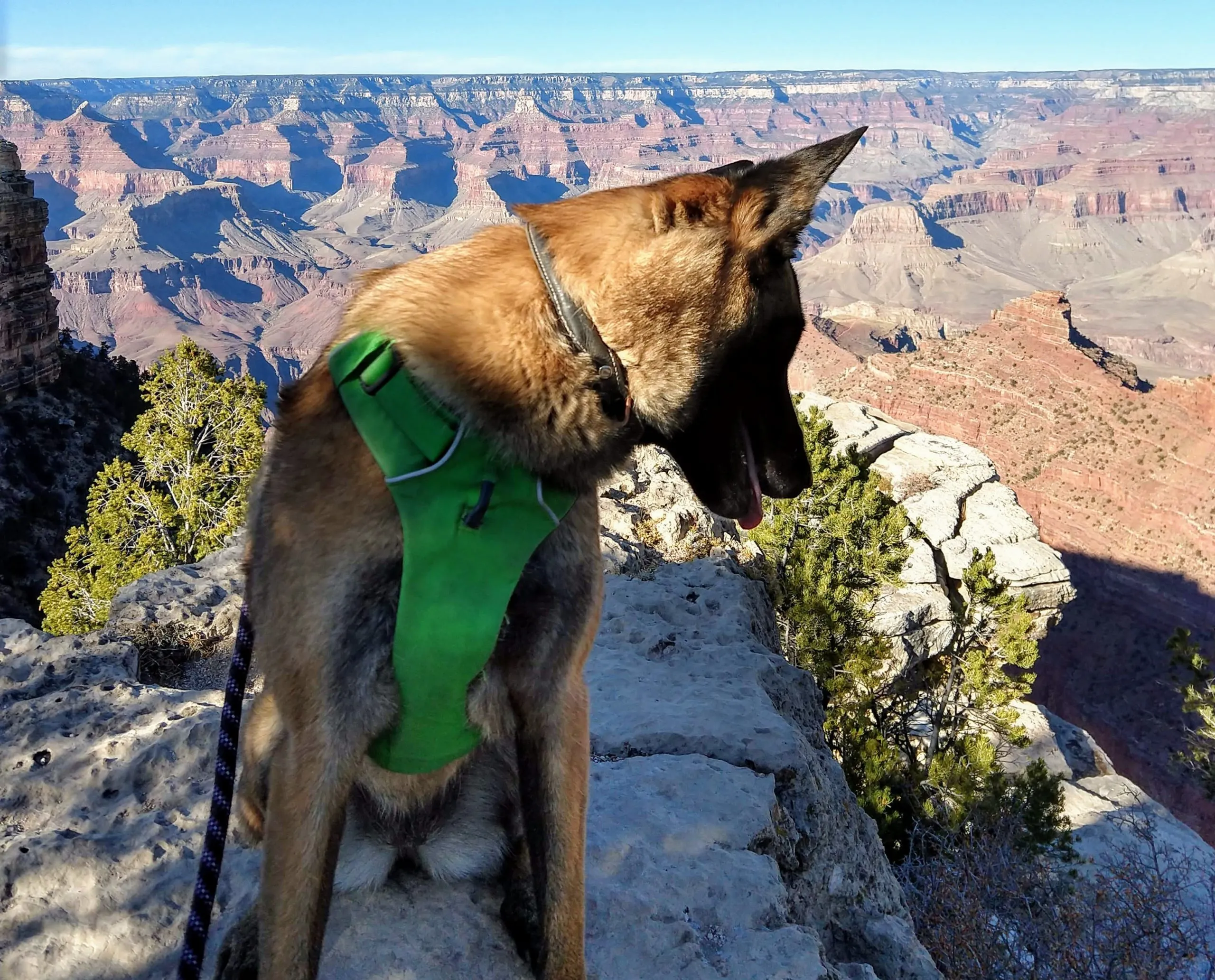
This common tactic involves waving food to redirect a distracted dog from whatever has caught their attention. While seemingly innocuous, it often fails to foster genuine engagement. Imagine standing at the rim of the Grand Canyon, completely awestruck, only for someone to step in front of you, waving their arms and demanding your attention. Your feelings towards that person would likely not be affection or respect.
This tactic doesn’t make your dog want to engage with you. More importantly, it doesn’t allow them to make the choice to engage. When a dog chooses to disengage from a distraction and focus on you, that is infinitely more powerful than if they only comply to make the annoying treat-waving stop. Distractions don’t have to be a negative. In fact, with the right approach, they can be utilized as part of your training strategy to teach your dog how to get my dog to stop pulling effectively. For instance, understanding how to stop a dog jumping on guests often involves redirecting attention, but it’s about building a desire for the desired behavior, not just waving a treat as a temporary fix.
 A dog sits attentively, looking at a person's hand holding a treat.
5. Trying to Be More Interesting Than the Environment
Many dog owners are told to “be more interesting!” when their dog gets distracted during training. This often implies needing to jump around, use high-pitched voices, and generally put on a performance to capture your dog’s attention. For those of us who are naturally more reserved, this can feel like an impossible and exhausting task. The good news is, you don’t have to compete with the entire world for your dog’s focus.
You don’t need to be a constant entertainer to have a well-behaved dog. There are effective training methods that don’t pit you against “environmental distractions” in a never-ending battle for attention. Instead, distractions can be leveraged to work for you. It can be incredibly liberating to let go of the stressful burden of being the sole focus of your dog’s attention and, instead, embrace the idea of exploring the environment with your dog as a cohesive team. Retraining dog to poop outside is another area where understanding environmental context and your dog’s natural behaviors is far more effective than trying to be “more interesting” than the outdoors. This approach builds a stronger bond and makes training for how to get my dog to stop pulling a collaborative and enjoyable experience for both of you.
What to Do Next
Take a moment to let go of the frustration and embrace a new perspective on loose leash walking. By shedding these old, often ineffective methods, you open the door to techniques that truly build your bond with your dog and encourage them to want to listen, even amidst distractions. For a deeper dive into practical, bond-building methods that address how to get my dog to stop pulling, consider exploring resources that focus on positive reinforcement and context-specific training.
