
Taking your puppy for regular walks is crucial for their physical health and mental well-being through exercise and socialization. However, getting a puppy to confidently walk on a leash outside isn’t always straightforward. Some puppies may readily embrace the leash, while others might pull you along. But a significant number, upon the clip of a leash, simply refuse to move. This common hurdle leaves many new owners wondering: why does the leash seem to act like a stop sign for their furry friend?
The core reason often lies in fear. Puppies can be intimidated by the collar and leash itself, or by the vast, stimulating world outside their home. Understanding these anxieties is the first step towards transforming a reluctant pup into an enthusiastic walking companion. Just like learning to walk outside, addressing early behaviors such as how to stop dogs jumping up at you can set your puppy up for success in various training aspects. This guide will explore why your puppy might be hesitant about outdoor walks and provide actionable strategies to foster a positive attitude towards adventures beyond your doorstep.
Understanding Puppy Reluctance: Why They Don’t Want to Walk Outside
For many puppies, the simple act of clipping on a leash can instantly trigger a shutdown. This reaction stems from the leash being a form of restraint. When leashed, a puppy’s natural instinct to explore freely or escape from perceived threats is inhibited. This feeling of being confined can be deeply unsettling, leading them to perceive the leash not as a gateway to exciting walks, but as a scary limitation.
Even a collar, a seemingly innocuous item, can be a source of discomfort or anxiety for some puppies. It feels strange and unnatural at first. Furthermore, if the collar has been used to grab or pull the puppy, they may quickly form negative associations with it. The goal is to ensure your puppy views their collar and leash as comfortable and positive tools, rather than instruments of control or fear.
Building Leash and Collar Confidence
Ideally, your puppy’s breeder would have introduced them to a collar and leash early on. If not, it becomes your responsibility to help your puppy feel confident and comfortable wearing them. Start this process indoors with very short periods of wear. During these times, shower your puppy with praise and engage them in playtime while they’re wearing the gear. Offer delicious treats as rewards to build positive associations.
A great way to reinforce this is by playing the “Gotcha” game with the collar: gently grab your puppy’s collar (without pulling) and immediately follow it with a favorite treat. This teaches them that a gentle touch on the collar predicts something wonderful. Soon, your puppy will see their collar and leash as signals for good things to come.
Once your puppy is comfortable with their collar and leash, you’re ready to teach them to walk on the leash. While still inside the house, use treats to lure your puppy towards you while they are clipped to the leash. Praise and reward them enthusiastically when they respond. Gradually, start walking with your puppy around the house. If they show hesitation, continue to use treats as a lure. When your puppy confidently walks with you indoors, progress to the backyard before attempting the sidewalk. Keep these initial sessions brief, ensuring frequent praise and rewards to maintain a positive experience.
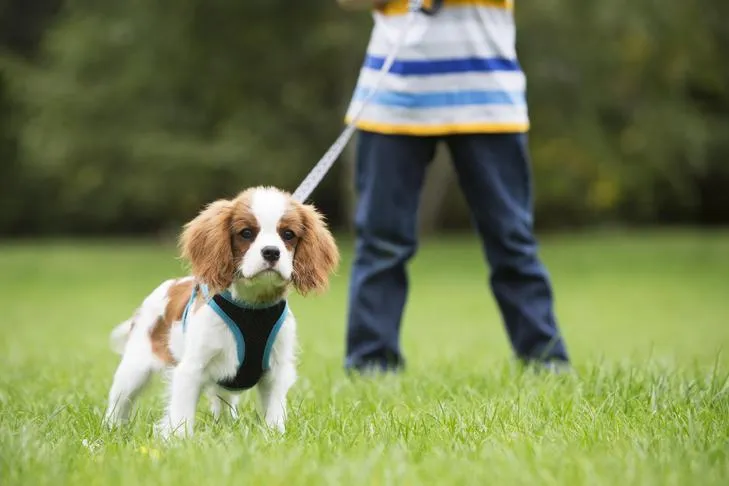 Boy walking a King Charles Cavalier Spaniel in a field.
Socializing Your Puppy to the World Beyond Your Door
When you transition your training outdoors, remember that the “great outdoors” can be an overwhelming sensory experience for many puppies. The myriad of new sights, sounds, and smells can be daunting. Proper socialization is key to conquering your puppy’s anxiety and building their confidence in new environments.
Introduce your puppy to a diverse range of people—different shapes, sizes, and ethnicities. Remember to expose them to various appearances that might seem unusual to a dog, such as glasses, wheelchairs, and hats. Crucially, your puppy also needs exposure to many different dogs and environments. However, it’s vital not to force any of these encounters. Allow your puppy to initiate contact and progress at their own pace. Always keep interactions positive, pairing new outdoor experiences with play, praise, and high-value treats. This approach helps your dog become comfortable with the world, teaching them to see other people and dogs as friends rather than potential threats, mitigating issues like training a dog not to jump up on visitors.
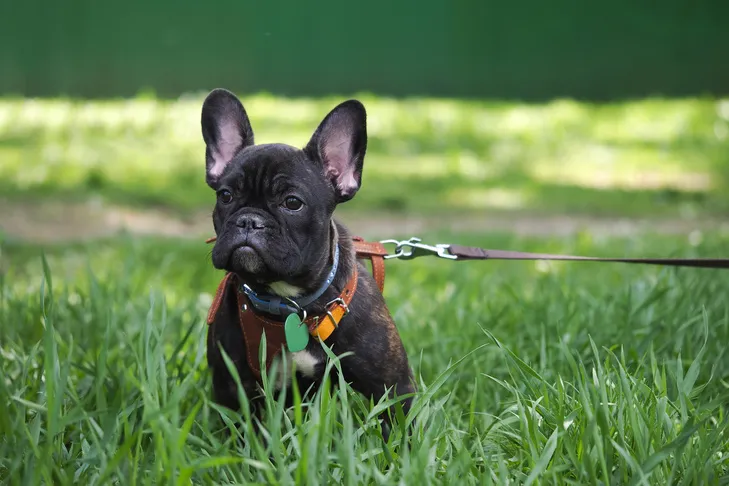 French bulldog puppy in a harness sitting in tall green grass on a leash for a walk.
Making Outdoor Walks Enjoyable and Fun
Your initial outdoor walks should be purely about enjoyment and exploration. At this stage, don’t worry about teaching your puppy to heel. Instead, encourage them to explore, sniff, and experience their surroundings. Give your puppy the best possible walk by avoiding rushing their bathroom behaviors or pulling on the leash. It’s important to remember that a leash serves as a safety tool, not primarily for control. Your puppy will not learn to love the leash if it’s consistently used to pull them around.
Initially, your puppy might drag their heels or pull backward rather than eagerly moving forward. Don’t be concerned about teaching your puppy how to get dog not to pull on lead until they are happy, confident, and willing to move forward on their own. By keeping these early experiences positive and fun, your puppy will soon become excited about walks. Only after this positive foundation is established should you focus on refining polite walking behavior.
Troubleshooting: Practical Tips for Reluctant Walkers
If you’re still facing challenges in getting your puppy to move on a leash, consider trying these proven techniques:
- The “Walk Back Home” Method: Carry your puppy 20 to 30 feet away from your home, then let them walk back on their own. This allows them to experience the outdoor environment while being motivated by the comforting knowledge that they are returning to safety.
- The “Drive and Walk” Strategy: Drive a block or two away from your house and then walk your puppy back home. Similar to the above, the journey back to familiar territory can provide crucial encouragement.
- Explore New Locations: Driving to a different area, a quiet local park, or a pet-friendly store can be excellent ways to socialize your puppy. Without the immediate sight of home, your puppy might be more inclined to explore rather than retreat. Socializing your puppy in new environments can also help prevent them from developing anxieties that lead to behaviors like how can i stop my dog jumping up at strangers or excessive barking.
- The “Magnet” Approach: Have a favorite person or another well-socialized dog stand a short distance away on the sidewalk. This provides your puppy with an exciting and familiar destination to walk towards.
- High-Value Rewards: Reserve a particularly high-value treat or a special toy that your puppy only receives during walks. This exclusive reward will serve as a strong incentive for them to move forward and earn their special goodie.
- Enroll in a Positive Dog Training Class: A structured class is an excellent way to continue your puppy’s socialization in a controlled environment. Furthermore, you’ll receive hands-on assistance and personalized advice tailored to your puppy’s specific needs, including if you’re wondering how to teach a dog to bark aggressively in certain situations or how to manage other behavioral quirks.
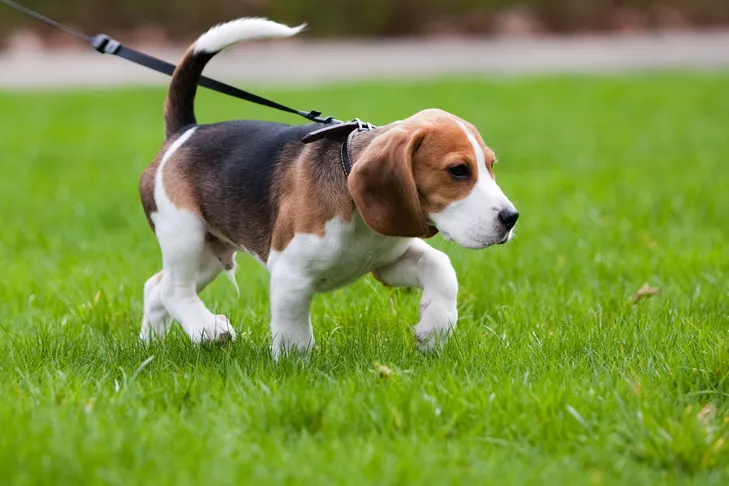 Beagle puppy on leash walking in the grass.
Whatever techniques you choose to employ, it’s paramount to remain upbeat and patient during your walks. Your puppy is highly attuned to your emotions; if you become worried or frustrated, it will negatively impact their perception of the experience. Keep your walks short, fun, and always strive to end each session on a positive note. It may take several weeks of consistent effort, but every small step you make together will bring you closer to your goal. With dedication and positive reinforcement, your puppy will eventually be walking with enthusiasm and confidence, eager for every outdoor adventure.
Need help with your adorable new puppy? Training your dog can be challenging without expert guidance. That’s why professional support, such as the AKC GoodDog! Helpline, can be invaluable. This live telephone service connects you with a professional trainer who offers unlimited, individualized advice on everything from house-training to behavioral issues.
