
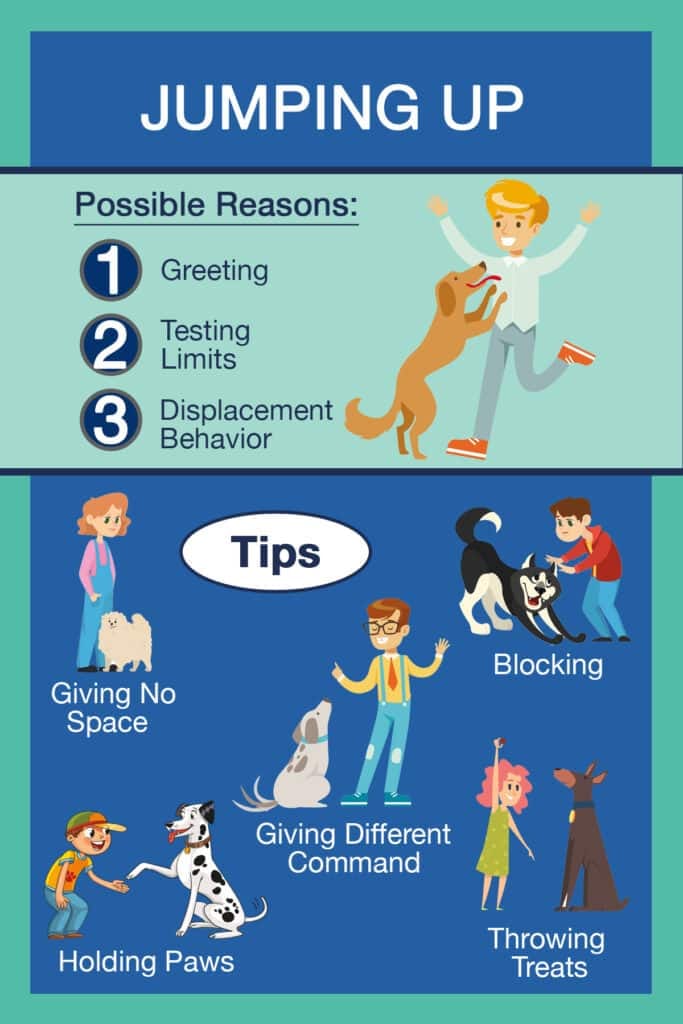
Jumping is a common behavioral issue in dogs, often stemming from an enthusiastic desire to greet people face-to-face. While natural for dogs, this behavior can be problematic, especially with larger breeds that could accidentally knock people over, or smaller dogs that might scratch or leave muddy paw prints. It’s also an effective way for dogs to get attention, reinforcing the habit. Fortunately, with consistent training and the right approach, you can teach your dog more appropriate greeting manners. This guide offers ten tips to help your dog learn to keep their paws on the floor when saying hello.
1. Establish a Clear Greeting Rule
The most effective training method involves teaching your dog an alternative behavior that is incompatible with jumping. This means showing them what to do, rather than just what not to do. For greetings, you can teach your dog to keep all four paws on the floor, to sit, or to lie down. Whatever rule you choose, it’s crucial to only provide attention and praise when your dog follows it. Consistency is key; avoid rewarding jumping at certain times and not others. This consistent reinforcement helps your dog understand the desired behavior.
2. Reward Appropriate Greetings Immediately
Dogs are motivated by rewards, and they will repeat behaviors that earn them positive outcomes. Therefore, as soon as your dog’s feet are on the floor, or they are sitting or lying down as instructed, offer immediate praise and petting. This immediate positive reinforcement helps your dog associate the correct greeting behavior with your attention. Avoid delaying the reward, as an impatient dog might resort to jumping again to get noticed.
3. Withhold Attention When Jumping Occurs
Conversely, to discourage jumping, you must remove the reward: your attention. When your dog jumps, calmly turn your back or walk away. This action signals that jumping has the opposite effect of what they intend – it makes your attention disappear. As soon as your dog has all four paws on the floor again, turn back and quietly offer praise and petting. This teaches your dog that their jumping directly controls when they receive your attention.
4. Set Your Dog Up for Success
While ignoring jumping and rewarding good behavior is effective, it can be a slow process for your dog. To speed up learning, set your dog up for success by making it easier for them to comply with your greeting rule. For instance, if the rule is to sit, ask them to sit as soon as you enter the house. If the rule is to keep four paws on the floor, encourage that stance. Scattering treats on the floor can also be a helpful technique, as dogs are naturally inclined to sniff and eat them, which naturally prevents jumping and rewards the desired “four on the floor” behavior.
5. Consistently Reward Proper Greeting Behavior
It is vital to consistently reward your dog whenever they adhere to your established greeting rule. Withholding attention when your dog’s feet finally touch the floor can be confusing and counterproductive, even if you’ve just endured a prolonged jumping episode. Every instance of correct behavior should be met with positive reinforcement to solidify the learning process.
6. Avoid Physical Corrections
Grabbing your dog, holding their paws, or pushing them away when they jump are forms of attention, even if negative. These actions can inadvertently reward the jumping behavior, potentially leading to more intense jumping in the future. For some dogs, such physical interactions can be misinterpreted as an invitation to roughhouse play, escalating the situation rather than resolving it.
©OlgaOvcharenko – stock.adobe.com
7. Do Not Use Your Knee to Block Jumps
While it might seem like a deterrent, lifting your knee to block your dog’s chest as they jump can be problematic. As mentioned, some dogs may interpret this as playful roughhousing, leading to increased jumping. More concerningly, it can create distrust and damage the human-canine bond, as your dog may perceive it as a punishment for a simple greeting. This can lead to more significant behavioral issues, such as a reluctance to come when called.
8. Keep Greetings Calm During Training
Dogs are highly attuned to human emotions. When you are excited or agitated upon returning home, your dog will likely mirror that energy, making it harder for them to control their urge to jump. To aid your dog’s learning process, keep greetings calm and quiet, even when offering praise. As your dog begins to understand and follow the new greeting rules, you can gradually increase your enthusiasm to match theirs.
9. Manage Greetings with Guests
It’s important to ensure that everyone interacting with your dog follows the same greeting rules. To prevent your dog from jumping on guests, implement management strategies. This could involve keeping your dog on a leash, sending them to a designated “place” like a mat or bed, or placing them in their crate when guests arrive. Using a baby gate to restrict access to the front door can also be effective.
©Jana Behr – stock.adobe.com
10. Enlist Guest Cooperation
Don’t hesitate to clearly communicate your dog’s training rules to guests and strangers. While your dog is still learning, ask people to ignore your dog completely until you signal it’s okay. You can also use cues like “watch me” or distract your dog with a toy or a hand target as people pass by. Practicing with cooperative friends and family first can build your dog’s confidence before introducing them to less predictable encounters with strangers.
For personalized advice and support with dog training challenges, the AKC GoodDog! Helpline offers consultations via phone or video. They can assist with a wide range of training needs, from basic puppy manners to addressing unwanted behaviors in adult dogs.
The AKC GoodDog! Helpline is celebrating its tenth anniversary of providing expert training support to dog owners. If you’re facing training difficulties, their experienced trainers are available to answer your questions and provide guidance. Join the many dog owners who trust the AKC GoodDog! Helpline for their training needs.
