
Taking your puppy for regular walks is crucial for their physical health and mental stimulation, offering essential exercise and socialization opportunities. However, for many new puppy owners, the excitement of an outdoor adventure can quickly turn into frustration when their furry friend refuses to budge once the leash is clipped on. This common behavior often stems from fear – either of the collar and leash itself, or of the overwhelming new sights, sounds, and smells of the great outdoors. Understanding why your puppy might be hesitant is the first step in teaching them to happily join you on their daily strolls. This guide will show you [How To Get A Puppy To Go On A Walk] by building positive associations and confidence.
Teach Your Puppy to Love the Leash and Collar
For some puppies, the simple act of clipping on a leash can be enough to trigger fear and shut them down. A leash represents restraint, limiting their ability to explore freely or escape perceived threats. Instead of viewing it as a gateway to exciting adventures, they might see it as a scary object. Even the collar can be unsettling, feeling strange around their neck. If a collar has been used to pull or reprimand them, puppies can quickly associate it with negative experiences. Your goal is to help your puppy associate their collar and leash with wonderful, positive outcomes.
Ideally, your puppy’s breeder would have introduced them to a collar and leash early on. If not, it’s your responsibility to help them feel comfortable and confident wearing them. Begin by having your puppy wear their collar for short periods inside the house. Praise and engage in play with your puppy while they have it on, rewarding them with delicious treats. You can also play the “Gotcha” game: gently grab your puppy’s collar, then immediately offer a favorite treat. This teaches them that a collar grab predicts something good. Soon, your puppy will see the collar and leash as predictors of positive experiences.
Once your puppy is comfortable with their collar and leash, you can begin teaching them to walk while wearing it. Still inside, clip on the leash and use treats to gently lure your puppy towards you. Offer plenty of praise and rewards when they respond. Gradually progress to walking short distances with them in the house. If they seem hesitant, continue to use treats as a lure. After successfully navigating indoor walks, try the backyard before venturing out to the sidewalk. Keep these training sessions brief, always ending on a positive note with ample praise and rewards. For more detailed guidance, consider learning how to leash train a lab puppy or any breed, as the principles remain largely the same.
Socialize Your Puppy to the Outdoors
Moving your training outside introduces a whole new level of sensory input that can overwhelm some puppies. The bustling sights, unfamiliar sounds, and countless new smells can be a lot for a young pup to process. Proper socialization is key to overcoming your puppy’s anxiety and building their confidence in the world around them.
Introduce your puppy to a wide variety of people of different ages, sizes, and appearances (including those with glasses, hats, or in wheelchairs). It’s also vital to expose them to various dogs and diverse environments. Crucially, never force these interactions. Allow your puppy to initiate contact and proceed at their own pace. Always keep these new outdoor experiences positive by pairing them with play, praise, and high-value treats. This approach helps your dog become comfortable with the world and perceive other people and dogs as friends, not threats. When encountering new people, it’s also a good idea to teach your puppy good manners, such as how to make my dog stop jumping on guests to ensure pleasant interactions.
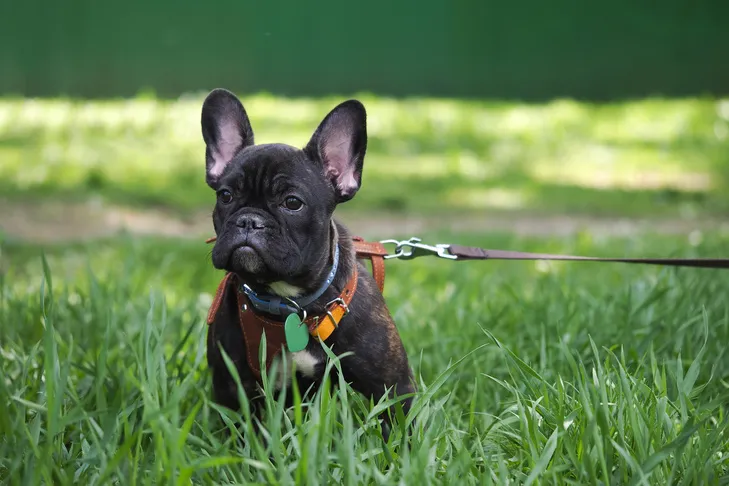 French bulldog puppy in a harness sitting in tall green grass on a leash for a walk.
Make Walks Enjoyable for Your Puppy
Your first walks outside should be purely about fun and positive exploration. Initially, don’t worry about teaching your puppy to heel perfectly. Instead, encourage them to sniff and explore their surroundings. Provide your dog with the best walk possible by allowing them time for bathroom breaks and avoiding pulling on the leash. Remember, the leash is primarily a safety tool, not a control device. Your puppy won’t learn to love walks if you constantly use the leash to pull them in different directions.
In the beginning, your puppy might drag their heels or pull backward rather than eagerly moving forward. Don’t be concerned with teaching your puppy to walk on a loose leash until they are happy and confident enough to walk forward on their own. If you maintain a positive and fun atmosphere during your outings, your puppy will soon become excited about walks. Only then should you begin to focus on refining their polite walking behavior. This gradual approach is essential for building a strong, positive association with walks.
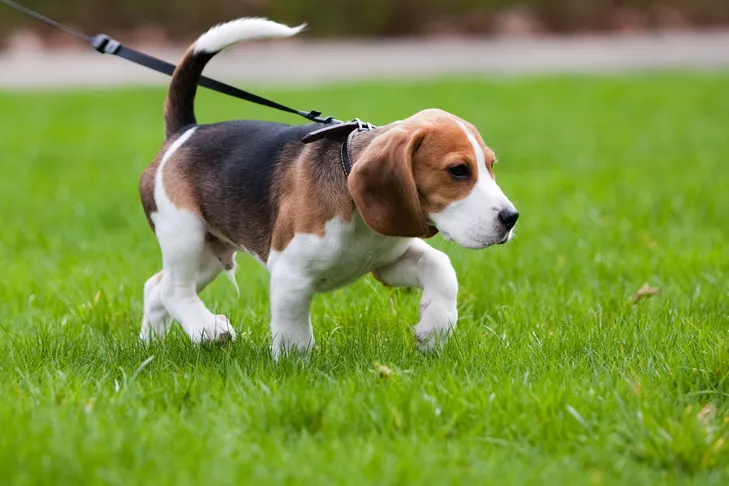 Beagle puppy on leash walking in the grass.
Practical Tips for Reluctant Walkers
If you’re still facing challenges getting your puppy to move forward on the leash, these additional tips can help:
- Walk Back Towards Home: Carry your puppy about 20 or 30 feet away from your home, then set them down and encourage them to walk back on their own. The security of knowing they are returning to a familiar place can often motivate them to move, allowing them to experience the outdoors without the anxiety of moving away from safety.
- Start Further Afield: Drive a block or two from home and then begin your walk back towards the house. This can sometimes make the journey less intimidating.
- Explore New Locations: Take your puppy to a new environment, such as a quiet park or a pet-friendly store. A change of scenery, especially one where your house isn’t visible, might encourage exploration over retreat. It’s also a great way to expose them to diverse settings for socialization.
- Use a Motivator: Have a favorite person or another well-behaved, friendly dog wait on the sidewalk a short distance away from your home. This gives your puppy an exciting goal to walk towards.
- High-Value Rewards: Reserve a particularly delicious treat or a special toy that your puppy only receives during walks. This exclusive reward will create a strong incentive for them to walk and earn their special goodie. If your puppy tends to get overly excited and how to get your dog stop jumping is a concern, ensure treats are given calmly.
- Enroll in Training Classes: A positive dog training class is an excellent way to continue your puppy’s socialization in a controlled environment. Furthermore, you’ll receive hands-on assistance and tailored advice from professional trainers for your puppy’s specific needs.
Throughout all your efforts, maintain an upbeat and positive attitude during your walks. Your puppy is highly attuned to your emotions; if you appear worried or frustrated, it will undoubtedly influence their perception of the experience. Keep walks short, fun, and always conclude them on a positive note. It may require weeks of consistent effort, but every small step you make together will bring you closer to your goal. With patience and positive reinforcement, your puppy will soon be walking with enthusiasm and confidence.
Need help with your adorable new puppy? Training your dog can be challenging without expert help. That’s why we’re here to help you virtually, through AKC GoodDog! Helpline. This live telephone service connects you with a professional trainer who will offer unlimited, individualized advice on everything from house-training to behavioral issues.
