
As the weather warms, yard work becomes a priority for many homeowners. Planting flowers, trimming trees, and mowing lawns contribute to a beautiful outdoor space. However, all this hard work can be undone by a dog with a penchant for digging. While it might seem like an ingrained behavior, you can train your dog to stop digging in the yard without resorting to punishment. With patience and the right techniques, you can preserve your lawn and garden.
Dogs dig for various reasons: searching for toys or food, burying treasures, or simply trying to cool off. Understanding the root cause is the first step to preventing destructive digging. Ensure your yard is free of potential hazards and provide plenty of engaging toys and food to keep your dog occupied.
Help Your Dog Get Their Energy Out
One of the most common reasons dogs dig is excess energy. If your dog is constantly digging, increasing their physical activity is essential. More frequent walks and hikes can make a significant difference. When the weather is too hot for outdoor adventures, engage your dog with indoor play or training exercises. Ensuring your dog is well-exercised, both indoors and outdoors, helps them expend pent-up energy and reduces the likelihood of destructive behaviors like digging.
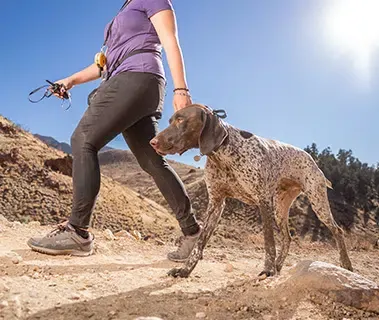 A dog wearing a bandana and leash, ready for a walk.
Provide a Way for Your Dog to Cool Down
Dogs may dig to reach cooler soil when they are hot. If your dog frequently digs in the yard, ensure they have access to ample water and shade. Consider installing a sunshade, providing a doghouse, or investing in an elevated dog cot with a cover. A kiddie pool can also offer a great way for your dog to cool off during hot weather. Always make sure fresh water is readily available. A water fountain toy can also be a fun way for them to stay hydrated and entertained.
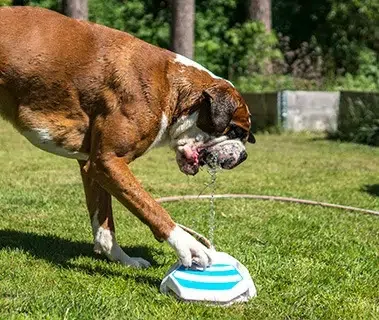 A dog drinking water from a fountain toy in a grassy yard.
Offer Engaging Activities
Boredom and a lack of stimulation can lead dogs to dig. Keep your dog entertained with a variety of bones, chew toys, or treat puzzle toys like this one. Filling a Kong toy with peanut butter or frozen yogurt can provide a long-lasting, rewarding activity.
Consider creating a designated “dig pit” in your yard filled with sand or loose soil. Bury treats, bones, or favorite toys in the pit to encourage your dog to dig in this specific area. Providing your dog with appropriate outlets for their energy and curiosity will make them less likely to dig in unwanted places.
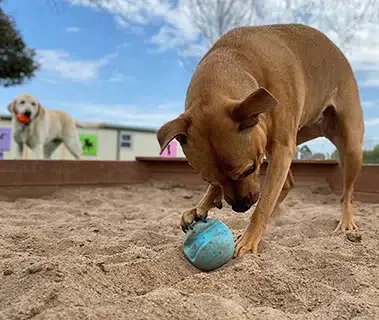 A dog happily digging in a sand-filled pit.
Utilize Digging Deterrents
To discourage digging in specific areas, you can use deterrents. Covering tempting spots with large, flat stones, rocks, or even metal netting can make them less appealing. Natural deterrents like cayenne pepper, citrus peels, or vinegar can also be applied to problem areas. Products such as Nature’s Mace are also available and have proven effective for some owners. Planting thorny or spiky bushes around trees or garden beds can also create a physical barrier.
 A bottle of dog repellent spray next to a potted plant.
Seek Professional In-Home Training
If you’re struggling to curb your dog’s digging behavior, especially in specific areas of your home or yard, professional help might be necessary. Consider our in-home training program. Our trainers work with you and your dog in your own environment, addressing behaviors at their source. We develop customized training plans to meet your dog’s unique needs, helping to correct unwanted digging and strengthen your bond.
Stop your furry friend from disrupting your yard and cultivate a more harmonious relationship through our tailored training solutions. If you have any questions, we’re always here to help!
