
Embarking on the journey of How To Get A Dog Therapy Trained is one of the most rewarding experiences a pet owner can have. It’s about transforming the loving bond you share with your canine companion into a powerful force for healing and comfort for others in your community. This isn’t just about teaching basic obedience; it’s about nurturing your dog’s innate empathy and shaping them into a calm, reassuring presence for people in hospitals, nursing homes, schools, and more. This guide will walk you through every step, from initial assessment to final certification, ensuring you and your furry friend are fully prepared for this noble calling. For those looking for a comprehensive overview, understanding the path is key, which is why exploring how to get a trained therapy dog can be an excellent starting point.
Understanding the Role of a Therapy Dog
Before diving into the training process, it’s crucial to understand what a therapy dog is and, just as importantly, what it is not. Unlike service dogs, which are trained to perform specific tasks for a person with a disability, therapy dogs are trained to provide comfort and affection to people in various institutional settings.
Therapy Dog vs. Service Dog vs. Emotional Support Animal
It’s a common point of confusion, but the distinctions are vital.
- Therapy Dogs: Volunteer in clinical or institutional settings to provide comfort. They do not have public access rights under the Americans with Disabilities Act (ADA).
- Service Dogs: Are individually trained to do work or perform tasks for a person with a disability. They are granted broad public access rights by the ADA. The training is intensive, as seen in programs like pettable service dog training, which focuses on these specific, task-oriented skills.
- Emotional Support Animals (ESAs): Provide therapeutic comfort to their owner through companionship. They do not require specific training and do not have the same public access rights as service dogs.
A therapy dog’s job is to be a stable, friendly, and gentle presence for strangers, often in stressful or unfamiliar environments. Their primary “task” is to be petted, held, and loved.
Key Traits of a Potential Therapy Dog
Not every dog is cut out for therapy work. The foundation of a great therapy dog is its temperament. Before you invest time and resources into training, honestly assess your dog’s personality.
Essential Temperament Checklist:
- Calm and Gentle: Does your dog have a naturally calm demeanor, even in new situations?
- Friendly and Sociable: They must genuinely enjoy meeting and interacting with new people of all ages and abilities.
- Patient and Tolerant: Therapy dogs must tolerate clumsy petting, loud noises, and sometimes-unpredictable behavior from the people they visit.
- Confident, Not Timid: A therapy dog should not be easily frightened by unfamiliar sights, sounds, or smells like wheelchairs, walkers, or medical equipment.
- Reliable and Predictable: Their behavior should be consistent and trustworthy. You need to know how they will react in almost any situation.
- Non-reactive: They must remain calm around other dogs and animals.
Age is also a factor. While puppies are adorable, most organizations require dogs to be at least one year old before they can be certified. This ensures they have reached a level of emotional maturity.
The Path to Certification: A Step-by-Step Training Guide
Getting your dog therapy trained is a multi-stage process that builds upon a foundation of basic obedience and socialization. It requires dedication, consistency, and a deep understanding of your dog’s behavior.
Step 1: Master Basic and Advanced Obedience
A rock-solid foundation in obedience is non-negotiable. Your dog must respond reliably to your commands, even with distractions. This is the cornerstone of the entire process of how to get dog trained as a therapy dog.
Essential Commands:
- Sit, Down, Stay: These must be solid, even when you are out of sight.
- Come/Recall: Your dog must come to you immediately when called, no matter the distraction.
- Leave It: This is critical for safety in environments where dropped medications or other hazards might be present.
- Heel: Your dog should be able to walk calmly by your side on a loose leash without pulling or lagging.
You can often find group classes or individual trainers to help with this. Programs like Canine Good Citizen (CGC) offered by the American Kennel Club are an excellent stepping stone and are often a prerequisite for therapy dog programs.
Step 2: Extensive Socialization and Exposure
Socialization for a future therapy dog goes far beyond puppy playdates. It involves exposing them to a wide variety of sights, sounds, and experiences in a positive and controlled manner so they become unflappable.
Exposure Checklist:
- People: Introduce them to people of all ages, appearances, and mobility levels (e.g., people with hats, beards, using walkers, in wheelchairs).
- Environments: Take your dog to dog-friendly public places like stores, outdoor cafes, and parks. Get them used to elevators, automatic doors, and different types of flooring.
- Sounds: Expose them to loud and sudden noises in a controlled way, such as vacuum cleaners, alarms, and dropped items.
- Objects: Let them investigate medical equipment like crutches, walkers, and wheelchairs in a non-threatening context.
Dr. Emily Carter, a renowned animal behaviorist, advises, “The key to effective exposure training is to keep it positive. Associate new experiences with high-value treats and praise. The goal is to build a dog who sees novelty as an opportunity for reward, not a reason for fear.”
Step 3: Finding the Right Training Program
While you can do much of the foundational work yourself, enrolling in a specific therapy dog training program is highly recommended. These programs are designed to simulate the environments your dog will encounter and teach you the specific handling skills required.
When looking for a trainer, consider both national organizations and local experts. A search for something specific like dog training in murrieta ca can reveal local professionals who may offer specialized therapy dog prep classes. Similarly, if you were in another area, you might look for service dog training greensboro nc to find trainers who, while focused on service animals, often have the expertise needed for advanced obedience and public access skills relevant to therapy work.
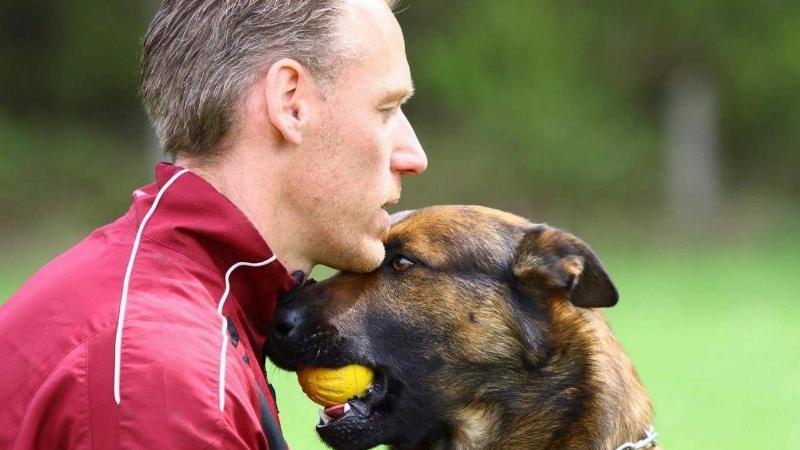 A handler guiding a calm Labrador through a simulated therapy dog training exercise, learning how to get a dog therapy trained.
Step 4: The Evaluation and Certification Test
Once your dog has completed training, the final step is to pass a certification test administered by a recognized therapy dog organization. Some of the most well-known organizations include Pet Partners, Therapy Dogs International (TDI), and the Alliance of Therapy Dogs.
The test will typically evaluate several key areas:
- Handler Skills: Your ability to read your dog’s stress signals and advocate for them.
- Dog’s Temperament: How the dog reacts to strangers, clumsy petting, and startling noises.
- Obedience: Execution of basic commands in a distracting environment.
- Reactions to Medical Equipment: A neutral or positive reaction to wheelchairs, walkers, and crutches.
- Crowd Behavior: Navigating through a group of people calmly.
Passing this test is the final confirmation that you know how to get a dog therapy trained and that your team is ready to volunteer.
Life as a Therapy Dog Team
Once certified, a world of opportunity opens up. You can volunteer at a wide range of facilities, bringing joy and comfort wherever you go.
Potential Volunteer Locations:
- Hospitals and rehabilitation centers
- Nursing homes and assisted living facilities
- Schools and universities (especially during exam periods)
- Libraries (for children’s reading programs)
- Disaster relief areas and crisis response centers
Remember, your primary role as the handler is to be your dog’s advocate. You must always monitor them for signs of stress or fatigue and ensure every interaction is positive for both your dog and the person you are visiting.
Frequently Asked Questions (FAQ)
What are the best breeds for therapy dog work?
While any breed can be a therapy dog, breeds known for their gentle and patient nature, such as Golden Retrievers, Labradors, Poodles, and Cavalier King Charles Spaniels, are common choices. The individual dog’s temperament is always more important than its breed.
How long does it take to get a dog therapy trained?
The timeline can vary greatly depending on the dog’s starting point. If you start with a well-behaved adult dog, it could take as little as 6-8 weeks of focused classes. For a younger dog, the process from basic obedience to certification could take over a year.
Can I train my own therapy dog?
Yes, you can and should do most of the foundational training yourself. However, you will likely need to join a class to prepare for the specific evaluation scenarios and must be tested and certified by an accredited national or local therapy dog organization.
How much does therapy dog certification cost?
Costs vary by organization. You should budget for training classes, the Canine Good Citizen test (if required), the evaluation fee, and annual registration fees. This can range from a couple of hundred to over a thousand dollars in total.
What is the difference between a therapy dog vest and a service dog vest?
A therapy dog vest is used to identify the dog as a working professional while volunteering. It does not grant public access rights. A service dog vest identifies a dog trained to perform tasks for a person with a disability, which is protected by the ADA. The two are not interchangeable.
In conclusion, learning how to get a dog therapy trained is a journey of deep connection and community service. It demands patience, dedication, and a profound respect for your dog’s well-being. By following these steps, you can prepare your canine partner to become a beacon of comfort, proving that the unconditional love of a dog truly is one of the most powerful forms of therapy.
