
It’s astonishing how many online resources recommend outdated and ineffective methods for disciplining cats, often focusing on punishment rather than understanding. This can lead to a damaged bond between you and your feline companion. This article explores humane and effective strategies to correct unwanted behaviors while strengthening your relationship with your cat. The goal is to foster a harmonious living environment by addressing the root causes of misbehavior and implementing positive, understanding-based solutions.
Understanding the Root Causes of Cat Misbehavior
Cats are highly attuned to their needs, and misbehavior often stems from an unmet requirement. Recognizing these triggers is the first crucial step in addressing issues effectively. Common culprits behind unwanted behaviors include hunger, boredom, anxiety, and underlying medical conditions. By addressing these fundamental needs, you can often prevent or resolve behavioral problems before they escalate.
Decoding Cat Communication: The Meaning Behind Their Meows
Cats, especially when young, use vocalizations to communicate their needs. While kittens meow to their mothers, domesticated cats often continue this communication with their caregivers. A cat’s meow can signal a demand for attention or indicate hunger. Notably, prolonged or deep meows can sometimes signal distress, anxiety, or pain. If you notice a sudden change in your cat’s meowing patterns, consulting a veterinarian is advisable.
When Your Cat Invades Your Workspace
Your cat’s desire to be near you can sometimes lead them to occupy your workspace or lie on your belongings. This behavior typically signifies a need for attention or a search for warmth, especially during colder months. Providing a comfortable alternative, such as a heating mat for cats, can often redirect this behavior and satisfy their need for a cozy spot.
The Mystery of Cats Following You from Room to Room
A cat that consistently follows you out of a room might be seeking something desirable, such as outdoor access or a meal. Understanding these patterns helps in addressing their underlying desires.
Seeking Affection Through Physical Touch
Pawing and nudging are common feline methods for soliciting attention, whether it’s mealtime, work hours, or even during sleep. These actions often indicate your cat is hungry, desires petting, or wants to play. If your cat wakes you up when you are sleeping, exploring specific strategies to manage nighttime awakenings is beneficial.
Waiting by the Door
A cat lingering or scratching at a door, whether it’s an external door or your home office door, suggests they perceive that space as part of their territory and have lost access. This is particularly relevant for those working from home.
Destructive Behavior: More Than Just Mischief
While cats are not inherently destructive, behaviors like knocking over objects, scratching furniture, or jumping on counters often indicate something is missing from their environment or that they are seeking attention. Providing appropriate outlets for natural behaviors is key.
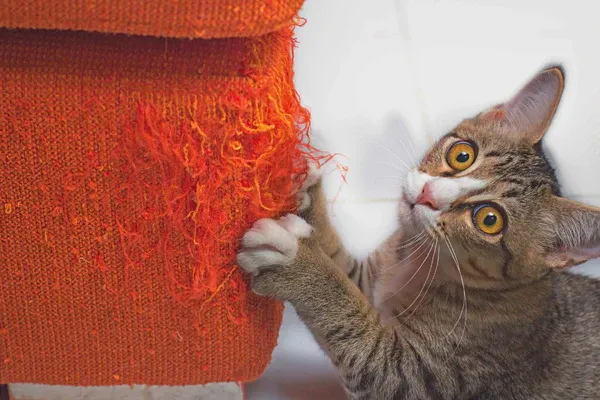 Stop cat from scratching sofa
Understanding and Accepting Your Cat’s Behavior
Given that we limit our cats’ ability to engage in natural behaviors like hunting and roaming freely, it’s essential to understand and accept certain compromises. Behaviors that might seem inconvenient to us are often natural expressions of their feline instincts. Instead of focusing solely on stopping a behavior, consider if it’s a compromise you can make for your cat’s well-being. For example, regularly disinfecting kitchen counters can be simpler than constantly trying to prevent your cat from jumping on them.
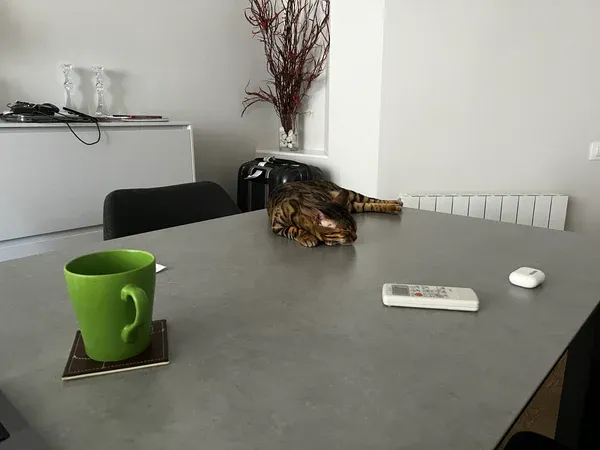 Cat on a Table
Applying Operant Conditioning for Behavior Modification
Operant conditioning, pioneered by Edward L. Thorndike and further developed by B.F. Skinner, provides a framework for understanding how consequences shape behavior. The core principles involve:
- Positive Reinforcement: Rewarding a desired behavior to increase its frequency.
- Negative Reinforcement: Removing an unpleasant stimulus to increase a desired behavior.
- Positive Punishment: Introducing an unpleasant stimulus to decrease an undesired behavior.
- Negative Punishment: Removing a pleasant stimulus to decrease an undesired behavior.
- Extinction: Withholding reinforcement for a previously rewarded behavior to decrease its frequency.
For cat behavior modification, we primarily focus on positive reinforcement, positive punishment, and negative punishment.
Positive Reinforcement: Encouraging Desired Actions
Positive reinforcement involves rewarding your cat for exhibiting the behavior you want to encourage. Clicker training is an excellent example of this, where a click sound is paired with a treat, reinforcing the desired action. This method is also effective for teaching tricks, with resources like “12 tricks you can teach your cat” offering guidance. When correcting unwanted behavior, use positive reinforcement by rewarding your cat when they choose the acceptable alternative, such as using their cat tree instead of the sofa.
Positive Punishment: Using Aversive Stimuli Wisely
Positive punishment involves applying an unpleasant consequence to deter a behavior. While spraying a cat with water is a common tactic, it’s generally discouraged as it can damage your bond and induce anxiety. However, certain forms of positive punishment can be effective when you are not present. For instance, spraying plants with a bitter-tasting solution can deter cats from chewing on them. The key is that the cat learns to associate the behavior with the unpleasant consequence without you being the direct source of the punishment.
Negative Punishment: Removing Rewards
Negative punishment occurs when a desirable stimulus is removed following an unwanted behavior. If your cat bites too hard during play, immediately stopping the game withdraws the “play” stimulus, teaching them that excessive biting ends the fun. This principle is also used in training commands like “teach a cat to sit and stay”.
Addressing Common Behavioral Issues:
Jumping on Counters: Provide attractive alternatives like cat trees for climbing and reward your cat for using them. If they are seeking food, ensure counters are clear and reward them for staying on the floor during meal prep. A motion-activated air spray can also deter them when you’re not around.
Keep Cats OFF Your Kitchen Counter
Opening Cabinets: Secure cabinets or remove tempting items. Redirect their need for stimulation by providing interactive toys or engaging in playtime away from the cabinets.
Eating Plants: Provide safe, appropriate chewing alternatives and use deterrents like bitter sprays. For more detailed advice, refer to “how to stop your cat from munching on your plants”.
Keep Your Cat OFF Your Plants
Scratching Furniture: Offer appealing scratching posts and cat trees. Reward your cat with treats or catnip when they use these designated scratching surfaces, making them more attractive than your furniture.
Pooping Outside the Litterbox: Ensure the litterbox is clean, accessible, and large enough. Experiment with different litter types and depths. Cleanliness and placement are paramount. Deterrents like double-sided tape or citrus scents can be used in off-limit areas.
Clean Cat Owner with Smelly House?
Peeing on the Bed: Maintain a consistent litterbox routine with the right type of litter and an adequate number of boxes. If the behavior persists, consult a veterinarian to rule out any underlying health issues.
Meowing at Night: This often requires understanding the root cause, which could be hunger, boredom, or a need for attention. Addressing these needs during the day can help reduce nighttime vocalizations.
Offering Alternatives and Encouraging Positive Behavior
Remember that cats do not misbehave out of spite. Their actions are driven by instinct or a need for communication. The most effective approach to stopping unwanted behavior involves a clear process:
- Understand the Cause: Identify why your cat is exhibiting the behavior.
- Offer an Alternative: Provide an acceptable outlet for their needs.
- Discourage Undesired Behavior: If the behavior persists, use gentle positive or negative punishment.
- Encourage Alternatives: Use positive reinforcement to reward the desired behavior.
By focusing on understanding, patience, and positive reinforcement, you can effectively guide your cat’s behavior, creating a happier and more harmonious life for both of you. Share this information with fellow cat owners to promote more humane and effective feline behavior management.
Stay Wild, Stay Safe, See You Outdoors!
