
Embarking on the journey of becoming a certified service dog trainer is more than a career choice; it’s a commitment to changing lives. For over half a million Americans with disabilities, service dogs are not just companions but essential partners providing independence and a higher quality of life. If you have a passion for dogs and a deep desire to help people, learning How To Become A Certified Service Dog Trainer could be your calling. This path requires dedication, specific skills, and formal education, but the reward of pairing a highly trained canine with someone in need is immeasurable.
This comprehensive guide will walk you through the entire process, from gaining initial experience to achieving certification and launching a fulfilling career. The journey might seem complex, but understanding the steps can make it accessible. As you progress, you may find tools like those in dog training app reviews helpful for supplementing your hands-on work.
What Does a Service Dog Trainer Actually Do?
The role of a service dog trainer extends far beyond teaching basic commands like “sit” and “stay.” It’s a highly specialized field focused on training dogs to perform specific, life-altering tasks tailored to an individual’s disability. This involves a deep understanding of animal behavior, learning theory, and the specific needs of the human partner.
A trainer’s responsibilities include:
- Task Training: This is the core of the job. Trainers teach dogs to perform a wide array of tasks, such as guiding a person with visual impairments, alerting a handler to low blood sugar, retrieving dropped items for someone with mobility issues, or providing deep pressure therapy for a person with PTSD.
- Public Access Training: Service dogs must remain calm, focused, and unobtrusive in any public environment, from bustling grocery stores to quiet libraries. Trainers rigorously prepare dogs for these situations, ensuring they are not distracted by sounds, smells, or other people.
- Client Matching and Team Training: A crucial part of the process is pairing the right dog with the right person. Trainers assess the needs, lifestyle, and personality of the client to make a perfect match. Afterward, they facilitate an intensive training period where the handler and dog learn to work together as a seamless team.
- Ongoing Support: The trainer’s job often continues after placement, providing follow-up support to ensure the partnership remains strong and effective for years to come.
Is This Career Path Right for You?
While a love for dogs is a prerequisite, it’s only the starting point. A successful service dog trainer possesses a unique blend of skills, patience, and emotional resilience. It’s a demanding profession that requires more than just animal expertise; it requires a genuine passion for helping people.
Key qualities of a great service dog trainer include:
- Immense Patience and Empathy: Training can be a slow, repetitive process. Dogs, like people, have good days and bad days. You must remain patient and empathetic, understanding the animal’s perspective while keeping the training goals in sight.
- Exceptional Communication Skills: You will be working just as much with people as you do with dogs. You need to clearly explain training techniques to clients, manage expectations, and provide emotional support during the transition period.
- Strong Observational Skills: A trainer must be able to read a dog’s body language to understand its emotional state—whether it’s stressed, confused, or confident. This skill is vital for effective and humane training.
- Problem-Solving Abilities: Every dog and client pairing is unique. Trainers must be adaptable, ready to think creatively, and adjust training methods when a particular approach isn’t working.
According to Dr. Emily Carter, a veterinary behaviorist with over 15 years of experience, “The most effective service dog trainers are those who master the art of canine communication while also acting as compassionate coaches for the human half of the team. It’s a delicate, essential balance.”
Your Step-by-Step Guide on How to Become a Certified Service Dog Trainer
While there are no federally mandated legal standards for service dog trainers in the U.S., the industry’s leading organizations have established rigorous certification processes to ensure a high standard of quality and ethics. Following a structured path is the best way to become a respected and effective professional.
Step 1: Gain Foundational Dog Training Experience
Before you can specialize, you need a strong foundation in general dog training and behavior. This hands-on experience is non-negotiable.
- Volunteer or Work at an Animal Shelter: This is an excellent way to work with a wide variety of breeds and temperaments. You’ll gain practical experience in handling, basic obedience, and managing challenging behaviors.
- Apprentice with a Professional Dog Trainer: Find a reputable local trainer and offer to assist them. This mentorship is invaluable for learning the nuances of the profession, from class management to client communication. For those looking for local opportunities, exploring options like dog training chesterfield va could provide a starting point.
- Take General Dog Training Courses: Enroll in workshops or basic certification programs to learn about learning theory, positive reinforcement techniques, and canine ethology.
Step 2: Understand the Legal Landscape
A service dog trainer must be well-versed in the laws that govern service animals. The primary legislation in the United States is the Americans with Disabilities Act (ADA). It’s crucial to understand the legal definitions and distinctions:
- Service Animals: Under the ADA, these are dogs individually trained to do work or perform tasks for a person with a disability.
- Emotional Support Animals (ESAs): ESAs provide comfort but are not trained to perform specific tasks. They do not have the same public access rights as service animals.
- Therapy Animals: These animals are trained to provide comfort and affection to people in facilities like hospitals or nursing homes but are not service animals.
Knowing these distinctions is vital for educating clients and the public.
 A certified service dog trainer carefully assessing a golden retriever's temperament for a training program, showcasing a crucial step in how to become a certified service dog trainer.
Step 3: Choose a Reputable Certification Program
Formal education and certification are what separate amateurs from professionals. While you can be a trainer without certification, credentials from a respected organization provide credibility, structure, and a network of peers.
Look for programs that offer:
- A comprehensive curriculum covering canine learning theory, specific task training, client assessment, and public access training.
- Significant hands-on training opportunities where you work directly with dogs.
- Instruction on ethics and legal standards.
- Mentorship from experienced, certified trainers.
Some of the most respected organizations include:
- Assistance Dogs International (ADI): ADI is a worldwide coalition of non-profit programs that train and place assistance dogs. While they accredit organizations rather than individuals, working for an ADI-accredited program is a prestigious path.
- Certification Council for Professional Dog Trainers (CCPDT): The CCPDT offers highly respected certifications, such as the CPDT-KA (Knowledge Assessed), which is often a stepping stone for aspiring trainers.
- Bergin University of Canine Studies: Considered a premier institution, Bergin offers degrees in canine studies, including service dog training.
Step 4: Complete Hands-On Training and Education
This is where you put theory into practice. A certification program will involve intensive learning, both in the classroom and in real-world settings. You’ll learn to break down complex tasks into small, teachable steps and master positive reinforcement techniques. This phase can take anywhere from several months to a few years, depending on the program’s structure. Some people also pursue related paths, such as learning about how to become a trainer of service dogs for specific fields like search and rescue.
Step 5: Pass the Certification Exam
Upon completing your program, you will need to pass a certification exam. These exams are typically comprehensive, covering:
- Dog training theory and application.
- Canine health and anatomy.
- Laws and ethics.
- A practical assessment of your handling and training skills.
Step 6: Maintain Your Certification
Certification is not a one-time event. Most organizations require trainers to earn continuing education units (CEUs) to stay current with the latest research, techniques, and best practices in the field. This commitment to lifelong learning ensures you remain a top-tier professional.
How Much Do Service Dog Trainers Earn?
Compensation for service dog trainers can vary widely based on several factors, including geographic location, experience, and employment model. Trainers working for non-profit organizations may have a set salary, while independent trainers who run their own businesses have more control over their income. Understanding the different pay scales, even at a corporate level like reviewing petco dog trainer pay, can provide a useful benchmark.
Generally, salaried positions at established organizations can range from $35,000 to $60,000 per year. Highly experienced independent trainers who offer specialized services can earn significantly more.
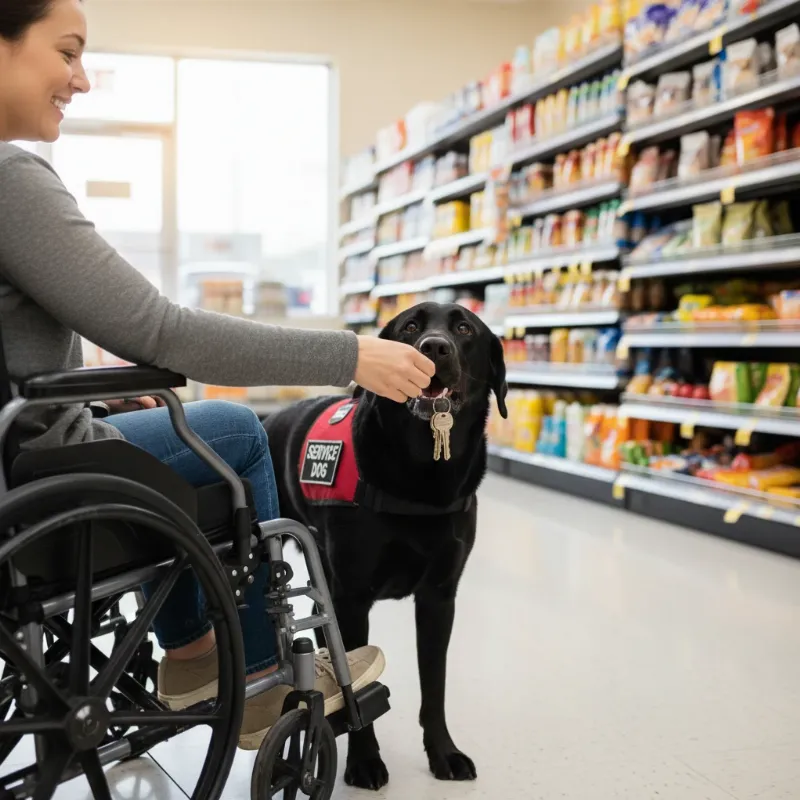 A certified service dog in a vest performing a specific task for its handler in a public setting, illustrating the successful outcome of training.
Frequently Asked Questions (FAQ)
How long does it take to become a certified service dog trainer?
The timeline can vary significantly. An intensive program might take 1-2 years, while an apprenticeship model or a university degree can take 3-4 years. This doesn’t include the foundational experience you should gain beforehand.
Do I need a college degree to become a trainer?
A specific college degree is not typically required. However, a degree in a related field like animal science, biology, or psychology can be incredibly beneficial and may be preferred by some employers.
What is the biggest challenge service dog trainers face?
One of the biggest challenges is the emotional toll. Not all dogs that enter a training program will graduate. Trainers invest hundreds of hours into a dog, and it can be heartbreaking when a dog is not suitable for service work. Additionally, working with clients who have significant disabilities requires great empathy and emotional strength.
Can I train my own service dog?
Under the ADA, individuals with disabilities have the right to train their own service dogs. However, it is a very challenging and complex process. It’s highly recommended to work under the guidance of a certified professional to ensure the dog is trained to the highest standards for both task performance and public access.
What’s the difference between a service dog trainer and a search and rescue trainer?
While both are highly skilled professionals, their focus differs. Service dog trainers focus on tasks to mitigate an individual’s disability. Those interested in emergency response training might explore search and rescue dog training near me to understand that distinct specialization, which centers on scent detection and navigating disaster environments.
Your Journey Starts Now
Becoming a certified service dog trainer is a demanding but profoundly rewarding career. You become a creator of life-changing partnerships, granting independence and confidence to those who need it most. By building a strong foundation of experience, pursuing formal education, and committing to ethical, humane training practices, you can join a community of dedicated professionals who make the world a better place, one dog at a time. The path requires patience and hard work, but the impact you can make is truly priceless.
