
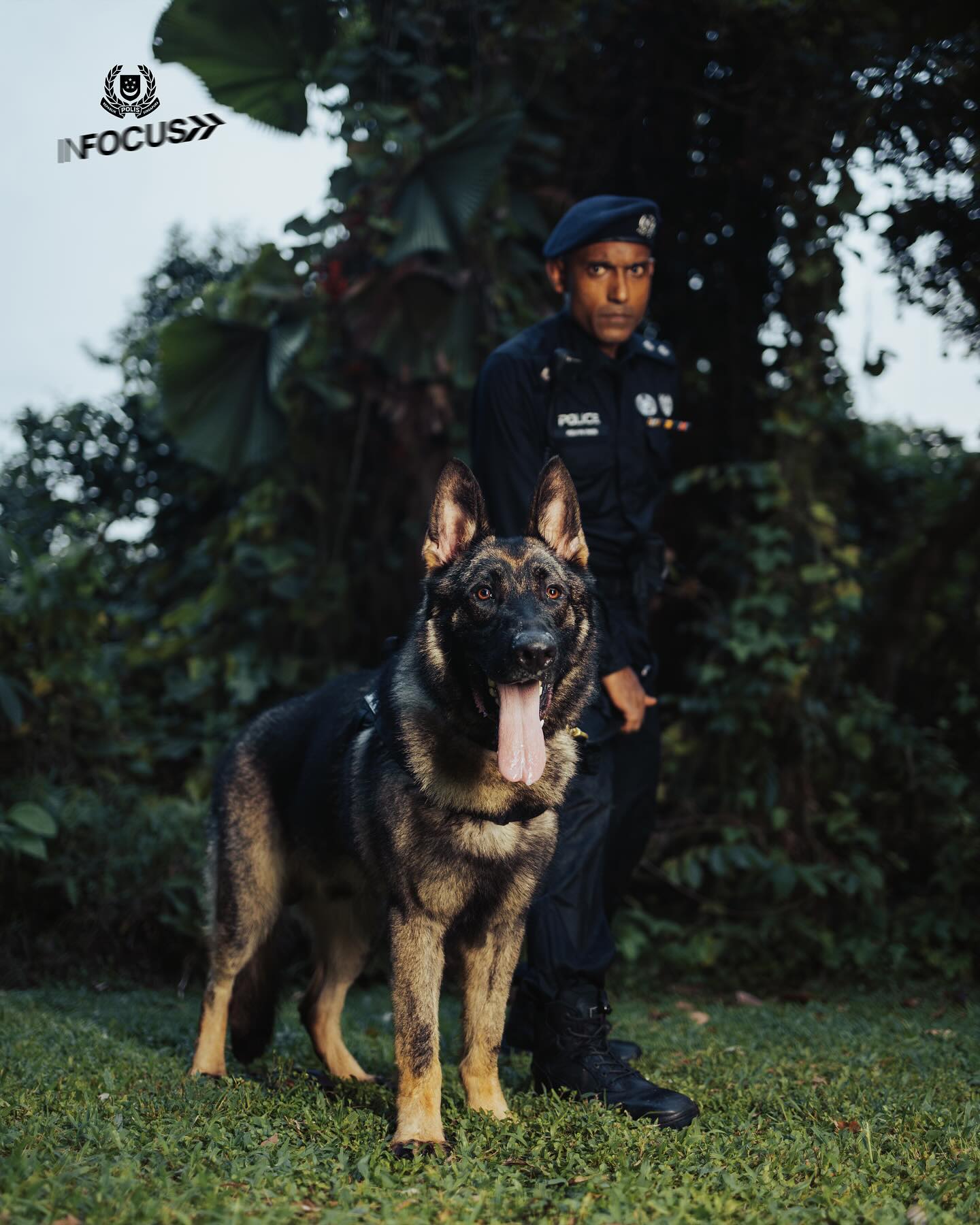
From the moment a puppy shows a glimmer of promise to the day it stands as a disciplined officer of the law, the path of a police dog is one of intense dedication and specialized instruction. Understanding How Police Dogs Are Trained reveals a fascinating world where instinct is honed into skill and a powerful bond is forged between handler and canine. These K9 units are not just animals; they are highly skilled partners crucial to modern law enforcement, undertaking tasks that are impossible for their human counterparts.
The journey begins long before the first command is ever given. It starts with selecting the right candidate, a process as rigorous as any job interview. Not every dog has what it takes. Law enforcement agencies typically favor breeds known for their intelligence, drive, and physical prowess, such as German Shepherds, Belgian Malinois, and Dutch Shepherds. Trainers look for specific traits: a relentless work ethic, high energy levels, courage, and an innate desire to please. Only those who pass these stringent initial assessments move on to the demanding training that will shape them into K9 officers. One common question that arises is in relation to the commands they learn; exploring what language are k9 dogs trained in often reveals that many are trained in their native European languages to avoid confusion with common English words.
The Making of a K9 Officer: The Selection Process
The foundation of any successful K9 unit is the careful selection of the right dog. This process is a blend of science and art, focusing on identifying dogs with the perfect combination of genetics, temperament, and drive. The most popular breeds for police work, German Shepherds and Belgian Malinois, are chosen for their versatility, athleticism, and sharp intellect.
Key traits sought during selection include:
- High Drive: This refers to the dog’s enthusiasm and motivation. Trainers look for a strong “prey drive” (the desire to chase) and “play drive” (the desire to interact and play), as these are harnessed for training tasks. A dog that will chase a ball relentlessly for hours has the focus required for tracking a suspect or sniffing for contraband.
- Courage and Confidence: A police dog must not be easily frightened. They are tested for their reaction to loud noises, unfamiliar environments, and stressful situations. They need to be confident enough to enter a dark building or face a non-compliant suspect without hesitation.
- Sociability: Despite their intimidating roles, K9s must be sociable and stable enough to interact with the public and work alongside other officers without aggression or fear.
- Physical Soundness: Candidates undergo thorough veterinary checks to ensure they are free from physical issues like hip dysplasia, ensuring they can handle the physical demands of the job.
Foundational Skills: The Core of K9 Training
Before any specialization occurs, every future police dog must master advanced obedience. This is the bedrock upon which all other skills are built. Basic commands like “sit,” “stay,” and “heel” are taught to an impeccable standard. The dog must respond instantly to the handler’s command, without hesitation, both on and off the leash and amidst numerous distractions.
This phase is about more than just commands; it’s about establishing control and building a relationship of trust and respect between the dog and its handler. Positive reinforcement techniques are widely used, with rewards like praise or a favorite toy motivating the dog to perform correctly. Agility and physical conditioning are also critical. A K9 must be able to navigate challenging terrains, scale walls, and clear obstacles, requiring them to be in peak physical condition. This rigorous physical training ensures they have the stamina and agility needed for a long pursuit or a complex search and rescue operation.
Specialized Training Disciplines for Police Dogs
Once a solid foundation of obedience is established, dogs and their handlers move on to specialized training tailored to the K9’s future role. This is where the dog’s natural abilities are channeled into specific law enforcement tasks.
Detection Training
A dog’s sense of smell is its superpower, estimated to be up to 50 times more sensitive than a human’s. Detection training harnesses this incredible ability to find specific scents. Dogs can be trained to detect a variety of substances:
- Narcotics: K9s learn to identify the odors of various illegal drugs and alert their handlers with a specific, passive signal, such as sitting or lying down, to indicate the location without disturbing potential evidence.
- Explosives: Bomb-sniffing dogs are trained to recognize the chemical scents of different explosive materials. Their role is vital for securing public spaces, events, and crime scenes.
- Human Remains: Cadaver dogs are trained to locate human remains, a crucial skill in search and rescue missions following disasters or in criminal investigations.
This training involves imprinting the dog on the target scent and then teaching it to systematically search for that odor in cars, buildings, and open areas.
Apprehension and Bite Work
Perhaps the most visually dramatic aspect of police dog training is apprehension, or “bite work.” This is not about making a dog aggressive but about controlling its bite. The principles of protection training for dogs are highly disciplined. The dog is taught to bite on command to subdue a fleeing or fighting suspect and, just as importantly, to release the bite instantly on command.
Dr. Sarah Miller, a renowned K9 behaviorist, states, “Controlled aggression is the key. The goal is to train a dog that can act as a deterrent and a tool for apprehension, but one that is always under the complete control of the handler. It’s a switch that the handler must be able to turn on and off.”
This training involves heavily padded decoys and simulated real-world scenarios to ensure the dog can perform effectively and safely under pressure. This skill set is closely related to the broader topic of how to train dogs to protect, focusing on control and specific commands.
Tracking and Trailing
Tracking involves training a dog to follow a specific human scent trail over various terrains. A dog can distinguish a particular scent from countless others and follow it for miles. This skill is invaluable for locating missing persons, such as a lost child or an elderly individual with dementia, as well as for pursuing suspects who have fled a crime scene on foot. Handlers learn to read their dog’s body language to know when the K9 is on the trail and when it might have lost the scent.
The Handler-K9 Bond: A Partnership for Life
The relationship between a police dog and its handler is one of the most critical elements of a successful K9 unit. It is a partnership built on countless hours of shared training, trust, and communication. Handlers undergo extensive training themselves to learn how to read their dog’s signals, provide clear commands, and manage their partner in high-stress situations.
This bond extends beyond the job. The handler and K9 are typically together 24/7, with the dog living at home with the handler’s family. This constant companionship strengthens their connection, making them a more effective team in the field. Continuous, ongoing training is mandatory to keep their skills sharp and their bond strong throughout their careers. For those interested in acquiring a fully prepared canine, there are services specializing in police trained dogs for sale, which highlights the value placed on this intensive training.
Frequently Asked Questions (FAQ)
How long does it take to train a police dog?
Initial training for a police dog and its handler can last anywhere from a few months to over a year, depending on the specialization. A typical patrol dog course is often between 12 to 16 weeks, but continuous training is required throughout the dog’s career.
What language are K9 dogs trained in?
Many police dogs, especially those imported from Europe, are trained with commands in their native language, such as German or Dutch. This is not for secrecy but simply because it’s the language they first learned. It’s easier for the handler to learn a few foreign words than to retrain the dog entirely.
Can any dog become a police dog?
No, very few dogs have the specific combination of high drive, courage, intelligence, and physical soundness required for police work. The selection process is extremely rigorous to ensure only the most suitable candidates are chosen.
What happens to police dogs when they retire?
When police dogs retire, typically around 8-10 years of age, they almost always live with their handlers as beloved family pets. Their bond is for life, and handlers are given the first option to adopt their partners upon retirement.
How are K9s trained to ignore distractions?
A significant part of their training involves “proofing,” where dogs learn to perform their duties despite extreme distractions. They are exposed to loud noises like gunfire, sirens, chaotic crowds, and other animals to ensure they remain focused on the task and their handler’s commands.
Graduation and a Career of Service
The journey of how police dogs are trained is a testament to the incredible capabilities of these animals and the dedication of their handlers. After completing their initial training and passing rigorous certification tests, the K9 and handler graduate as a team and are ready for patrol. Their training never truly ends, as they must constantly practice and recertify to maintain their high level of skill. These remarkable canines play an indispensable role in keeping our communities safe, serving as loyal partners and courageous officers on four legs.
