
Welcome to the ultimate journey of pet parenthood! If you’re wondering How Do U Potty Train A Dog, you’ve come to the right place. This isn’t just about preventing messes on your favorite rug; it’s about building a foundation of communication, trust, and understanding with your new best friend. Whether you have a tiny, rambunctious puppy or a wise adult dog joining your family, house training is one of the first and most critical lessons you’ll share. It requires patience, consistency, and a whole lot of love. Think of it as your dog’s first class in learning how to live harmoniously in a human world. This guide will walk you through every step, demystifying the process and turning what seems like a daunting task into a rewarding bonding experience.
Understanding the Fundamentals of Potty Training
Before you dive into schedules and commands, it’s essential to grasp the core principles that make potty training successful. A dog’s ability to learn is incredible, but they don’t instinctively know that the living room is off-limits for their business. We have to teach them the rules of our home.
The entire process hinges on three pillars: consistency, positive reinforcement, and patience. Consistency means creating a predictable routine that your dog can learn and rely on. Positive reinforcement is about rewarding the behavior you want to see, making your dog want to do the right thing. And patience? That’s your superpower. There will be accidents, setbacks, and moments of frustration. Your calm and patient demeanor will be the guiding light that keeps the training process positive and effective. Understanding the challenges involved is crucial, similar to how one might wonder are female dogs harder to potty train; every dog has unique quirks and learning speeds.
When Is the Best Time to Start?
For puppies, potty training should begin the moment you bring them home, typically around 8 to 12 weeks of age. Younger puppies have small bladders and limited control, so your initial efforts will focus more on management and preventing accidents than on expecting perfection.
For adult dogs, training also starts on day one. You might have an advantage if they were previously house-trained, but never assume. A new environment can cause stress and regression. Start with the basics as if they’re learning for the first time to build a strong foundation in their new home.
A Step-by-Step Guide to Potty Training Your Dog
Ready to get started? This proven, step-by-step method breaks down the process into manageable actions. Follow these steps consistently, and you’ll be well on your way to a fully house-trained companion.
Step 1: Establish a Rock-Solid Routine
Dogs are creatures of habit. A consistent schedule is the single most important element of successful potty training. This teaches them when to expect opportunities to relieve themselves, reducing the likelihood of accidents.
- First Thing in the Morning: The very first thing you do when you wake up is take your dog outside. Their bladder will be full after a night’s sleep.
- Last Thing at Night: Take them out right before you go to bed to minimize the chance of overnight accidents.
- After Meals and Drinks: Digestion naturally stimulates the bowels. Take your dog out within 15-20 minutes after they eat or have a big drink of water.
- After Waking Up from Naps: Just like in the morning, they’ll likely need to go after any nap.
- During and After Playtime: Excitement can make them need to urinate. Take a break during an energetic play session and always go out immediately after.
- For Puppies: Young puppies (under 6 months) need very frequent breaks. A good rule of thumb is their age in months plus one. So, a 3-month-old puppy can generally hold it for about 4 hours. Take them out at least every two hours to be safe.
Step 2: Choose a Designated Potty Spot
Designate one specific area in your yard or outdoor space where you want your dog to do their business. Always take them to this exact spot on a leash. The lingering scent will act as a trigger, reminding them what they’re there to do. This consistency helps them quickly understand the purpose of these outdoor trips. Stand still and be “boring” until they go. This isn’t playtime; it’s potty time.
Step 3: Use a Consistent Command
As your dog is in the act of eliminating, introduce a verbal cue like “Go potty” or “Do your business” in a calm, encouraging tone. Over time, your dog will associate this phrase with the action. This can be incredibly useful later on, especially when you’re traveling or need them to go on command in a new place.
Step 4: Supervise, Supervise, Supervise
When you are not able to watch your dog with your full attention, they should be in a secure, dog-proofed area. This is where crate training becomes an invaluable tool. Most dogs have a natural instinct not to soil their den. A properly sized crate (just big enough to stand up and turn around in) becomes a safe space and a powerful house-training aid.
If you’re not using a crate, you can use baby gates to confine them to the room you’re in or keep them on a leash tethered to you. The goal is to prevent them from having the opportunity to sneak off and have an accident. Unsupervised freedom is a recipe for training failure.
Step 5: Master the Art of Positive Reinforcement
This is the fun part! The moment your dog finishes their business in the designated spot, praise them enthusiastically. Use a happy, excited voice and say “Yes! Good potty!” Immediately reward them with a high-value treat—something special they only get for successful potty trips. This immediate reward creates a powerful positive association with going to the bathroom outside. The celebration should happen the second they finish, not when you get back inside, so they connect the reward directly with the action. For a creative approach, some owners have success with a dog doorbell for potty training, which empowers the dog to clearly signal their need to go out.
Step 6: How to Handle Accidents Correctly
Accidents will happen. It’s a normal part of the process. How you react is critical.
- Do Not Punish: Never scold, yell at, or punish your dog for an accident. This will only create fear and anxiety, which can make house training more difficult. They won’t connect the punishment to the act of eliminating inside; they’ll connect it to you, potentially leading them to hide from you when they need to go.
- Interrupt if You Catch Them in the Act: If you see them starting to have an accident, make a noise to interrupt them (like a sharp “Ah-ah!” or a clap), then immediately scoop them up and take them outside to their potty spot. If they finish outside, praise and reward them.
- Clean Thoroughly: If you find an accident after the fact, simply clean it up without any fuss. It’s crucial to use an enzymatic cleaner specifically designed for pet stains. Regular cleaners won’t eliminate the odor molecules that attract your dog back to the same spot.
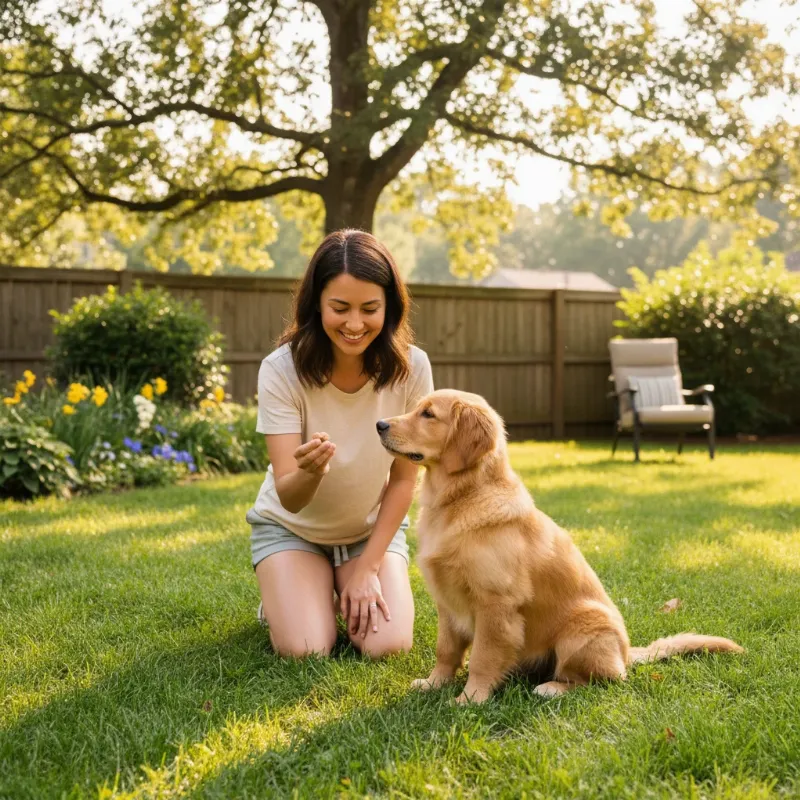 A happy dog owner giving a treat to a small golden retriever puppy on the grass as a reward for successful potty training
How Long Does Potty Training Usually Take?
This is the million-dollar question, and the answer is: it depends. There is no magic timeline. For some puppies, the basics might click within a few weeks, but for many, it can take anywhere from 4 to 6 months to be fully reliable. Some dogs may even take up to a year.
Several factors influence this timeline:
- Age: Puppies have less bladder control than adults.
- Breed: Smaller breeds have smaller bladders and faster metabolisms, often requiring more frequent trips outside.
- Past Experiences: An adult dog from a shelter may have never been taught the rules of living in a home, requiring you to undo old habits.
- Your Consistency: The single biggest factor is your commitment to the routine.
Set realistic expectations and celebrate small victories. Focus on progress, not perfection.
Common Potty Training Problems and How to Solve Them
Even with a perfect plan, you might hit a few bumps in the road. Here are some common issues and how to navigate them.
Submissive or Excitement Urination
Some dogs, especially puppies, may urinate when they get overly excited or feel intimidated (like when you greet them or when visitors arrive). This is an involuntary reaction, not a training issue. To manage it, keep greetings calm and low-key. Avoid direct eye contact and towering over your dog. Try to greet them outdoors if possible.
Marking Territory
If your dog is urinating in small amounts on vertical surfaces (like furniture legs), it’s likely marking behavior. This is more common in un-neutered males but can occur in any dog. Ensure your dog is neutered or spayed, as this can reduce the instinct. Also, restrict access to areas they frequently mark and thoroughly clean any marked spots with an enzymatic cleaner.
Potty Training Regression
Sometimes, a previously house-trained dog starts having accidents again. This can be caused by a number of things:
- Medical Issues: Rule this out first. A urinary tract infection (UTI) or other health problems can cause incontinence. A vet visit is in order.
- Changes in Routine: A new schedule, a move to a new house, or a new family member can cause stress that leads to accidents.
- Insufficient Cleaning: If old accident spots weren’t cleaned properly, your dog may be drawn back to them.
If regression occurs, simply go back to the potty training basics: increase supervision, stick to a strict schedule, and reward successful outdoor trips. The knowledge of can you potty train an old dog successfully demonstrates that it’s never too late to reinforce good habits.
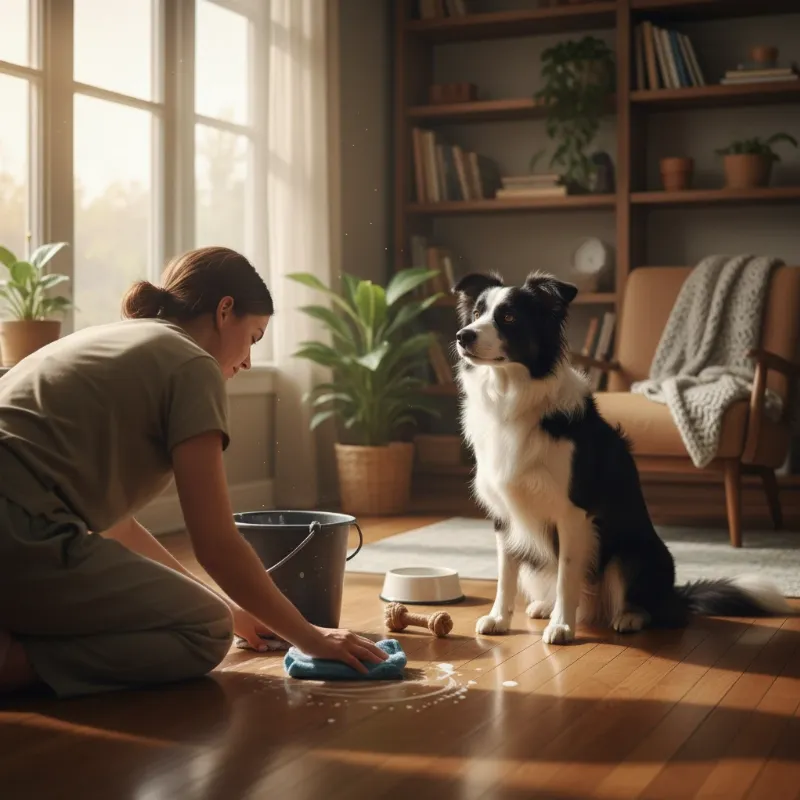 A person patiently cleaning a puddle on a hardwood floor with a spray bottle and paper towels, while their dog sits calmly nearby
Frequently Asked Questions (FAQ)
What are the signs my dog needs to go potty?
Look for key signals like restlessness, pacing, circling, whining, or sniffing the ground intently. Some dogs might go to the door and scratch or stare at you. When you see these signs, drop everything and take them out immediately.
Should I use puppy pads?
Puppy pads can be a useful tool for those living in apartments or for people who can’t take their puppy out frequently. However, they can sometimes confuse the dog, teaching them that it’s okay to go to the bathroom inside. If you use them, be consistent with their placement and work on transitioning to outdoor potty training as soon as possible.
Are there tools that can help with potty training?
Absolutely. Besides a good crate and enzymatic cleaner, many owners find success with tools that help their dog communicate. The concept of dog potty training with bell is popular, where you teach your dog to ring a bell hanging on the door when they need to go out.
What’s the difference between training a puppy and an adult dog?
The core principles are the same, but with an adult dog, you might be working against established habits. The key is to treat them like a puppy in terms of supervision and routine. The good news is that adult dogs have better bladder control and can often learn the new rules more quickly than a very young puppy.
What if I’m really struggling?
If you’ve been consistent and are still facing major challenges, don’t be afraid to seek professional help. A certified dog trainer or veterinary behaviorist can provide a personalized plan. Sometimes, a quick search for local [potty training dogs near me](https://dogcarestory.com/potty-training-dogs-near-me/) can connect you with the hands-on guidance you need to succeed.
Your Journey to a Potty-Trained Pal
Potty training is a rite of passage for every dog owner. It’s a process that tests your patience but ultimately deepens the bond between you and your canine companion. By understanding your dog’s needs, establishing a consistent routine, and showering them with positive reinforcement, you can successfully teach them this essential life skill. Remember to stay patient, celebrate every success, and handle setbacks with grace. Before you know it, you’ll have a confident, well-behaved dog who understands the rules of the house. Now you truly know how do u potty train a dog, and you’re ready for the adventure ahead.
