
Toilet training a cat can seem like a daunting task, but with patience and the right approach, it’s achievable for most feline companions. This guide will walk you through a 7-step process designed to gently transition your cat from their litter box to using the toilet. Remember, the key to success is to let your cat set the pace and never rush the process. By following these steps, you can help your cat develop this new habit cleanly and effectively.
Step One: Relocate the Litter Box
Begin by moving your cat’s current litter box to a location directly beside the toilet. Ensure your cat is comfortable using the litter box in its new spot and leave it there for a period you deem necessary for them to adjust. It’s crucial to go slow during this phase. If your cat becomes confused or stressed, they might seek out alternative, less desirable places to relieve themselves, which can be difficult to correct later.
Step Two: Gradually Elevate the Litter Box
Once your cat is accustomed to the litter box’s position next to the toilet, you’ll begin to gradually raise its height. Each time you increase the elevation, slightly reduce the amount of litter in the box. You can use sturdy materials like stacks of newspapers or phone books to raise the box.
Pro-Tip: Secure the litter box to the elevating material to prevent it from shifting or tipping when your cat jumps on or off, which could startle them and cause them to revert to old habits.
Step Three: Move the Litter Box Onto the Toilet
Continue to move the litter box incrementally closer to the toilet, about one inch each day, until it is positioned directly over the toilet seat. Concurrently, you should continue reducing the litter depth, aiming for no more than an inch of litter. The goal is for your cat to become comfortable balancing on the edge of the toilet seat.
Step Four: Introduce a Training Box
Now it’s time to replace the traditional litter box with a specialized “training box.” This training box needs to be stable enough to support your cat’s weight. You have a couple of options: you can purchase a commercial cat toilet training system, or you can create a DIY version.
To make your own training box:
- Place a piece of wax paper over the toilet seat, taping it securely around the edges.
- Fill the wax paper with flushable cat litter.
- Alternatively, tape a sturdy bowl or aluminum pan to the edges of the toilet seat. Place the toilet seat down to hold the pan in place. Add flushable litter to this pan.
Pro-Tip: Clean the training box after each use and consider adding a small amount of catnip to the fresh litter. This can help create a positive association with the new setup.
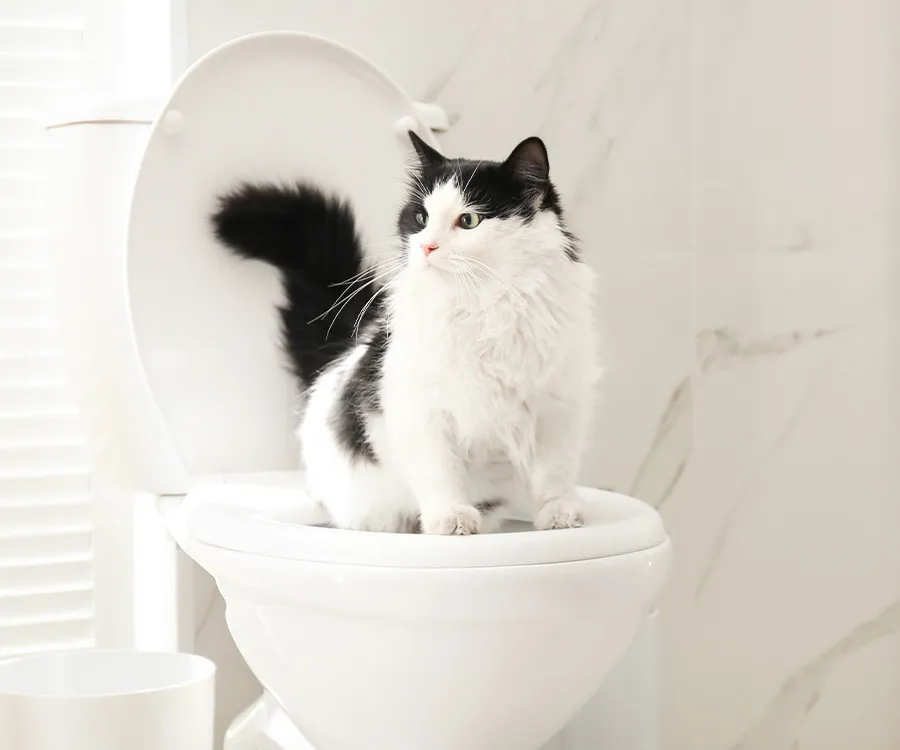 Cat using a toilet training systemRewarding your cat with treats can significantly aid in the toilet training process.
Step Five: Gradually Enlarge the Opening
In this phase, you’ll encourage your cat to start using the toilet water directly. Begin by cutting a small hole, about one inch in diameter, in the center of the wax paper or the aluminum pan. Gradually increase the size of this hole over time. As you enlarge the opening, simultaneously decrease the amount of litter used, eventually reaching a point where no litter is present when the cover or pan is removed.
Step Six: Encourage Flushing (Without Teaching Them How)
Once your cat is consistently using the toilet, it’s time to establish the habit of flushing. Flush the toilet yourself after each of your cat’s uses.
Pro-Tip: Resist the urge to teach your cat how to flush the toilet. While many cats can learn this trick, they often find it amusing and may flush repeatedly, leading to significant water wastage.
Step Seven: Reward Success
Positive reinforcement is a crucial part of successful toilet training. Offer your cat a treat or praise them enthusiastically immediately after they successfully use the toilet. This positive association will help solidify the new behavior.
Pro-Tip: If your cat seems hesitant about the water in the toilet bowl, you can add a small amount of litter to the water. This can help them associate the smell with their familiar litter box environment.
Toilet training a cat requires commitment and understanding, but the rewards of a cleaner home and a more integrated pet can be well worth the effort. Remember to be patient and celebrate every small success along the way.
